
Few writers cross time with the natural ease of Jane Austen. Read, quoted, and reinterpreted more than two centuries later, she remains alive not because she wrote romantic stories, but because she understood — with irony, precision, and rare emotional intelligence — how desire, money, pride, and social conventions shape human relationships. Austen writes about marriage, but above all about choice; about families, but essentially about power; about love, yet almost always about negotiation.

Her sentences, now widely highlighted and shared, endure not merely as elegant aphorisms. They carry the moral architecture of her novels: characters who learn to truly see themselves, women forced to calculate their futures in a world that denies them full autonomy, men who mistake status for character. In just a few lines, Austen exposes vanity, dismantles certainties, and reveals the delicate tension between what is felt and what is permitted to be felt.
To read Jane Austen — and to reread her words when separated from their larger context — is to encounter an author profoundly aware of the social structures she portrays and, at the same time, deeply compassionate toward human fragility. Her sentences offer no easy comfort. They observe, provoke, and often smile from the corner of the mouth. Perhaps that is why they remain so current: they speak less of a specific time and more of the enduring difficulty of being truly lucid about ourselves.
Let’s review the 15 most famous ones!
On love and feeling
- “If I loved you less, I might be able to talk about it more.”
Emma (1815) - “You pierce my soul. I am half agony, half hope.”
Persuasion (1818) - “I have loved none but you.”
Persuasion (1818) - “I will have to tell you: you have bewitched me, body and soul, and I love, I love, I love you.”
Pride and Prejudice (1813)
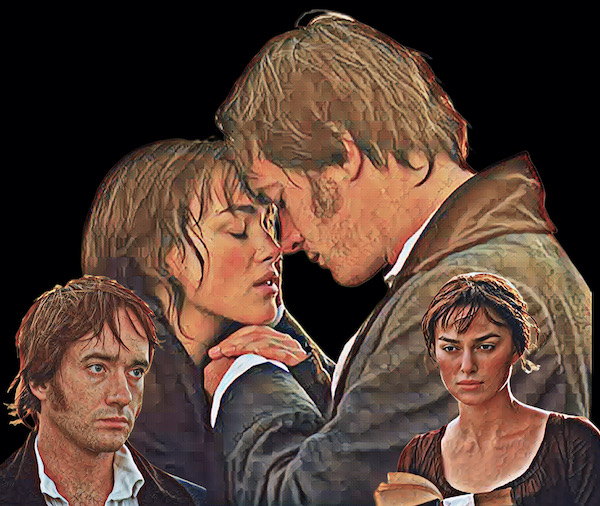
On marriage, society, and choices
- “Happiness in marriage is entirely a matter of chance.”
Pride and Prejudice (1813) - “One half of the world cannot understand the pleasures of the other.”
Emma (1815) - “My good opinion once lost is lost forever.”
Pride and Prejudice (1813)
On character, friendship, and moral sense
- “There is nothing I would not do for those who are really my friends.”
Northanger Abbey (1818) - “Friendship is certainly the finest balm for the pangs of disappointed love.”
Northanger Abbey (1818) - “We have all a better guide in ourselves, if we would attend to it, than any other person can be.”
Mansfield Park (1814) - “Selfishness must always be forgiven, you know, because there is no hope of a cure.”
Mansfield Park (1814)

On time, life, and irony
- “Time will explain.”
Persuasion (1818) - “Life seems but a quick succession of busy nothings.”
Mansfield Park (1814) - “Nothing ever fatigues me but doing what I do not like.”
Mansfield Park (1814)

- “There is no charm equal to tenderness of heart.”
Sense and Sensibility (1811)
Descubra mais sobre
Assine para receber nossas notícias mais recentes por e-mail.
 miscelana.com