
Perhaps I’m alone in this reading, and that’s fine. Wake Up Dead Man: A Knives Out Mystery has been met with enthusiasm by much of the critical establishment, but to me, it is the weakest entry in Rian Johnson’s franchise. A film that knows exactly which buttons to push, which themes to invoke, and which tricks to repeat, yet operates almost entirely on autopilot, sustained more by the goodwill built by Knives Out and Glass Onion than by any real sense of narrative freshness.
This isn’t about denying its merits; they are there. But they are too concentrated, and in some cases, isolated.
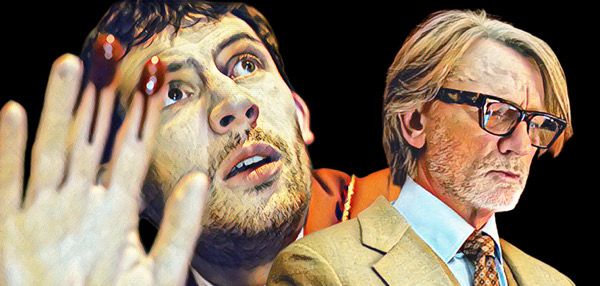
The mystery itself is the first problem. Unlike the original film, which played cleverly with perception, class, and moral ambiguity, here the “whodunit” is extremely easy to deduce almost from the start. Not because the viewer is particularly clever, but because the script practically hands you the answer. The only real uncertainty lies in the “how” and the “why”. And even then, it quickly becomes clear that the motivation and execution would be inevitably overcomplicated and contrived. I knew the twists would be baroque by design, so I simply didn’t care to speculate about them.
Rian Johnson wraps this mystery in heavier symbolic clothing: greed, faith, guilt, forgiveness, moral hypocrisy. All of it is present, clearly signposted, almost underlined. The issue is not the subject matter — it’s the treatment. With one notable exception, these ideas never acquire enough dramatic weight to justify the more solemn tone. They hover over the narrative as concepts, not as lived conflicts.
That exception is Josh O’Connor, and here there are no caveats. O’Connor is perhaps the only element that truly works in the film. His performance doesn’t just stand out; it exposes, by contrast, how much of the rest is coasting. He creates a character full of fractures, moral unease, and ambiguity, the kind that lingers after the credits roll. It’s a performance that once again confirms what has become increasingly evident: Josh O’Connor is one of the finest actors working today, capable of elevating even limited material.
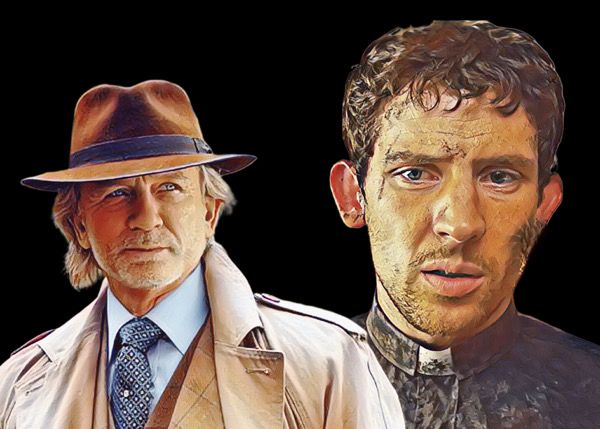
Another honorable exception is Andrew Scott, an actor who seems incapable of making a bad choice. There is something deliciously ironic in seeing him far removed from Fleabag’s “hot priest” and yet once again playing a man of faith. The meta-joke is obvious and enjoyable, particularly for fans. But again, it isn’t enough to save the film. Scott shines because he always does — not because the script gives him anything especially inspired to work with.
The rest of the ensemble — large, talented, undeniably charismatic — mostly functions as intended. Everything is competent, efficient, neatly in place, but rarely inspired. Subplots appear and vanish without leaving a mark, interrupting the flow with uninspired detours that feel more like obligations than organic narrative choices.
Which brings us to Daniel Craig’s Benoit Blanc. The character remains charming and entertaining, and Craig is clearly at ease in the role. Perhaps too much so. Blanc no longer surprises or destabilizes the story the way he once did. Here, he observes more than he provokes. He still anchors the film, but without the spark that once made him a creative engine rather than a familiar presence.
Critically, the reception has been largely positive, with many praising the film’s thematic ambition and darker tone. I understand those reactions — I simply don’t share them. To me, Wake Up Dead Man mistakes weight for depth and solemnity for risk. It feels overly aware of its own prestige, less interested in playfully subverting the genre than in reaffirming its importance.
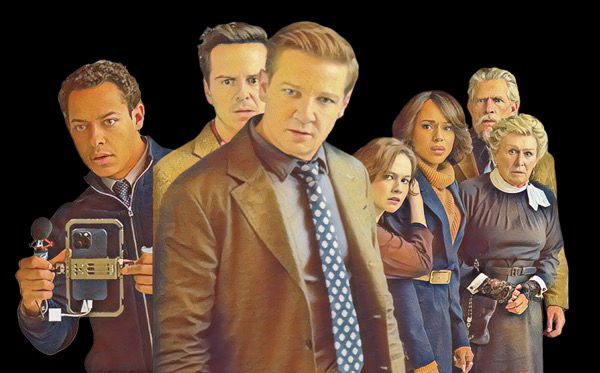
As for the future of the franchise, both Netflix and Rian Johnson have made it clear that there is interest in continuing. Benoit Blanc has become a brand, a format, a recurring promise. And that may explain everything. This film feels less like a mystery that needed to be told and more like another cog turning to keep the machine running.
If more chapters are to come, I hope they recover the inventive spirit that made Knives Out feel so alive in the first place. Because if the franchise comes to rely solely on Josh O’Connor’s talent to elevate the experience, it risks becoming exactly what it has always pretended to critique: comfortable, predictable, and far too self-aware.
Descubra mais sobre
Assine para receber nossas notícias mais recentes por e-mail.
 miscelana.com