
December 16, 2025, holds a special place on the calendar of Janeites. On that date, the world marks the 250th anniversary of Jane Austen’s birth, an author who, two and a half centuries later, continues to bring together a global community of devoted readers, scholars, cinephiles, and fans who recognize themselves not only in her stories but in the emotional intelligence and refined irony of her writing. For Janeites, the celebration goes far beyond a commemorative milestone: it is the reaffirmation of a lasting emotional bond with a writer who never stopped observing the world with clarity, wit, and a deep understanding of imposed limitations, especially those placed on women, in any era.

Even in the 21st century, Jane Austen occupies a rare position in culture: that of a classic author who never feels distant. Her work spans generations, inspires contemporary reinterpretations, and continues to create new readers, many of them young, many of them women who still recognize themselves in the tensions Austen described with surgical precision. It is no coincidence that 2026 is already shaping up as another year of Austenian renewal, with two new adaptations underway: Netflix is remaking Pride and Prejudice, while a new version of Sense and Sensibility is also entering production.
The central question, therefore, is no longer why Jane Austen endures, but what exactly sustains that endurance. What unites such different fans? Where does her modernity lie? And why do her stories remain so coveted by the audiovisual industry?
It is not only romance, although romance certainly matters. The deep bond between readers and viewers of Jane Austen lies in emotional recognition.
Austen writes about people who must learn how to live within limits, economic, social, familial, and emotional. Her characters do not have complete freedom to make mistakes without consequences. Every choice carries a cost, and it is precisely this awareness that makes her stories feel so close to contemporary audiences.

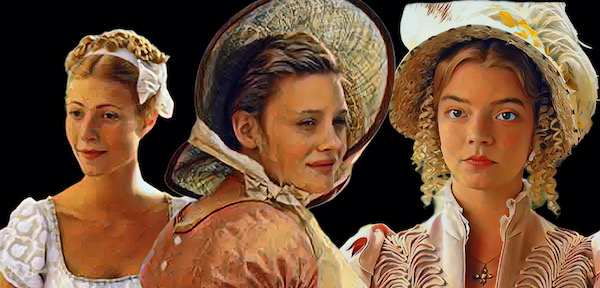
Elizabeth Bennet, Elinor Dashwood, Anne Elliot, or Emma Woodhouse do not live in idealized passions; they live in constant negotiations between desire and survival. Loving too much can be reckless. Being too rational can cost happiness. This unstable balance—so familiar today—is the core of Austen’s work.
What unites her fans, then, is the sense that she understands us. That she writes about what is rarely said out loud: the pressure to make the “right” choice, even when it does not align with the heart.
It is also worth remembering that no one travels so far through time, with so few books, and is still considered modern, yet Jane Austen undeniably is. The very formula of contemporary romantic comedies is rooted in the structure of Pride and Prejudice, and it still works. Austen wrote women who think, observe, judge, and change their minds. Women who understand the world as a system and try to carve out some space for autonomy within it. She does not romanticize female precarity, nor does she treat love as a magical solution. On the contrary, she exposes how affection is shaped and often constrained by money, status, reputation, and fear.
This lucidity allows her books to speak directly to current debates about emotional labor, gender expectations, structural inequality, and the difficulty of reconciling personal fulfillment with material security. Jane Austen did not write fairy tales. She wrote social dramas with negotiated endings, and that remains deeply contemporary.

Of course, some adaptations push the original axis too far, such as the recent remake of Persuasion starring Dakota Johnson, which turned Anne Elliot into a kind of late-stage Elizabeth Bennet. Still, these contemporary reinterpretations help explain the ongoing demand for Austen. Jane Austen is far from merely being “revived”; she is continually repositioned. And that is only possible because her stories can withstand new lenses.
They allow for feminist, intersectional, political, and emotional readings without losing internal coherence. They work equally well in classic versions and in stylized, contemporary, or culturally specific approaches—as recent adaptations that relocate her narratives into different social and racial contexts have shown. Austen does not depend on the period. She depends on human conflict. And that conflict, between who we are, who we want to be, and who the world allows us to be, remains intact.
For this reason, and for so many others, Jane Austen remains relevant because she never offered easy answers. Her stories do not promise happiness without compromise. They offer only the possibility of more conscious choices. Each new adaptation is not a nostalgic return, but an act of translation. Each generation reads Austen through the lens of its own limitations, expectations, and frustrations.
Perhaps that is precisely why, at 250 years old, Jane Austen does not feel like a literary monument, but like a writer in constant dialogue with the present.
Happy birthday, Jane.
Descubra mais sobre
Assine para receber nossas notícias mais recentes por e-mail.
 miscelana.com