
As published on CLAUDIA
The news that award-winning director Rob Reiner was murdered in his home on the first night of Hanukkah — the Jewish holiday deeply associated with family life, the home, and the transmission of values across generations — brought Hollywood to a standstill on Sunday, December 14, 2025. Reiner and his wife, Michele Singer Reiner, were reportedly found by their daughter, Romy, and the main suspect in the case — not yet officially confirmed by authorities — is one of the couple’s sons, Nick Reiner.
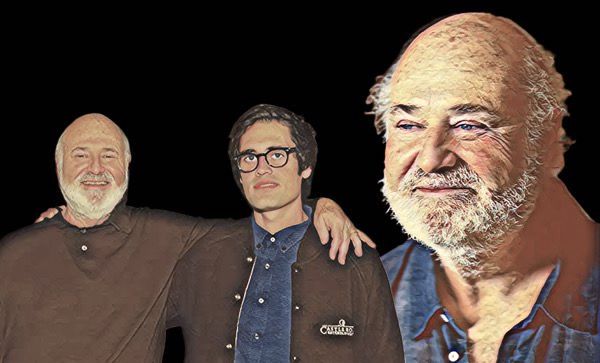
It is a tragedy that feels almost “typically Hollywood,” yet one that makes no sense precisely because Reiner spent his life filming human relationships with a delicacy rarely seen in the industry. Perhaps that is why his violent death at 78 caused such widespread shock — not only because of the crime itself, but because of the stark contrast with the work of a man who consistently believed that stories, even the hardest ones, should be told with empathy.
The son of legendary filmmaker Carl Reiner, Rob built a career defined by films that crossed generations, as well as by strong, complex, and deeply human female characters. He understood something essential: love, friendship, and care are territories of conflict, not of easy idealization.
It is almost ironic — and profoundly cinematic — that Reiner met the love of his life during the filming of When Harry Met Sally… (1989), one of the most romantic films in Hollywood history. At the time, he had been single for a decade and was emotionally adrift. Many of the absurd things Harry says in the film — including the claim that men and women cannot be true friends — were drawn directly from Reiner’s own beliefs. He realized that the story needed a female voice, and found it in Nora Ephron, who wrote Sally as a witty, demanding, contradictory, and self-possessed woman — a portrait that continues to resonate powerfully with women across generations.
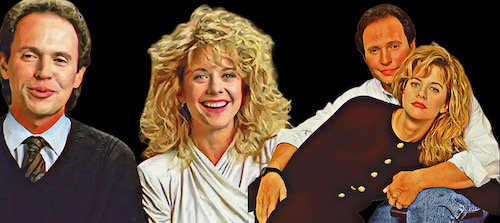
Then came the ultimate irony: during production, Reiner fell in love with photographer Michele Singer. The romance altered the film’s trajectory itself. The originally bitter ending was rewritten into a happy one. Life intervened in cinema — or perhaps cinema once again mirrored life.
If Sally became a symbol of a woman who knows what she wants — including in the film’s legendary restaurant scene — that was no accident. Reiner consistently made room for female characters who existed not merely as romantic interests, but as the emotional axis of their stories. Consider Annie Wilkes in Misery (1990): terrifying not because she is monstrous, but because she is recognizable in her obsession, control, and false devotion. Kathy Bates won the Oscar, but the character’s impact stems from Reiner’s precise direction, which understood horror as something intimate, psychological, and relational.

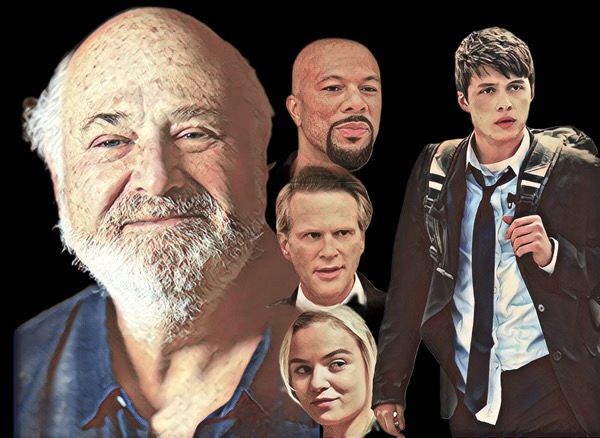
That same sensitivity runs through The Princess Bride, where true love is anything but passive, and The American President, where romance unfolds amid responsibility, power, and vulnerability. Reiner never filmed love as an absolute fairy tale, but as a daily choice — flawed, imperfect, and human.
Perhaps for that reason, one of the most important films of his career is also one of the least seen: Being Charlie (2015). Directed by Reiner and co-written with his son Nick Reiner, the film was born from real pain — Nick’s struggle with substance addiction since adolescence. It follows a young addict who cycles in and out of rehabilitation centers, runs from treatment, and repeatedly tests the limits of paternal love.
Behind the scenes, Being Charlie was a radical act of exposure. Reiner did not protect his own image as a father, nor did he soften the conflict. The film depicts something rarely shown in American cinema: the powerlessness of love in the face of illness, the emotional erosion of families, silent guilt, and the boundaries that must be imposed to survive. There is no easy redemption. No heroism. Only honesty.
Premiering at the 2015 Toronto International Film Festival, the film received mixed reviews — perhaps because it is difficult to watch a story that offers no comfort. Today, Being Charlie reveals itself as one of the most courageous and intimate works in Reiner’s filmography, especially in light of recent events, as Nick is now considered the primary suspect in the 2025 murder of his parents.

Until the end of his life, Rob Reiner remained active. He left behind a completed film, Spinal Tap II, the long-awaited continuation of This Is Spinal Tap, and recently appeared in the series The Bear, engaging a new generation without empty nostalgia.
Offscreen, he was a consistent defender of progressive causes and a man who believed that ethics and affection walk hand in hand. Speaking about his father, Carl Reiner, he once said that he never received direct advice — only the example of someone who lived with decency. It is hard to imagine a more fitting description of Rob Reiner himself.
His legacy lies not only in films that continue to be watched and quoted, but in the way he chose to look at people — especially women — with complexity, irony, and respect. In a cinema often loud and cynical, Rob Reiner believed in love without naïveté. And perhaps that is why his stories still matter so deeply.
Descubra mais sobre
Assine para receber nossas notícias mais recentes por e-mail.
 miscelana.com