
As Published on Bravo Magazine
The year 2025 was not kind to Hollywood legends. The tragic death of Gene Hackman, followed by the unexpected farewells to Diane Keaton and Robert Redford, among others, had already given American cinema the unmistakable sense of a cycle coming to an end. But the death of Rob Reiner, surrounded by criminal mystery and an ongoing investigation, felt like the final blow of an especially harsh year. Born into stardom, trained as an actor, but above all, the director of some of the most beloved films of the past four decades, Reiner leaves behind an unmistakable legacy: When Harry Met Sally…, Stand by Me, The Princess Bride, A Few Good Men. His signature was always there, and with it, scenes, dialogue, and emotions that crossed generations.

The Investigation and the Silence of Authorities
The Los Angeles Police Department was called on Sunday, December 14, to a residence in Brentwood, where they found two people stabbed to death: the 78-year-old director and his second wife, Michele Singer Reiner, 68. The case is being investigated as a homicide, and so far, authorities have not released details about the circumstances surrounding the crime.
According to sources cited by People magazine, the couple was reportedly found by their daughter, Romy, with their throats slit. One of the couple’s sons, Nick Reiner, is considered the primary suspect and is currently in police custody, though he has not been formally charged. His alleged involvement has not been officially confirmed by authorities.
It is publicly known that Nick Reiner has struggled for years with substance addiction, which began during his adolescence. In interviews and in the film Being Charlie (2015) — directed by his father, with Nick contributing to the screenplay — he described cycling in and out of rehabilitation facilities since the age of 15 and spending long periods away from his family, including times living on the streets.
As of now, the Los Angeles Police Department has not issued an official statement regarding responsibility for the crime. The investigation remains ongoing.
A Rare Career, Guided by People
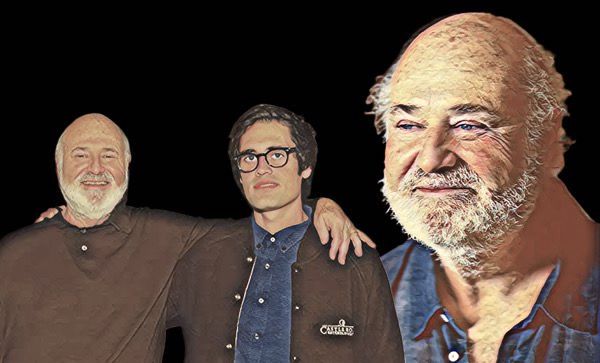
Reiner’s death brings to a close a rare Hollywood career, one defined by an effortless movement between television and film, comedy and drama, romance and political storytelling, without ever losing sight of what truly mattered to him: people. The shock felt across the industry stems not only from the violence of the event, but from the fact that Reiner was widely regarded as a steady, generous, and deeply civilized presence in a business historically shaped by ego and excess.
From All in the Family to Film: The Making of a Director
Born in the Bronx in 1947, Reiner quite literally grew up inside American entertainment. The son of legendary comedian and director Carl Reiner and actress and singer Estelle Lebost, he moved at a young age to Beverly Hills, where he developed an almost premature sense of independence. That determination to carve out his own path — without rejecting his heritage, but never leaning on it — would define his entire career.
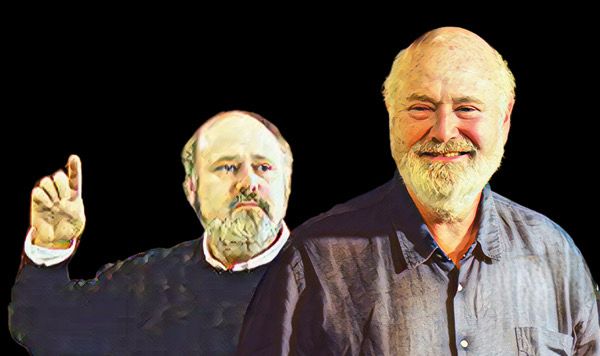
Before establishing himself as a director, Reiner became one of the most emblematic faces of television’s revolution in the 1970s. As Mike “Meathead” Stivic on All in the Family, he helped transform the sitcom into an arena for political, social, and moral debate. Progressive, combative, and often arrogant, his character stood in direct opposition to the conservative Archie Bunker, and the tension between them became an uncomfortable — and necessary — mirror of America at the time. The series topped television ratings for five consecutive seasons, and Reiner won two Emmys from five nominations.
Even at the height of that success, he was already looking ahead. Reiner left the series before its conclusion to focus on writing and directing, a risky move at the time. His directorial debut, This Is Spinal Tap (1984), failed theatrically but found new life on VHS, eventually becoming one of the most influential comedies ever made, redefining the mockumentary and earning a place in the National Film Registry.
Classics That Crossed Generations
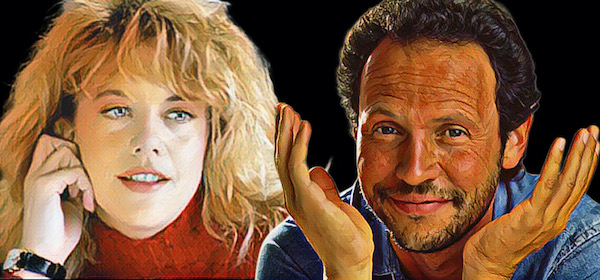
What followed was an almost unbelievable run of classics, each distinct in tone yet united by empathy. Stand by Me (1986) captured the quiet ache of lost innocence like few films before or since, so much so that Reiner often described it as the most personal work of his career. The Princess Bride (1987) proved that irony and romance are not opposites, but allies. When Harry Met Sally… (1989), meanwhile, emerged directly from Reiner’s own emotional confusion: single for a decade, he realized he needed a female voice to tell that story and found in Nora Ephron a creative partner who would redefine the romantic comedy.
The film nearly ended on a bitter note, with Harry and Sally going their separate ways. Reiner changed the ending after falling in love with Michele Singer during production. Life intervened in cinema, and perhaps that is why the film still feels so honest. His mother, Estelle, delivered one of cinema’s most iconic lines (“I’ll have what she’s having”), while his daughter Tracy appeared in a small role, reinforcing a recurring theme in his work: cinema as an extension of life, not a spectacle detached from it.
Other films followed: Misery, A Few Good Men, The American President, and The Story of Us, confirming his versatility. Reiner directed actors without authoritarianism, creating sets known for comfort and collaboration. “I want everyone around me to feel happy at work,” he told The Guardian in 2018. It was not a slogan; it was his method.
Rob Reiner and Stephen King: When Horror Is Human
This attentive focus on character, emotion, and silence helps explain why Rob Reiner was also one of the directors who most successfully translated Stephen King’s universe to the screen. Rather than being guided by the label of horror, Reiner recognized early on that the heart of King’s work lies less in the supernatural and more in human fragility: in loss, obsession, the fear of growing up, or the fear of losing control. He not only delivered two of the finest screen versions of King’s work, but also revealed a rare affinity between filmmaker and writer: both believed that the true impact of a story is born from empathy, not shock.
Lines That Entered History
For example, in Stand by Me, adapted from the novella The Body, Reiner emphasized that this is not a story about the discovery of a corpse, but about the end of childhood. The film shifts the center of the drama away from death itself and toward the emotional impact it has on the boys — and the moment when they realize, perhaps for the first time, that the adult world is irreversible. The absence of explicit horror does not weaken the narrative; on the contrary, it makes it more unsettling. Reiner films friendship, silence, vulnerability, and farewell with a delicacy rarely associated with adaptations of Stephen King, yet one that is deeply aligned with the author’s spirit. It is also considered one of the finest performances of River Phoenix — and the film that truly revealed him.


In Misery, the terror is intimate, claustrophobic, and psychological. Reiner understands that Annie Wilkes is frightening not because she is violent, but because she is recognizable. Her obsession, her need for control, and her ability to mask brutality with care and devotion tap into a distinctly modern fear: being trapped by someone who believes they own you. By constricting the space, concentrating the action, and trusting the confrontation between James Caan and Kathy Bates (Oscar as Best Actress for this role), Reiner transforms the adaptation into a study of power, dependence, and authorship, themes central both to King and to cinema itself.
What unites these two adaptations, so different in tone and genre, is Reiner’s trust in the audience’s emotional intelligence. He does not underline fear, over-explain, or chase easy shock. He favors slow discomfort, weighted silence, and looks that speak louder than dialogue. Rather than attempting to “cinematize” Stephen King in the most literal sense, Reiner translated his essence: wounded characters, interrupted affections, the burden of memory, and the violence born of frustration.
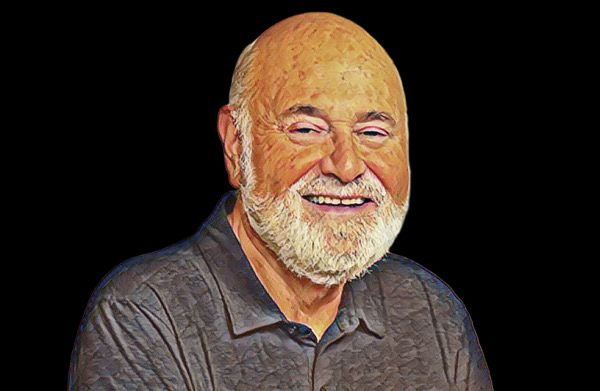
It is no coincidence that these titles consistently rank among the best Stephen King adaptations ever made, despite belonging to completely different cinematic registers. This speaks less to technical versatility than to a sensitive reading of literary material. Reiner did not impose his signature on these stories; he placed it in their service.
A Filmmaker Who Never Left the Stage
But those two films do not diminish the fact that three other classics he directed became permanent fixtures in pop culture, either through cult status or immediate popular impact.
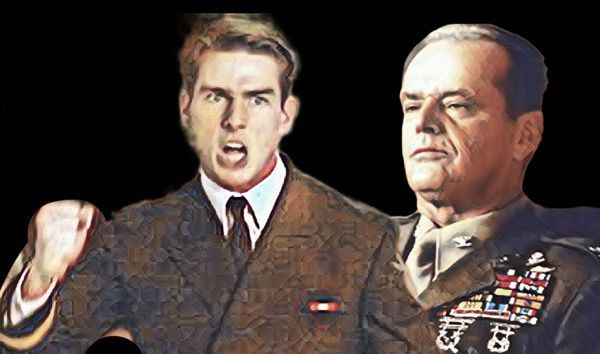
The Princess Bride became a generational phenomenon by immortalizing lines such as “As you wish,” now shorthand for absolute love in the cinematic imagination. When Harry Met Sally… remains one of the most perfectly constructed romantic comedies ever made, not only for its structure or characters, but for its near-infinite supply of dialogue that continues to be quoted, revisited, and reinterpreted decades later. A Few Good Men — the highest-grossing film of Reiner’s career, powered by a star-studded cast including Tom Cruise, Demi Moore, and Jack Nicholson — permanently etched the line “You can’t handle the truth” into collective memory, one of those rare phrases that transcended the film itself and entered everyday language.
A Small, Little-Seen Film Becomes the Most Personal of His Legacy
Even after considering all of this, it is striking that one of the most significant films of Rob Reiner’s career may be among his least seen: Being Charlie (2015). Directed by Reiner and co-written with his son, Nick Reiner, the film is a raw and painful portrait of substance addiction, inspired directly by Nick’s own life.
In the film, Reiner brings to the screen not only the drama of addiction, but also the troubled relationship between father and son — shaped by love, helplessness, and boundaries that are difficult to accept. Screened at the Toronto International Film Festival, Being Charlie received a divided critical response, but in the aftermath of the 2025 murder, it will almost certainly come to be seen, over time, as one of the most personal and revealing works in the director’s filmography.
Rob Reiner remained active and attentive to the present until his death. He left behind a completed film, Spinal Tap II, the long-awaited continuation of This Is Spinal Tap, reaffirming his connection to one of the most influential projects of his career. At the same time, he caught the attention of a new generation through a small but memorable appearance in the most recent season of The Bear, the kind of role that functions as a quiet nod across generations, confirming his ability to move between eras without losing relevance.

Storytelling as an Act of Care
Offscreen, Reiner was a consistent political activist, a co-founder of the American Foundation for Equal Rights, a vocal critic of Donald Trump, and a defender of progressive causes. He never fully separated art from citizenship, but he also never allowed one to become propaganda for the other.
After the death of his father, Carl Reiner, in 2020, Rob reflected on the influence he had had on his life. He never gave advice, Rob said, “he just lived a certain way, and that was the best advice I could have gotten.” It is difficult to imagine a better description of Rob Reiner himself.
His legacy lives not only in films that continue to be watched, quoted, and loved, but also in the trust he always placed in his audiences, in the belief that stories can be intelligent without cruelty, emotional without manipulation, and political without losing humanity. In an increasingly noisy cinematic landscape, Rob Reiner remains a powerful reminder of something essential: telling stories is also an act of care.
Descubra mais sobre
Assine para receber nossas notícias mais recentes por e-mail.
 miscelana.com