
Hollywood has long preferred the word scandal to the word violence. A scandal suggests exposure, public curiosity, and a moral excess that can be managed with press strategy, controlled silence, and time. Violence, by contrast, demands accountability, intervention, and rupture. For decades, Los Angeles has built an intimate relationship with this semantic choice — and the crimes linked to Hollywood figures reveal the human cost of that preference.
Organizing these episodes by theme rather than chronology makes visible what the industry has often tried to blur: clear, repeated, persistent patterns.
I. Violence that begins at home
Some of the most devastating crimes in Hollywood history did not come from strangers, obsessed fans, or random attacks. They came from the space that should have been safest: the home.
The murder of Rob Reiner and his wife, Michele Singer Reiner, in 2025 exposes this axis with unprecedented brutality. Not only because of the violence itself, but because of its symbolic contradiction. Reiner built an entire filmography around empathy, dialogue, and the humane treatment of flawed characters. His personal life, however, revealed how love, resources, and good intentions do not replace firm boundaries when addiction, emotional instability, and long-term risk coexist within a family.
Investigated as a deliberate domestic crime, the case transformed a discussion often treated abstractly — how far parental responsibility extends with adult children — into an irreversible tragedy. The result was not only grief, but a public reckoning with fear disguised as compassion, with hesitation framed as loyalty, and with the fatal cost of waiting too long to act.
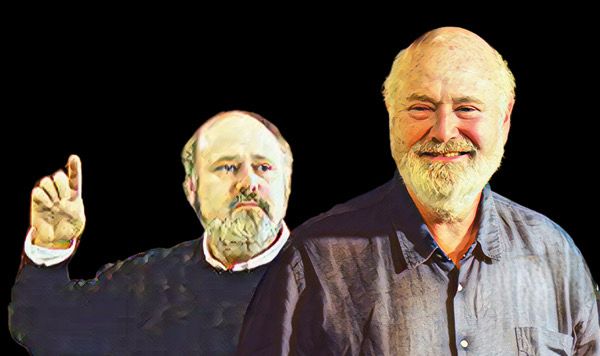
Decades earlier, Phil Hartman had already shown how domestic violence can coexist with success, charisma, and an impeccable public image. Murdered by his wife, Brynn Hartman, while he slept, Hartman became a symbol of a silent collapse that no one wanted to see in time. Brynn struggled with severe substance addiction, emotional instability, and a long history of relapse. Friends later described frequent arguments, episodes of loss of control, and repeated requests for help that were postponed, minimized, or ignored. None of it was invisible.
According to those close to him, Phil lived in a constant state of containment. He feared leaving her alone. He feared separating the children from their mother. He feared that any firmer action might make things worse. He chose to stay, to protect, to manage the risk day by day — as if love, vigilance, and patience could be enough to keep danger under control.
Together, the two cases reveal how addiction, psychological suffering, and ignored warning signs form a painfully familiar pattern. The result was a shock that left Hollywood without answers — and with something even harder to confront: the unsettling sense of shared responsibility in the face of a known, named risk that was nevertheless tolerated until it became irreversible.
II. When romantic love becomes a threat
Another recurring axis is violence tied to romantic relationships marked by control, jealousy, and abuse, often framed as melodrama rather than real danger.
The case of Johnny Stompanato and Lana Turner remains paradigmatic. Stompanato was violent, connected to organized crime, and terrorized the actress. His death, caused by Turner’s teenage daughter during a domestic confrontation, was ruled legally justified. Culturally, however, the episode was packaged as a Hollywood scandal, with studios and the press working in tandem to protect the star and soften the conversation around domestic abuse. Careers were preserved; the danger itself was normalized.

In 1982, Dominique Dunne revealed how this pattern spans generations. Strangled by her ex-boyfriend inside her home, the young actress became emblematic not only because of her death, but because of the lenient sentence given to her killer. The impact of the case lies in the recognition that even when violence is unmistakable, the system may still fail to treat it as a structural threat. The result was public outrage and a legacy of grief that turned her family into outspoken critics of judicial complacency.
III. Violence that ends an era
Some crimes exceed the personal and become collective trauma.
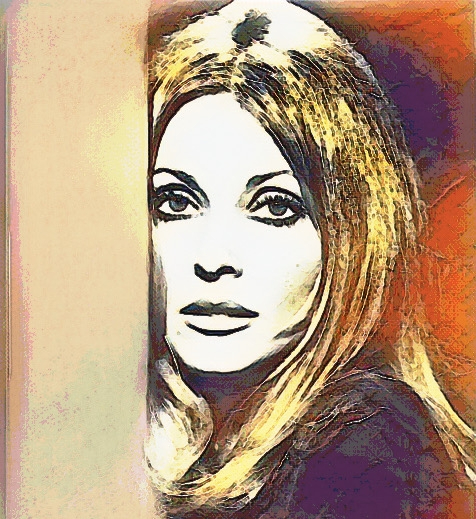
The murders committed by the Manson Family, treated as a single historical event, serve this role. Sharon Tate, eight months pregnant, Jay Sebring, and others deeply embedded in Hollywood’s creative elite were killed not for who they were individually, but for what they represented. The result was the abrupt end of California’s illusion of innocence. Los Angeles ceased to see itself as a creative refuge and began to recognize its own vulnerability. Doors closed, walls rose, trust evaporated.
Such crimes not only take lives; they reorganize behavior, fear, and ways of living.
IV. When fame interferes with justice
Some cases become emblematic because they expose the friction between celebrity and accountability.
The murder of Nicole Brown Simpson in 1994 turned Los Angeles into the stage of a global judicial spectacle. Domestic violence, graphic evidence, criminal acquittal, and civil liability coexisted within the same historical moment. The result was a permanent rupture in public perceptions of justice, race, and privilege. The case never truly ended; it continues to reverberate as a warning and an open wound.
The 2001 murder of Bonny Lee Bakley reinforces this ambiguity. Shot after dinner with her husband, actor Robert Blake, her death resulted in criminal acquittal and civil responsibility, but no emotional closure. The case distilled Hollywood’s chronic difficulty in separating fame, narrative, and legal truth.
V. Exposure, obsession, and unrestricted access
Not all violence emerges from intimate relationships. Sometimes it is a direct product of exposure itself.
In 1989, actress Rebecca Schaeffer was murdered by a stalker outside her home. Young, rising, and unprotected, she paid with her life for the ease with which strangers could access the private lives of public figures. The result was concrete change. Privacy laws were revised, security protocols altered. Her death forced the industry to acknowledge that visibility can be lethal.
VI. Crimes without death, but with lasting victims
Some episodes do not end in murder, yet expose Hollywood’s power dynamics with equal clarity.
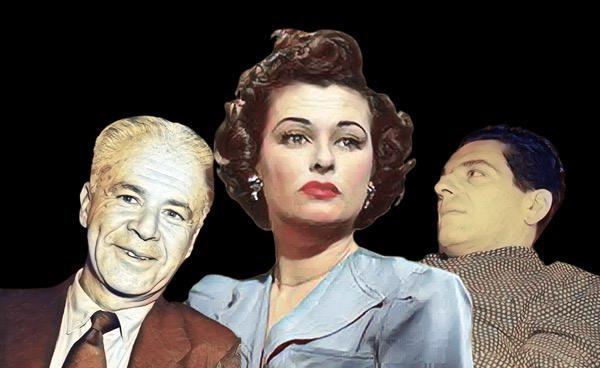
In 1951, producer Walter Wanger shot agent Jennings Lang out of jealousy over his wife, actress Joan Bennett. Lang survived. Wanger served little time. Bennett, however, bore the longest-lasting consequences. Morally judged, silenced, and pushed out of leading roles, she became a symbolic victim of violence she did not commit. The result confirmed a recurring cruelty: Hollywood often punishes women for male violence.
VII. Deaths surrounded by silence and narrative control
Finally, there are cases that never fully resolve, not because questions are lacking, but because the pursuit of closure outweighs the desire for clarity.
The death of Paul Bern, husband of Jean Harlow, was officially ruled a suicide; matters less for what happened than for what followed. The studio acted swiftly to control the narrative, protect the star, and erase ambiguity. Harlow continued working, but under a silent stigma. The result was the institutionalization of a logic that would repeat for decades: not to explain, but to manage.

Patterns, not exceptions
Taken together, these cases dismantle the notion that Hollywood merely hosts extraordinary tragedies. What emerges instead is a series of patterns: domestic violence minimized, exposure treated as collateral damage, fame interfering with justice, silence elevated to a survival strategy.
The murder of Rob Reiner and Michele Singer Reiner does not inaugurate this dark archive — it updates it. In the twenty-first century, with all the awareness accumulated over time, Los Angeles still confronts the same unresolved question it has long avoided: how many warnings are ignored before tragedy stops being a scandal and becomes irreversible?
Dividing these stories by theme does not fragment them. It reveals that behind each case lies a structure that insists on repeating itself, while Hollywood continues to manage narratives rather than confront real danger.
Descubra mais sobre
Assine para receber nossas notícias mais recentes por e-mail.
 miscelana.com