
For a younger generation, the name Lily Safra may be appearing for the first time through the suspense of a Netflix documentary. In Murder in Monaco, she is presented in connection with a tragic death, surrounded by theories and questions that seem never to end. But reducing Lily Safra to that episode — or to the role of a billionaire banker’s widow, ignores a far longer, more complex and revealing life story about power, money, survival and public image across the twentieth century.
Lily Safra was born in 1934, in Porto Alegre, Brazil, to Jewish European immigrant parents. Her childhood was modest, but marked by a rigorous education and early mastery of languages — she spoke English and French from a young age. Still young, she moved to Brazil’s Southeast and began circulating in social environments where ambition, elegance, and opportunity intersected. It was the beginning of a woman who would learn, with near-surgical precision, how to move within closed worlds.
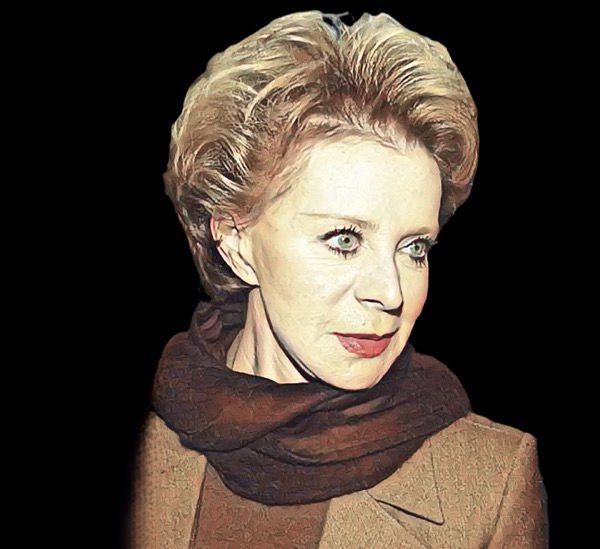
Over the course of her life, Lily married four times — a fact often presented in a simplistic, almost caricatured way. Yet her marriages help explain how she crossed and survived, very different spheres of power.
Her first husband was Mario Cohen, an Argentine textile businessman whom Lily met while still very young, in social circles spanning Brazil, Argentina, and Uruguay. Together they had three children — Adriana, Eduardo, and Cláudio (who died in a car accident in 1989). It was a conventional marriage that gave her an early international life. The relationship ended in separation, without public scandal.
Her second marriage, decisive in her trajectory, was to Alfredo Monteverde, founder of the Brazilian retail chain Ponto Frio, whom Lily met in Brazil within Rio de Janeiro’s business and social circles. Monteverde was a rising entrepreneur but suffered from severe depression. In 1969, he died by suicide. Press reports at the time mentioned two gunshot wounds to the chest, an unusual detail that decades later would fuel speculation, especially in later biographical accounts. Still, it is essential to note that there was no reopening of the investigation nor any legal reclassification of the case. What remains is not evidence of a crime, but a narrative unease typical of tragedies involving power, money, and expectations about how grief should appear.
From this marriage, Lily inherited a significant stake in Ponto Frio, one of the concrete foundations of her fortune. Decades later, she would sell her share to Grupo Pão de Açúcar in a billion-dollar transaction that resulted in a prolonged legal dispute, which she ultimately won in 2015.
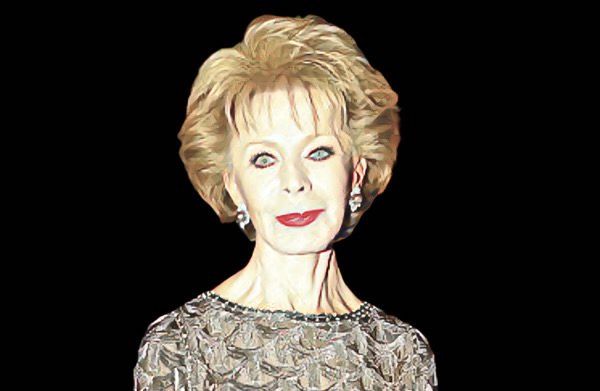
It was during the period following Monteverde’s death that Lily began to circulate more consistently within Europe’s highest social circles. Even before marrying again, she was already frequenting aristocratic, diplomatic, and art-collecting environments, developing ties that included proximity to the British royal family. This often-overlooked social capital helps explain why her rise was not merely financial, but also symbolic.
In 1972, Lily briefly married businessman Samuel Bendahan, whom she met in Europe. The marriage was short-lived and later annulled. Surrounded by folkloric accounts in the society press of the time, it held little practical or financial relevance and ended quickly, leaving no lasting mark on her trajectory. Contrary to some claims, this was not the marriage that made her world-famous.
Lily Safra’s true global prominence began in 1976, when she married Edmond J. Safra, a Lebanese-Brazilian banker and member of one of the most powerful financial families in the world. The two met in international financial and social circles. Their marriage lasted 23 years and placed Lily firmly at the center of global capitalism, dividing her life between Monaco, Geneva, Paris, New York, and the French Riviera.
Edmond Safra suffered from Parkinson’s disease and died in 1999 in a criminally set fire in his Monaco apartment — a case that shocked the world, fueled conspiracy theories, and ultimately resulted in the conviction of his nurse. It is this episode that Murder in Monaco revisits. But what followed also defines who Lily Safra was.
Although most of Edmond’s fortune was left to the Edmond J. Safra Foundation, Lily inherited sufficient assets to become one of the richest women on the planet. From that point on, she chose a less visible — and more enduring — path.

Lily Safra found fulfillment in philanthropy. Not as a symbolic gesture, but as a structured, long-term project. She presided over her husband’s foundation and supported hospitals, universities, and research centers around the world, with particular attention to neurological diseases, including Parkinson’s, which had marked her personal life. In 2012, she auctioned historic jewelry at Christie’s, raising tens of millions of dollars for medical research.
She was also the owner of the legendary Villa Leopolda on the French Riviera — one of the most expensive mansions in the world, a symbol of almost mythical luxury and, at the same time, of the distance between her private life and relentless public curiosity.
Part of the renewed interest in her story also stems from the book Gilded Lily by journalist Isabel Vincent. It is an unauthorized biography, based on secondary sources and interpretive readings. The book is not banned in Brazil, but it was never commercially released or translated there, amid legal and editorial resistance. It should be read as a work of inquiry — not as a conclusive or evidentiary source.
Lily Safra died on 9 July 2022, aged 87, in Geneva. Her name now returns to public debate not because of the legacy she built over decades, but because of a crime that never ceased to provoke fascination. Discovering her story today is an invitation to move beyond easy narratives — and to understand that Lily Safra was, above all, a woman who endured successive tragedies, reinvented her place in the world, and transformed fortune into legacy.
Descubra mais sobre
Assine para receber nossas notícias mais recentes por e-mail.
 miscelana.com
1 comentário Adicione o seu