
Seven years after the end of Game of Thrones, perhaps the most honest gesture is not to keep trying to fix Westeros, but to accept that the story is over — with all its flaws, frustrations, and rushed decisions. Enough complaining about the ending as if there were still something to be rewritten. Kit Harington seems to have understood that before many others.
While part of the fandom still dreams of an alternative eighth season, the actor who played Jon Snow for a decade has chosen a very different path: conscious distance. Not out of ingratitude, but out of artistic and personal maturity. The “no” he repeats today does not sound like a rejection of the series that made him famous, but rather the setting of a necessary boundary.
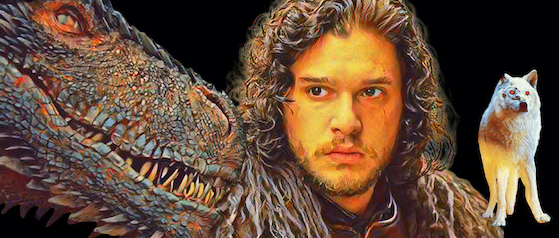
In a recent Variety interview, during the promotion of Audible’s new Harry Potter audiobook series, Harington was asked who should voice Jon Snow if a Game of Thrones audiobook were ever produced. His response was immediate and unequivocal: “No, god no. I don’t wanna go anywhere near it. I spent ten years doing that. Thanks, I’m alright.”
Context matters. Harington has spoken openly about the toll of playing Jon Snow for a decade and how that period coincided with personal struggles, including mental health challenges and alcoholism. His current distance is not merely creative; it is also an act of self-preservation. Even a seemingly harmless return, such as narrating an audiobook, would mean reopening something he prefers to leave behind.
At the same time, it is telling to see where Harington has chosen to invest his energy. He has just entered another global mythmaking universe: Harry Potter. In Audible’s audiobooks, he voices Gilderoy Lockhart, a vain, fraudulent, and tragicomic character famously played on screen by Kenneth Branagh. Not a tortured hero, but a satire of ego, fame, and self-deception.
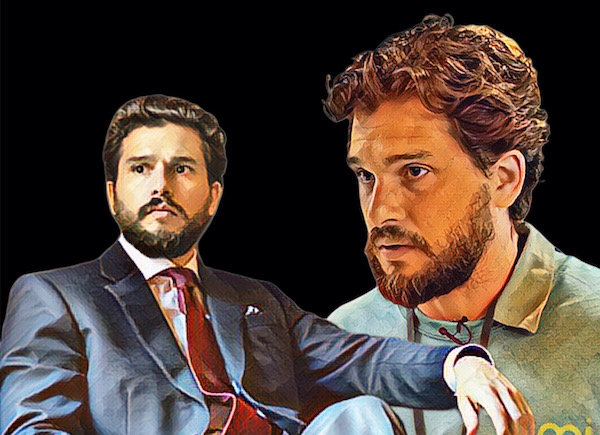

Harington himself acknowledges this. He describes Lockhart as a fable about hubris in the creative world — about the trap of believing one’s own public image. With humor, he admits there is more than a little bit of Lockhart in him. It is a symbolic choice: moving away from the tragic weight of Jon Snow toward a character who exposes, through comedy, the illusions of celebrity.
This shift is consistent with his post–Game of Thrones career. Harington has deliberately built a fragmented path: Marvel (Eternals), auteur television (Industry), guest roles, audiobooks, and now an ambitious adaptation of A Tale of Two Cities for the BBC and MGM+, in which he also serves as a producer. He is working constantly; he just refuses to be defined by a single role.
The fate of the Jon Snow spin-off reinforces this sense of exhaustion. Announced in 2022, the project was officially shelved in 2024 due to the lack of a clear creative direction. HBO executives later suggested it “might be revisited,” while George R.R. Martin mentioned in 2025 that “one or two” sequel projects were in development. Even so, in light of Harington’s recent comments, his involvement now seems increasingly unlikely.
And perhaps that is only natural. The original cast has scattered, careers have expanded, and Westeros itself has found new narrative centers. House of the Dragon and A Knight of the Seven Kingdoms expand the world without touching the exposed nerve of the original ending. They do not try to fix Game of Thrones. And that may be their greatest strength.
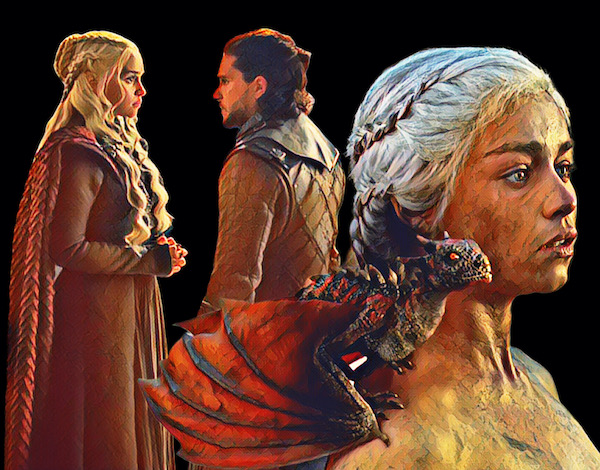
The discomfort lingers because we live in an era obsessed with retroactive corrections, alternate versions, and rewritten endings. Game of Thrones, however, ended in a brutally classical way: with mistakes, questionable choices, and irreversible consequences. There is no comfortable return from that — neither for the story nor for those who lived it from the inside.
Seven years later, stopping the complaints does not mean absolving the ending. It means acknowledging that the story is over, and that insisting on reopening it says less about the series and more about our difficulty in accepting imperfect endings.
Kit Harington has moved on. Perhaps it is time for Westeros to do the same.
Descubra mais sobre
Assine para receber nossas notícias mais recentes por e-mail.
 miscelana.com