
It’s hard to believe, but in 2027, Titanic will reach its 30th anniversary.
Three decades after its release, it remains something rare: a film that didn’t merely survive its own excess, but transformed that excess into language. It is not just a box-office phenomenon, nor simply a tragic romance that crossed generations. Titanic stands as a record of a moment when Hollywood still believed it was possible to bet everything — money, prestige, reputation — on an original story, author-driven, emotionally ambitious, and technically overwhelming.
Revisiting Titanic today also means revisiting an industry that no longer exists.
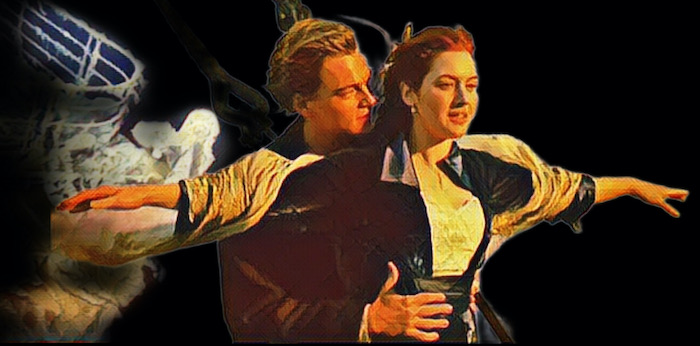
The project was born from James Cameron’s personal obsession. Long before he was known as a director of epic love stories, Cameron was fascinated by shipwrecks, engineering, depth, and silence. The real Titanic attracted him not as a romantic myth, but as a historical wound. He wanted to descend to the ocean floor, see the wreckage with his own eyes, and, more importantly, bring the audience with him. The romance emerged almost as a narrative Trojan horse: a way to turn historical data, blueprints, and fragmented testimonies into emotional experience. Jack and Rose never existed, but they function as witnesses. They are the human gaze placed inside a monumental event.
From the very beginning, Titanic seemed like a mistake waiting to happen. A lavish historical epic with no franchise, no pre-existing IP, an extended runtime, set almost entirely on a ship, and led by a director notorious for pushing limits. Still, Fox approved the project — and spent the following months trying to contain what increasingly looked like an inevitable disaster.
Filming began in 1996, largely in Rosarito, Mexico, where one of the largest sets in cinema history was built: an almost full-scale replica of the Titanic, installed inside a massive water tank. This was not merely a set; it was an industrial operation. Cameron demanded absolute precision. Water, extras, props, costumes — everything had to behave as it would have in 1912. The schedule stretched, the budget ballooned, and the atmosphere on set became legendary for its intensity. Actors spent hours in freezing water, the crew worked under constant risk, and accidents occurred. Kate Winslet fell ill. Cameron accumulated roles, slept little, and rewrote scenes overnight. There was a persistent sense that the film was spiraling out of control.

Before it even premiered, Titanic was already being treated by the press as shorthand for impending failure. Its cost surpassed 200 million dollars, an almost unthinkable figure in the 1990s. Fox split international distribution with Paramount to mitigate risk. Industry analysts said the film would need to become the biggest hit in history just to break even. Headlines labeled it “megalomaniacal.” Titanic became the ultimate example of what Hollywood should never do.
Then the film opened.
What no one predicted was the kind of success Titanic would become. There was no explosive opening weekend. Instead, there was something far more powerful: endurance. Audiences returned to theaters. They brought friends, mothers, and daughters. They rewatched it to relive specific scenes. Word of mouth transformed the film into an emotional ritual. Titanic stopped being just a release and became a shared experience.
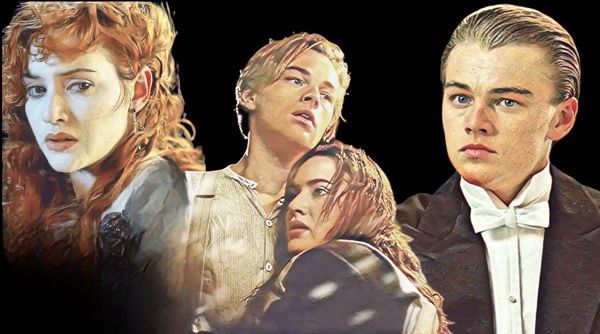
Leonardo DiCaprio emerged as the face of a generation. Jack Dawson became an archetype: young, poor, but free; sensitive, charismatic, curious rather than fearful of the world. The public response was immediate and overwhelming. Kate Winslet, meanwhile, delivered something rarer: a romantic heroine with agency. Rose is trapped by social expectations, by a strategic engagement, by a mother terrified of financial ruin. She doesn’t merely want love; she wants to exist. When Rose survives, she carries not only Jack’s memory but the choice to live as the person she became.
Their romance works because it is never isolated from its social structure. Class determines access, survival, and even who is deemed worthy of rescue. The sinking exposes this mercilessly. At its core, Titanic is a film about hierarchies. About who gets into lifeboats. About who remains locked behind gates. About how money tries to bargain even with death.
Controversies followed, as they always do when a film becomes ubiquitous. Critics accused it of excessive melodrama. The infamous debate over the floating door became a recurring joke. Cameron repeatedly clarified that the issue was never physical, but narrative: Jack dies because he has to. Because the story demands real loss. Because love, to endure, must cost something.

The numbers cemented the impossible. Titanic became the highest-grossing film in history for years, surpassing two billion dollars worldwide. It won 11 Academy Awards. It dominated VHS, DVD, and Blu-ray sales. It returned to theaters in multiple re-releases. It never truly disappeared.
And then there is the song. My Heart Will Go On almost didn’t happen. Cameron resisted the idea of a pop ballad over the end credits. The result was one of the most recognizable songs of the 20th century. Its opening notes still provoke an immediate emotional response. The song doesn’t merely accompany the film; it crystallizes its emotional memory.

Thirty years later, the Titanic’s legacy is twofold. It proved that emotion and spectacle are not opposites. That audiences will accept long runtimes when engagement is genuine. And, paradoxically, it taught Hollywood to be afraid. Few studios have since dared to give that level of freedom and financial risk to an original, author-driven vision.
Titanic endures because it speaks of love, yes, but also of time, choice, class, loss, and memory. It is not merely about a ship that sank, but about what we try to save when everything begins to collapse.
Perhaps that is why, three decades later, it still refuses to sink.
Descubra mais sobre
Assine para receber nossas notícias mais recentes por e-mail.
 miscelana.com