
It is still difficult to emerge from a state of shock. It took me time to fully grasp not only the fact that Rob Reiner died last Sunday, the 14th, alongside his wife, Michele, but above all, the brutality of how their lives came to an end: at the hands of their own son, Nick.
A week later, the initial impact is slowly giving way to a more structured—though still profoundly incomplete—understanding of what happened. There have been no spectacular twists, no revelations capable of altering the course of the investigation. What exists instead is a slow, procedural advance, typical of cases that are likely to become long, delicate, and legally complex.
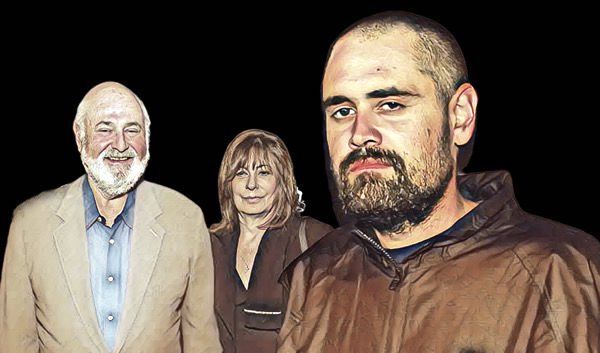
The official confirmation of a double homicide and the continued identification of Nick Reiner as the sole suspect remain the central pillars of the case. Held without bail, he awaits his arraignment as information about his mental state in the weeks preceding the crime gains space in the American press. Reports of recent medication changes and unstable behavior have begun to circulate more consistently—not as investigative breakthroughs, but as a preview of the strategy the defense is likely to pursue going forward.
In this context, the house in Brentwood has become an unavoidable symbolic element. More than a celebrity mansion, it is a property steeped in history—not only of classic Hollywood, but of Reiner’s own trajectory. Built in 1936, the residence originally belonged to Henry Fonda, who lived there in the 1940s, when Jane Fonda and Peter Fonda were still children. It was Henry who planted the garden that still defines the property’s identity today: trees and flowerbeds cultivated in the postwar years, during a moment of personal and emotional reconstruction following the dissolution of his marriage and amid the demands of a Hollywood that was still rigid, masculine, and deeply uncomfortable with vulnerability.
After Fonda, the house passed through a few hands until it was acquired in 1972 by Norman Lear. The creator of All in the Family—the series that introduced Reiner to a wide audience in the role of Mike “Meathead” Stivic—Lear turned the address into a space for intellectual and political exchange for nearly two decades. Reiner frequented the house long before imagining it as his own: he played tennis in the backyard, attended dinners, and discussed television, cinema, and politics there. Their bond was professional, emotional, and formative.
When Reiner purchased the property from Lear in the early 1990s, the choice was anything but casual. It was an almost symbolic gesture of continuity: the mentor’s home becoming the space where he and Michele would build their private life. Integrated into the landscape and sheltered by the garden planted decades earlier by Henry Fonda, the house represented exactly what Reiner always seemed to seek away from the screen—permanence, memory, discretion. It was there that the couple hosted close friends, shared unceremonious dinners, and maintained a routine that, to outside observers, appeared solid, almost immune to the chaos that so often surrounds public lives.

The funeral will be private and held over the course of the week, following the same logic of restraint. It will be a reserved farewell, without a public ceremony, without media tributes or long speeches. Family members and close friends will gather away from the cameras—a simple gesture, but one heavy with meaning in the face of such a brutal ending.
From here on, the case enters its most predictable—and paradoxically most protracted—phase. The initial hearing is expected to formally present the charges only in the first week of January, and all signs point to a process that will stretch on for months, perhaps years, especially if the defense insists on combining mental illness and substance dependency as its central line of argument. Until then, little is likely to change in terms of publicly available information.
There is a harsh irony in all of this. Rob Reiner built his career telling stories about human bonds, moral choices, family, and responsibility. He always protected his private life, keeping his distance from the industry’s permanent spectacle. In the end, it is precisely that intimate space—his home, his routine, his family—that becomes the epicenter of a tragedy impossible to recount without discomfort. A story without catharsis, without redemption, and, for now, without definitive answers.
Descubra mais sobre
Assine para receber nossas notícias mais recentes por e-mail.
 miscelana.com