
Few ballet characters are as instantly recognizable as the Sugar Plum Fairy. Before the first pas de bourrée, the audience already knows who she is, and much of that recognition comes from the music, but we can also argue that her costume too. More than stagewear, the Sugar Plum Fairy’s attire acts as a visual summary of each era, each ballet school, and each cultural idea of fantasy, femininity, and power.
Since her debut in The Nutcracker in 1892, the Sugar Plum Fairy’s costume has evolved alongside ballet itself, reflecting changing aesthetics and values while remaining deeply rooted in tradition.

Origins: Authority Over Sweetness
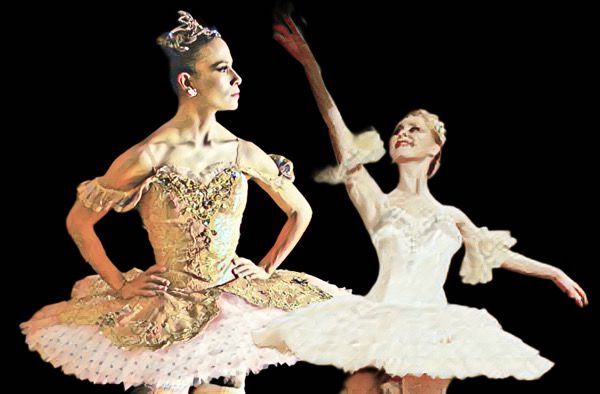
In the original Mariinsky production, the Sugar Plum Fairy was not overly decorative. Her classical tutu, delicately embroidered bodice, and restrained palette of pale pinks, whites, and silvers created a figure that was regal rather than childlike.
At the end of the 19th century, ballet was still closely tied to courtly traditions. The Sugar Plum Fairy emerged less as a whimsical confection and more as a sovereign presence, a calm and commanding ruler of a symbolic kingdom.
The Canonical Image: Mariinsky and Bolshoi
Throughout the 20th century, especially through the Mariinsky (formerly Kirov) and the Bolshoi, the Sugar Plum Fairy’s costume solidified into the image we now consider definitive:
layered tulle, visible crystal embellishments, pastel pinks and lilacs, and discreet crowns or tiaras.
At the Mariinsky, elegance and imperial lineage remain central. At the Bolshoi, everything is heightened — volume, sparkle, and theatrical impact. The costume mirrors the company’s philosophy: the Fairy does not merely preside; she commands the stage.

Balanchine’s Revolution: Less About the Costume, More About the Music
When George Balanchine staged The Nutcracker for the New York City Ballet in 1954, the Sugar Plum Fairy underwent a quiet revolution. Ornamentation was reduced. The tutu became lighter, shorter, almost austere.
Here, the costume does not compete with the choreography — it reveals it. The ballerina’s body becomes part of the musical structure. The Fairy is no longer decorative fantasy but pure musical embodiment.
European Refinement: Royal Ballet and Paris Opéra
At the Royal Ballet, the Sugar Plum Fairy gains emotional maturity. The costume is refined and restrained, emphasizing craftsmanship and subtlety over spectacle.
At the Paris Opéra Ballet, the look approaches haute couture: clean lines, sophisticated colors, and a sense of modernity within classical form. This Fairy is less literal, more conceptual — elegance over enchantment.
Contemporary Reinterpretations: From Pink to Symbol
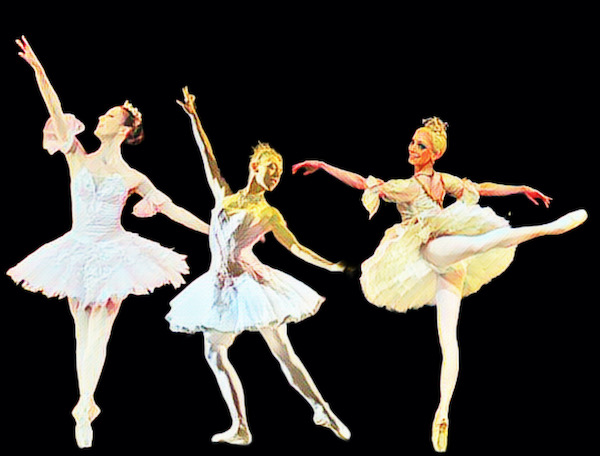
In recent decades, many productions have moved away from obvious pinks. Blues, silvers, champagne tones, and sheer fabrics reframe the character as mystical, abstract, and timeless rather than overtly “sweet.”
These costumes assume an audience already familiar with the story — viewers ready for reinterpretation rather than illustration.
So, Which Costume Is the Most Iconic?
Historically, culturally, and collectively, the most iconic Sugar Plum Fairy costume remains the traditional Russian model, shaped by the Mariinsky and magnified by the Bolshoi.

Not necessarily because it is the most beautiful or technically complex, but because it has become the shared mental image of the character. It appears in music boxes, illustrated books, Christmas displays, and childhood memories.
Balanchine revolutionized. Paris refined. Contemporary productions reimagined.
But it is the luminous, embroidered, pastel classical tutu that endures as the definitive symbol.
Perhaps because The Nutcracker itself is tradition in motion — and the Sugar Plum Fairy, dressed in tulle and music, remains its most lasting face.
Descubra mais sobre
Assine para receber nossas notícias mais recentes por e-mail.
 miscelana.com