
There is something quietly telling about the decision to release the trailer for Season 4 of Bridgerton on Christmas Day. Not merely as a gift to fans, but as a statement of intent. After three seasons exploring different romantic configurations — restrained desire, love shaped by duty, affection grown through patience, the series returns to the most archetypal romantic structure of all: the masquerade, the magical encounter, the woman who vanishes before the dream can settle. But this time, with full awareness that enchantment alone is never enough.

Season 4, released in two parts on January 29 and February 26, 2026, finally places Benedict Bridgerton at the center of the narrative. The bohemian artist, long positioned on the margins of family convention, steps into the spotlight — and not by accident. This is perhaps the season that most directly confronts romantic fantasy with the social systems that sustain it.
Where we left off
By the end of Season 3, the Bridgerton universe felt momentarily resolved. Daphne had found her footing, Anthony and Kate had transformed conflict into partnership, and Penelope and Colin had crossed the line between friendship and love. Benedict, however, remained suspended. While his siblings embraced marriage and responsibility, he lingered among studios, fleeting romances, and a carefully guarded refusal to commit. Not immaturity, but resistance.
Season 4 begins precisely there.

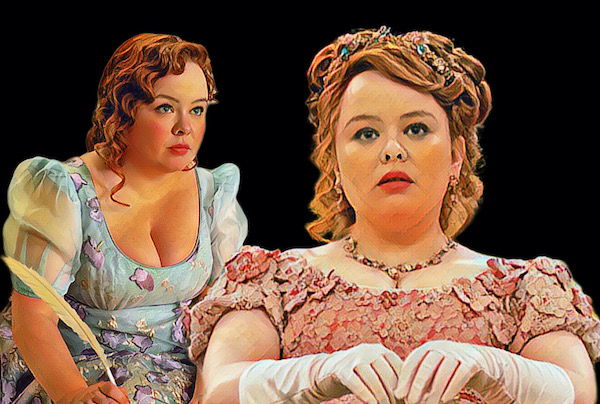
The plot
Inspired by An Offer From a Gentleman by Julia Quinn, the season openly embraces its Cinderella framework. In the very first episode, Benedict encounters the Lady in Silver at Violet Bridgerton’s masquerade ball. Framed beneath a colossal chandelier, she exists in a dreamlike suspension — a fantasy space where reality has not yet intruded.
But Bridgerton is less interested in the magical instant than in its aftermath.
The woman behind the mask is Sophie Baek, a resourceful maid, illegitimate and socially invisible. When fate reunites them, Benedict finds himself torn between two versions of the same woman: the idealized Lady in Silver and the tangible presence of Sophie. His inability to reconcile these images is not a narrative quirk — it is the thematic core of the season.
As Yerin Ha notes, Sophie’s obstacles are not merely emotional. They are structural. To love, for her, is always a risk bound to class and invisibility.
Fantasy versus reality
Showrunner Jess Brownell describes the masquerade as a “dream space,” a place where fantasy reigns. But Season 4 quickly pulls back the curtain, revealing the unseen labor that upholds aristocratic excess. For the first time, Bridgerton turns its gaze decisively toward servants, domestic hierarchies, and the quiet mechanics of privilege.
Luke Thompson frames the season as a struggle between old-school fairy tale romance and the real world. True love, the series suggests, happens not by denying this tension, but by enduring it.

New characters, familiar structures
The arrival of Lady Araminta Gun and her daughters Rosamund and Posy deepens the season’s social commentary. Araminta is a ruthless tactician of the marriage market. Rosamund understands Benedict’s symbolic value and pursues him accordingly. Posy, dreamy and out of step, becomes a softer echo of Sophie herself. Around the central romance, every relationship reflects the same question: who is seen, and who is overlooked.
A more introspective Bridgerton
Season 4 promises heightened sensuality, as well as greater introspection. The shift from grand ballrooms to spaces like My Cottage, Benedict’s countryside retreat, signals a movement from spectacle to intimacy — from performance to choice.
The central question is not whether Benedict will find Sophie. It is whether he can love her without requiring her to be someone else. Without the mask. Without the chandelier. Without the fantasy.
After stories about desire, duty, and longing, Bridgerton now seems ready to tell a story about perception — and the cost of mistaking fantasy for love.
Descubra mais sobre
Assine para receber nossas notícias mais recentes por e-mail.
 miscelana.com