
As published in Caderno B+
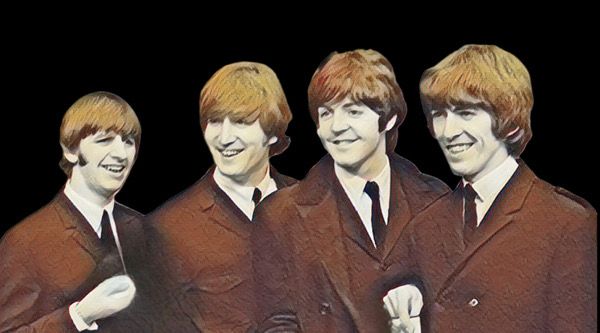
I want to steer clear of the obvious — but here’s a tip that works precisely because it’s obvious. If the idea is a quieter end of the year, less performative and more affectionate, few soundtracks are as reliable as The Beatles. Not only because their songs have crossed generations, but because the band’s story also became the story of how we learned to listen to, watch, and consume pop culture in the 20th century.
The Beatles were more than a musical phenomenon: they redefined the very idea of a group, of authorship, of youth, and of creative freedom. In film and television, their legacy is just as vast, and revisiting these movies and documentaries at the end of the year feels almost ritualistic. It’s not just nostalgia. It’s a reunion. It’s observing, with the distance of time, how four young men changed everything — and how we’re still trying to understand the scope of that impact decades later.
For those who want an end-of-the-year wrapped in memory, creative process, and living history, this is a possible itinerary.

The Beatles: Get Back (Disney+)
The myth dismantled, the process revealed
Directed by Peter Jackson, the series transforms what for decades was seen as the record of a band in collapse into something far more complex: an intimate portrait of creative work unfolding in real time. Get Back shows tension, exhaustion, and conflict, but also humor, affection, and raw brilliance. Its relevance lies precisely there: by humanizing the Beatles, the documentary restores life to a group that for too long had been treated as a monument.
Beatles ’64 (Disney+)
Beatlemania as a cultural phenomenon
This documentary focuses on the Beatles’ first visit to the United States, capturing the moment when the band ceased to be merely a British success and became a global earthquake. More than talking about music, Beatles ’64 observes the world’s reaction: hysteria, television, and the generational shock. Its relevance lies in documenting the birth of pop culture as a mass spectacle — something that still shapes artists today.
The Beatles Anthology (Disney+)
The band’s definitive self-portrait
For years, it was the canonical account of the Beatles’ history. Expansive, detailed, and narrated by the band members themselves, Anthology organizes their journey from beginning to end, contextualizing albums, breaks, and transformations. Its importance is historical: it’s the great official archive, the one that helps us understand not only what the Beatles were, but why they became an absolute reference.
Let It Be (Disney+)
The end observed without filters
Long treated as a melancholy and almost cruel film, Let It Be gained new layers after Get Back. Dry, direct, and sparing in explanation, it observes the band without mediation, without a comforting voice-over. Its relevance lies precisely in that starkness: a historical document that records exhaustion — and, paradoxically, the greatness — of a group at its limits.

McCartney 3, 2, 1 (Disney+ / Hulu)
A legacy explained by the one who built it
Here, Paul McCartney revisits songs, recordings, and creative choices alongside producer Rick Rubin. It’s less about chronology and more about process. The series’ relevance lies in close listening: understanding how seemingly simple songs carry complex decisions — and how the Beatles’ legacy remains alive in contemporary creation.
George Harrison: Living in the Material World (HBO Max)
The quietest Beatle — and the most radical
Directed by Martin Scorsese, the documentary reveals George Harrison as an artist in constant tension between fame, spirituality, and detachment. Less interested in spectacle and more in an inner search, Harrison emerges as the group’s critical conscience. Its relevance lies in broadening our understanding of what it meant to be a Beatle — and the personal cost of that condition.
John & Yoko: One to One (HBO Max)
Love, art, and politics without separation
The film revisits a specific period in the lives of John Lennon and Yoko Ono, when artistic creation and political activism were completely intertwined. Less idealized and more direct, the documentary is relevant for showing Lennon outside Beatle mythology, grappling with contradictions, excesses, and radical choices.
Descubra mais sobre
Assine para receber nossas notícias mais recentes por e-mail.
 miscelana.com