
For years, the idea of continuing Peaky Blinders lived in a hazy space made up of promises, conflicting interviews, and inflated expectations. There was, in fact, an original plan: the Shelby family saga was meant to end with the sound of the air-raid sirens of World War II. But reality — as so often in Tommy Shelby’s own trajectory — forced a brutal detour.
The death of Helen McCrory in 2021 changed everything. Polly Gray was not merely a central character; she was the moral, political, and emotional axis of the series. Her absence made any continuation of the pretended narrative stability impossible. Add to that the pandemic, the natural exhaustion after six dense seasons, and Steven Knight’s refusal to turn Peaky Blinders into a franchise that drags on by inertia. The result was a clear decision: there would be no seventh season. There would be a film. A full stop.
That film is titled The Immortal Man, and the title says far more than it seems.
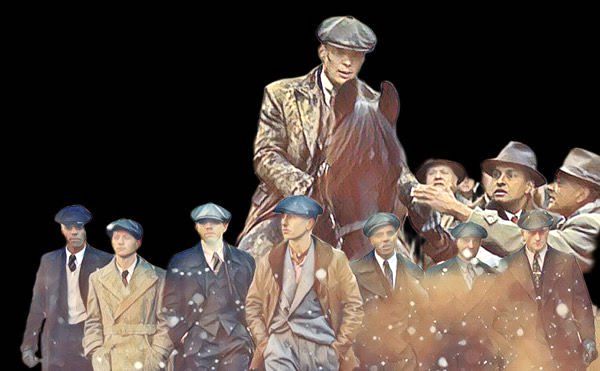
The idea of immortality has always hovered over Tommy Shelby. Not as a gift, but as a punishment. He survives wars, betrayals, family losses, mental breakdowns, and his own political ascent. Others fall; he endures. The “immortal man” is the one condemned to keep going when everything around him collapses.
Now, that condition is pushed to its limit.
Set in 1940, in the midst of World War II, the film pulls Tommy out of a self-imposed exile and throws him back into the heart of chaos. He is no longer the elegant gangster trying to legitimize himself in Westminster. He is a man confronted simultaneously by two collapses: that of the world in total war and that of his own legacy. The official synopsis captures the spirit of the series with brutal clarity: with the future of both family and country at stake, Tommy must decide whether to confront the demons he created or burn everything to the ground.
The time jump is crucial. It allows The Immortal Man to avoid being held hostage by absences or repetition. The film does not attempt to replace Polly, nor to artificially reconstruct the old dynamics of the show. Instead, it repositions Tommy on a larger, historical chessboard, where organized crime is definitively entangled with politics, war, and national reconstruction.
This is also why the film is conceived as a true ending. Cillian Murphy, returning not only as protagonist but also as producer, described the project as a “bookend”, a proper closing for more than 36 hours of television. Not nostalgia. Responsibility. A sense of duty to the audience that transformed Peaky Blinders into a cultural phenomenon.
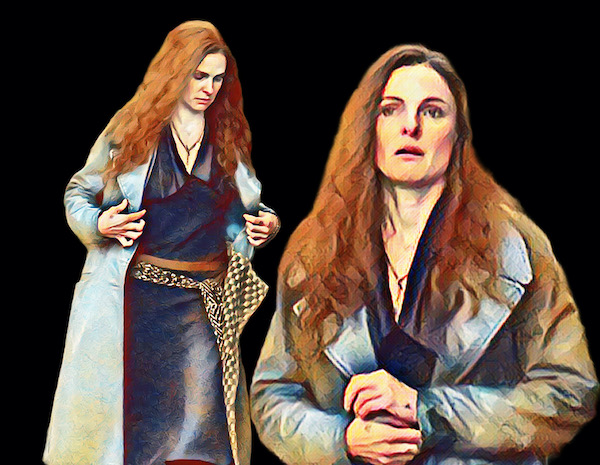

Direction is handled by Tom Harper, who helped shape the series’ original visual language, ensuring aesthetic continuity. The tone, however, promises to be different: tighter, more political, more existential. The Immortal Man shows little interest in repeating the familiar cycle of rise and fall. Instead, it asks a more unsettling question: what remains of a man who has won all the wrong battles?
The casting reinforces this sense of reinvention within the same universe. Alongside the return of Arthur Shelby, the film introduces new figures played by Rebecca Ferguson, Barry Keoghan, and Tim Roth, whose characters remain shrouded in secrecy, as befits a narrative intent on shifting power structures rather than reaffirming them.
There is also symbolism beyond the screen: the film will premiere theatrically in March 2026 before arriving on Netflix on March 20th. Peaky Blinders ends as it began: large-scale, stylized, fully aware of its cultural weight. Cinema, not television. Event, not season.
This does not mean the end of the universe that Steven Knight created. On the contrary, new stories set in the 1950s, focused on the reconstruction of Birmingham and a new generation of Shelbys, have already been confirmed. But The Immortal Man makes one thing clear: that is another conversation. Another cycle. Another era.
This film exists to close a very specific question: who is Tommy Shelby when the world that defined him no longer exists?
Perhaps the answer lies in the title itself. Immortality is not glory. It is a prolonged survival. And in Peaky Blinders, survival has always come at a devastating cost.
Descubra mais sobre
Assine para receber nossas notícias mais recentes por e-mail.
 miscelana.com