
For those who pay attention, the foreshadowing in Stranger Things has always been there: in Mr. Clarke’s classroom (beloved by Erika and Dustin), in the book Holly reads obsessively (A Wrinkle in Time), in the rules of Dungeons & Dragons, and in throwaway lines of dialogue. But, like the characters themselves, connecting all the dots perfectly was never easy; even our guide and translator, Dustin, got it wrong. And of course, that is part of what makes the series the phenomenon it is.
Stranger Things has always liked to teach us through repetition. For years, we referred to the Upside Down as “another world” with comforting ease: a parallel dimension, a rotting mirror of Hawkins, a territory where evil existed in almost geographic terms. It was a functional explanation — efficient, even elegant. But Volume 2 of the final season does something rare for a long-running series: it doesn’t just raise the stakes. It changes what those stakes actually mean.
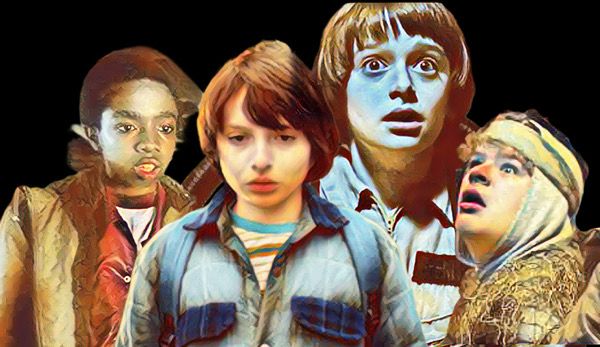
The penultimate episode is not grand in the classic sense. It is, above all, an episode that explains. It explains because it must. With a supersized finale looming, the series needs to tell us, with precision, exactly what is about to be destroyed; the ending cannot land emotionally.
The initial victory — making it through the MAC-Z gate with the entire group intact — is small and provisional from the start. There is no catharsis. Only relief. And in Stranger Things, relief almost always precedes pain. The atmosphere that settles in is not one of momentum, but of unease. Eleven feels it. Kali knows it. Something will go wrong, even if everything goes right.
This is the moment when the series finally changes its vocabulary. The Upside Down is not a world. It is not an autonomous dimension. It is not a “place” in the full sense of the word. It is a wormhole. A bridge. An unstable corridor between two points in space and time. It exists to connect, not to exist on its own.
That conceptual shift reorganizes the entire mythology of the show. The Upside Down becomes what it always was, even before we had the language for it: an open wound. A tear that allows passage — and, precisely because of that, contaminates both sides.
The real “other world” now has a name: the Abyss. It is where Eleven sends Henry when she expels him from the Rainbow Room. It is where he hides while he cannot be found. It is where he fuses, definitively, with horror. The Upside Down comes later, when Brenner forces Eleven to search for Henry in the sensory-deprivation tank, and she makes contact with what lies beyond. That contact creates the bridge. The bridge becomes a permanent structure. Ever since, Vecna and his creatures have been using that corridor to move back and forth.
This distinction is crucial because it clarifies Vecna’s final plan. He does not simply want to invade Hawkins. He wants to merge worlds. He wants to pull the Abyss into our reality, weakening both sides until they collide. This is not gratuitous destruction; it is replacement. He believes he is saving the world by remaking it.
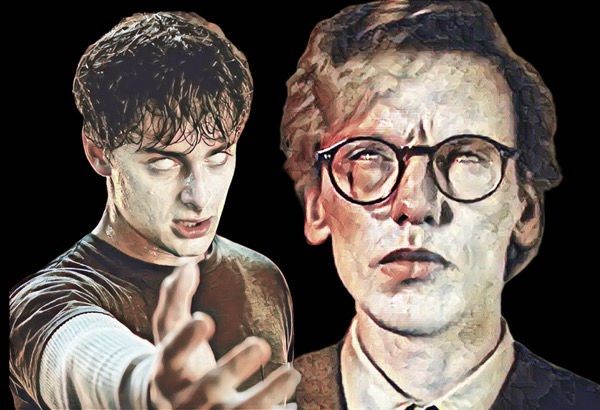
That is why Henry’s speech to the kidnapped children is so disturbing. He does not present himself as a villain, but as a solution. He speaks of the “black thing” from A Wrinkle in Time, compares himself to a hero who has found the light capable of expelling darkness. He calls the children “perfect vessels” because they are easy to shape, easy to convince, and easy to turn into instruments. Will was the first amplifier. Now he wants twelve. Twelve connected minds. Twelve aligned consciousnesses. Enough psychic energy to move worlds.
Nothing illustrates this logic more clearly than the moment when Holly almost escapes. She runs, crosses what seems to be a territory that is no longer Hawkins, finds a gate in the ground, and jumps. For an instant, everything points to a fall back into our world. She screams. She is close. She calls for her sister. Nancy runs to the rooftop and sees the body falling from the sky. And then the gravity of the Abyss asserts itself. Vecna catches her midair and returns her to the place of the vessels. The image is brutal because it is precise: attempting to return already means being caught in the pull of the other side.
With everyone gathered at the radio station, the series lays bare the scale of the problem. This is no longer a battle on familiar ground. It is a battle for access. They need to reach a place that is, by definition, unreachable. They need to climb two thousand feet into the air. They need to enter the Abyss. They need to kill Vecna, rescue the children, and come back: all before the worlds merge.
When Hopper, in desperation, jokes about a magic bean, Stranger Things delivers one of its smartest moves: the plan comes from Steve Harrington. Operation Beanstalk works because it is ridiculous and coherent at the same time, just like the series itself. The radio tower, which once seemed like the setting for a silly rivalry early in the season, reveals itself as an endgame piece. It does not reach the Abyss yet. But it will, once the Abyss is close enough. Once the convergence allows the tower, in the Upside Down, to pass through a rift and become a ladder. A beanstalk made of metal, fear, and timing.

From that point on, everything depends on interruption. Eleven enters Vecna’s mind, the spell is broken, the worlds stop drawing closer, and the team climbs into the Abyss to rescue the children. Dustin adds the final layer: afterward, a timed bomb will destroy the bridge. The Upside Down collapses. The Abyss is isolated. The end.
In theory.
In practice, anyone who has ever watched television knows the metallic taste of the word “timer.” Someone always gets left behind. And this is where Kali turns the plan into a moral dilemma. For her, killing Henry is not enough. The cycle must be stopped. As long as Eleven exists, the State will try to use her. Dr. Kay will be replaced. New programs will be created. New portals will be opened. A happy ending is a fantasy. The only real solution, according to Kali, is total erasure: dying with the bridge.
The final look between Eleven and Kali carries that weight. Even if they win, something irreversible may be demanded. The end of the Upside Down may mean the end of those who sustain it. And none of the others — with the partial exception of Hopper — realize that a pact has been made.
Amid this colossal game board, the series still finds room for what has always set it apart: the human. Max wakes up and reunites with Lucas, not as a miracle, but as a promise kept. Dustin and Steve are healing the open wound left by Eddie’s death, understanding that what was missing was not courage, but presence. And Will.

Will’s coming out is not a detour from urgency; it is a direct response to Vecna’s method. Vecna dominates because he enters the mind, because he exploits fear, shame, and secrecy. Defeating him requires removing that raw material. Will understands that remembering happy things is not enough. He must face fear until it loses authority. He must say out loud what the monster uses as a shackle. The group hug is not a narrative pause. It is a declaration of war. Vecna promises isolation. They answer with permanence.
In the end, Volume 2 makes one thing clear: the Upside Down was never about monsters. It was about what happens when a wound is left open for too long. It was about crossing boundaries that should never have been crossed. And now, on the eve of the final episode, the question Stranger Things leaves us with is not whether Hawkins will be saved.
It is those who will have to remain on the other side when the bridge finally falls.
Descubra mais sobre
Assine para receber nossas notícias mais recentes por e-mail.
 miscelana.com