
As we enter 2026, talking about Hollywood inevitably means talking about awards, at least until March, when the Oscars close the season. But before predictions, ballots, or betting pools take over, some artists are already confirmed recipients of major honors. Among them is Sarah Jessica Parker, the 2026 honoree of the Carol Burnett Award.
It is true that recent memory immediately brings us to And Just Like That, a continuation that sharply divided audiences. Still, the choice felt obvious to some, questionable to others — and that is precisely why it makes sense. The Carol Burnett Award does not exist to crown flawless careers, but to recognize presences that endure over time: even when they stumble, even when they fail, even when they insist on occupying space in an industry that changes without asking permission. In that sense, Sarah Jessica Parker asserts herself.
Her career does not rest on a single role, but it is impossible to pretend there was no clear before and after Carrie Bradshaw. And perhaps the core of this award lies exactly there: when a character ceases to be merely a role and becomes cultural language, the actress who sustains it carries something greater than success. She carries historical responsibility.


Before Carrie: a solid but scattered career
Before becoming the face of a television generation, Parker built a long and curiously uneven career. She began as a child in theater — Annie — moved through teen films such as Footloose and Girls Just Want to Have Fun, and later appeared in adult cinema, mostly in supporting roles or mid-range projects (L.A. Story, Ed Wood, Honeymoon in Vegas).
She was a recognizable, respected actress, but never a central one. Something was missing. An axis. A character capable of reorganizing everything retroactively — as often happens when careers, belatedly, find the right role.
That role arrived in 1998.
Sex and the City: when television changed its subject — and its protagonist
Sex and the City was not merely a success. It was a turning point. The series helped redefine what adult television could openly discuss — female desire, friendship between women, money, loneliness, aging, poor decisions — without defaulting to moralization.
Carrie Bradshaw was not an example. She was a walking contradiction. Vain, insecure, brilliant, selfish, generous, childish, lucid — often all at once. And from the beginning, Sarah Jessica Parker understood something essential: Carrie had to be played without defense. She was not a character to be “saved” by the actress, but exposed by her.
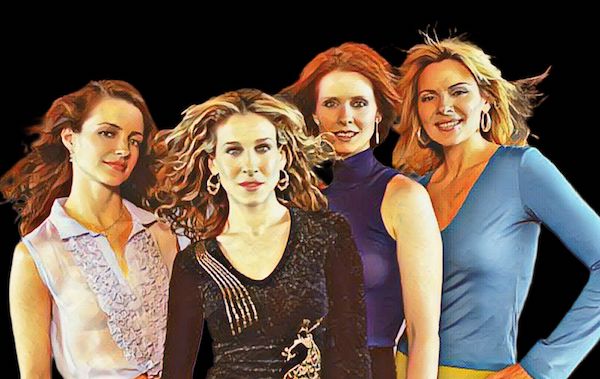
The result was historic. Parker won four Golden Globes for Sex and the City. The series won three consecutive Globes for Best Comedy. More than that, Carrie became an aesthetic, narrative, and symbolic reference. Fashion ceased to be mere wardrobe and became text. New York stopped being a backdrop and became a character. The weekly column turned into a dramatic device.
Television was never quite the same afterward, especially for female protagonists.
The burden of surviving one’s own myth
The problem with creating something so defining is that everything that follows is inevitably measured against it. And this is where the most uncomfortable areas of Parker’s trajectory emerge, the ones the Carol Burnett Award does not ignore, but incorporates.
In Divorce, she attempted to step away from Carrie’s glow and invest in a bitter comedy about the end of a marriage. The result was competent, but muted. It lacked risk. It lacked the spark that transforms observation into cultural diagnosis. Divorce was never a failure, but it was never essential either.
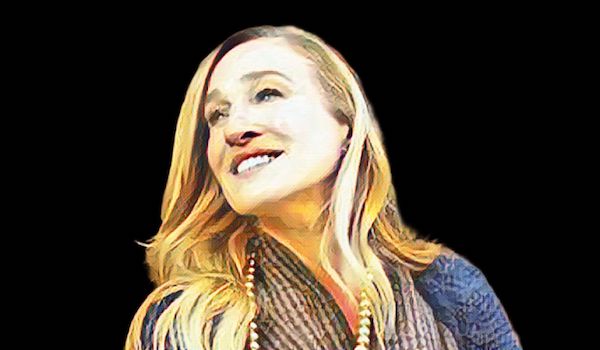
And Just Like That, however, carries a heavier burden: revisiting a phenomenon without managing to update it with the same organic force. The series succeeds in acknowledging time — aging, grief, displacement — but falters in execution, in its anxiety to correct itself, in the sense that it is constantly responding to external criticism rather than listening to its own characters.
And yet — perhaps this is the most honest point — the impact remains.
Because even when And Just Like That fails, it does so in public. It generates debate, frustration, analysis, rejection, and defense. It continues to be watched, discussed, and scrutinized. That is not irrelevant. It is cultural centrality under strain, something very different from obsolescence.
What the Carol Burnett Award truly recognizes in Parker
The Carol Burnett Award does not mean that Sarah Jessica Parker has had a perfect career. It is saying something more interesting: that she helped structure a central axis of modern television — and that this axis continues to be challenged, revisited, and questioned, often by her own work.
Just as Carol Burnett redefined women’s space in prime-time comedy, Parker helped redefine the space of the adult woman as a complex, flawed, desiring protagonist in premium television. One opened the door to command the stage. The other, to occupy the center of the narrative without asking permission or absolution.
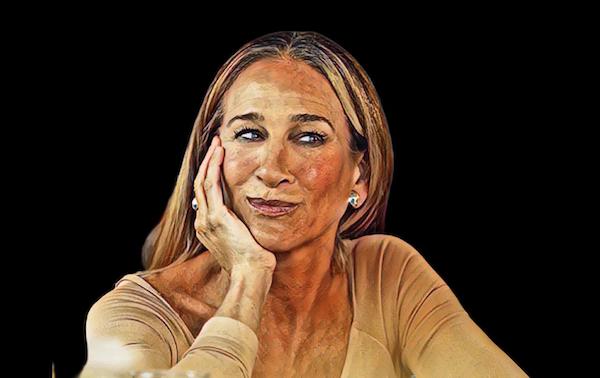
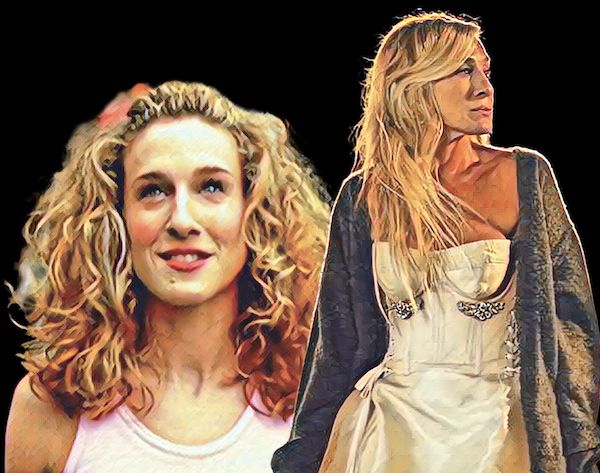
Legacy, in the end, is not about always getting it right. It is about the remaining part of the conversation as times change. It is about continuing to serve as a reference even when the present is uncomfortable. It is about carrying a character — and everything she represents — knowing she no longer belongs only to you.
Carrie Bradshaw belongs to the history of television. And Sarah Jessica Parker, whether we like her most recent projects or not, belongs to that same chapter. That — not nostalgia — is what the Carol Burnett Award recognizes.
Descubra mais sobre
Assine para receber nossas notícias mais recentes por e-mail.
 miscelana.com