
For more than a decade, Marvel told a continuous story in a way cinema rarely manages to sustain. It was not merely a sequence of films connected by Easter eggs, but a cumulative narrative project with a clearly defined beginning, middle, and end. That ending arrived with Avengers: Endgame, which closed the Infinity Saga and, with it, a model of storytelling built on accumulation, payoff, and consequence. The real challenge was never ending that story, but figuring out what could plausibly come after it.
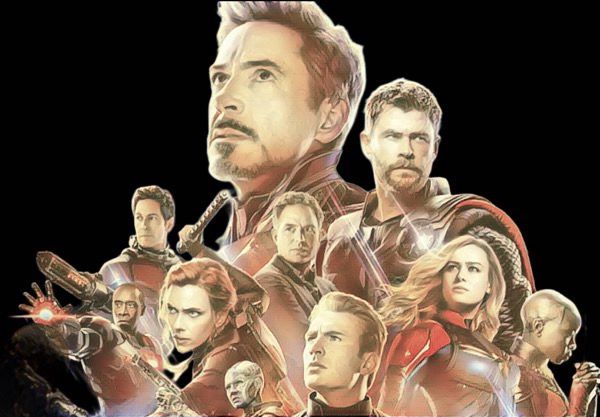
Endgame did not simply conclude an arc. It removed from the center of the board characters who functioned as emotional and symbolic pillars. Tony Stark, Natasha Romanoff, and Steve Rogers did not leave because of convenience or creative fatigue, but through definitive dramatic closure. Their deaths and farewells are canonical and irreversible within the MCU’s main continuity, which industry shorthand often calls a “hard death.” By honoring that promise of consequence, Marvel also created a narrative void that proved difficult to fill. The franchise lost the genius who organized chaos, the sacrifice that gave moral weight to decisions, and the symbol that offered ethical direction.
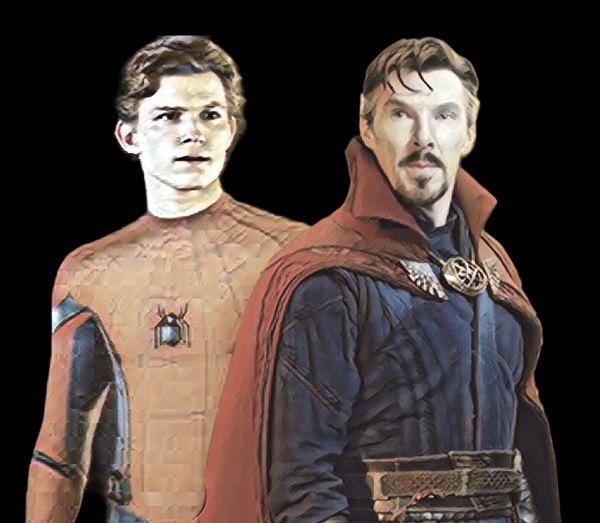
The phase that followed tried to answer that void by expanding the universe in two directions at once. The series arrived, designed to deepen secondary characters and explore themes such as grief, identity, and power with greater intimacy. At the same time, the multiverse was introduced as the franchise’s new structural engine. Films such as Spider-Man: No Way Home and Doctor Strange in the Multiverse of Madness established, officially, that multiple realities coexist and that those realities can collide. From that moment on, the central conflict stopped being merely physical or moral and became systemic.
The side effect of this choice was fragmentation. For casual viewers who do not follow every series or treat each release as mandatory, the MCU began to feel like a universe in constant expansion without a clear center. In the films, there is currently no formal Avengers team in operation. There is no leadership capable of replacing the symbolic role once held by Tony Stark or Steve Rogers. Nor is there a consolidated central antagonist organizing the threat of the current saga. The multiverse is a known problem, but not a controlled one, and this places the MCU at a very specific narrative stage: the interval between the collapse of an old system and the attempt to construct a new one.
This loss of axis becomes even more evident when looking at the villains introduced after Thanos. For years, Marvel built antagonists as long-term forces, capable of sustaining multiple films. In the more recent phase, that approach unraveled. Villains were presented as structural threats and discarded too early, before they could mature dramatically. Others were reworked so often that they lost coherence. The most emblematic case is Kang. Planned as the central pillar of the Multiverse Saga, Kang depended entirely on the presence of Jonathan Majors, who portrayed his many variants. When Majors was fired by Disney following a criminal conviction related to assault and harassment, the impact was immediate and undeniable. This was not a matter of interpretation or fan speculation: the project collapsed because of an external factor, and the villain vanished from the narrative center because the studio was forced to redraw its plans. Kang was not defeated in a classical sense; he was emptied out by a backstage crisis that made sustaining him as a long-term axis impossible.
At the same time, some bets did work, albeit in isolation. Loki, reshaped by the series that bears his name, became more narratively relevant after his death than he had ever been before, precisely because he began operating at the structural level of the universe. Wanda Maximoff gained emotional depth and complexity, even if her arc was ultimately closed in a rushed and controversial way. These successes, however, did not add up to a cohesive whole. They remained islands of interest in an increasingly scattered archipelago.
Other characters and subplots were simply left behind. Political consequences teased in earlier films were never fully explored. The global response to the existence of gods, aliens, and reality-altering beings remains superficial. Moral debates raised during the Infinity Saga were sidelined in favor of speed and content multiplication. These are not mysteries waiting for future resolution, but conscious choices to move forward, even at the cost of weakening the sense of purpose.

It is within this context that the comics return less as nostalgia and more as a source of structure. When systems fail, and heroes prove insufficient, Marvel’s comics often turn to figures who do not represent chaos, but the unsettling promise of order. Among them, none is more recurring or more complex than Doctor Doom. Doom is not a destructive villain in the classic sense. He is a ruler and a strategist, someone who believes that humanity’s problem is not a lack of power, but an inability to manage it. In the comics, he has already saved reality, ruled what remained of it, and occupied roles traditionally associated with heroes when he deemed it necessary. His function is not to be defeated and discarded, but to persist as an alternative form of order when previous models collapse.
This repertoire speaks directly to where the MCU finds itself today: a universe that still functions, but is politically and morally unstable, and in need of a new axis.
It is also within this landscape that the name Robert Downey Jr. resurfaces so insistently. Here, separating fact from speculation is essential. There has been no official announcement confirming his return to the MCU, nor his casting as Doctor Doom. What exists is a clear reading of market logic and cinematic language. Downey was the face of Marvel’s first era, and any mention of him immediately carries symbolic weight. The relevant question is not whether an actor can return after playing a defining hero, but whether the narrative can sustain that return without becoming hostage to nostalgia.
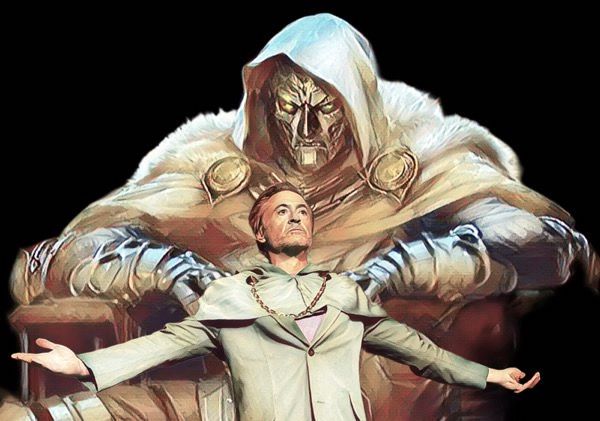
In the comics, the connection that part of the fandom points to between Doom and Tony Stark is not literal, but conceptual. Both occupy similar intellectual territory, defined by absolute confidence in their own reasoning, faith in technological solutions, and a willingness to override others “for the greater good.” The difference lies in moral trajectory. Stark learns to pull back. Doom never accepts external limits. It is this thematic proximity, not any identity equivalence, that makes the idea discussable. Doom does not need to be a variant of Tony Stark, and treating him as such would impoverish both characters. The mask, constant in the comics, exists precisely to separate the actor from the role should this path ever be taken. Even so, the risk is evident: the audience projecting Stark onto Doom and reducing a complex antagonist to a distorted echo of a fallen hero. Avoiding that would require a cold, controlled approach without emotional shortcuts, something Marvel has not always shown it can maintain.
At this point, a question inevitably resurfaces among more attentive viewers: if the multiverse exists, why don’t Tony Stark and Natasha Romanoff have parallel versions walking around somewhere? Why are their deaths still treated as definitive when reality itself is plural? Once again, the answer is not scientific or rooted in lore, but narrative. The MCU deliberately established that the story we are following is anchored to a specific continuity, often referred to as Earth-616. Within that line, death must carry weight because it is what defines consequence. Parallel versions may exist elsewhere, but they are not interchangeable without collapsing the emotional logic of the saga.
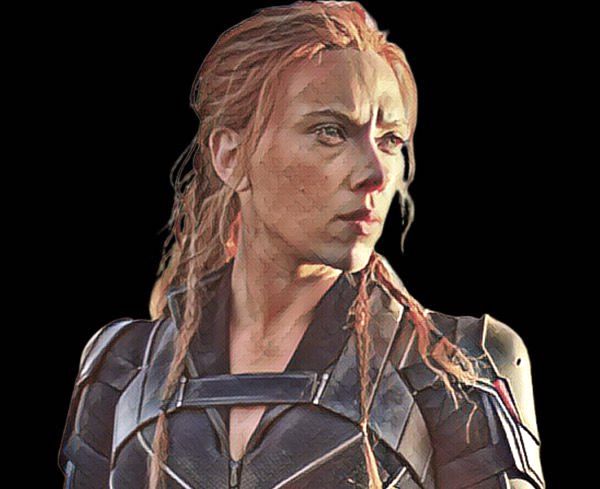
In Natasha’s case, there is an additional backstage detail often oversimplified. Scarlett Johansson indeed entered a public legal dispute with Disney over the hybrid release of Black Widow during the pandemic, a case involving breach of contract that ended in a financial settlement. That happened and was widely reported. But Natasha did not die because of that conflict. The decision to end the character in Endgame was made earlier and was creative and structural, conceived as part of the saga’s closure. The dispute merely sealed that ending, making any later return of the actress as the character unnecessary and unlikely, even in more flexible multiverse contexts.
This distinction helps clarify Marvel’s current moment. Some characters disappeared because entire projects collapsed due to unpredictable external factors, as happened with Kang. Others remain absent because the narrative demands that they remain absent, as is the case with Natasha and Tony Stark. Mixing these categories creates confusion, especially when the multiverse seems to promise infinite solutions. The MCU, however, has drawn a line. The multiverse exists, but it does not exist to erase consequences or function as an emotional eraser.
Marvel now finds itself in a late but necessary period of adjustment. After experimenting too much and scattering its narrative in multiple directions, the studio needs to recentralize its universe. This is not about repeating the past or resurrecting symbols for comfort, but about deciding what kind of order replaces the one that ended with Endgame. The discarded villains, the characters that endured, the abandoned threads, the backstage disruptions, and the deaths that remain untouched all point to the same conclusion: the MCU is no longer simply about saving the world from destruction. It is about deciding who has the right to shape it once survival itself is no longer the central question.
The Return of Steve Rogers, Thor, and the X-Men
In recent months, this process of reorganization has gained new momentum through a wave of buzz surrounding teasers, controlled leaks, and persistent rumors about brief appearances in Avengers: Doomsday. These are not official confirmations, but they clearly signal how Marvel tests audience response before committing to irreversible narrative decisions.
Among the most discussed names are Thor and Captain America, also known as Steve Rogers. Thor’s presence, if it happens, is hardly surprising. He remains the last major active link to the MCU’s founding era, a character who has crossed every phase of the franchise and carries with him memories, continuity, and a mythic scale. A brief appearance in Doomsday would function less as nostalgia and more as a marker of transition: the definitive closing of a generation that survived the original collapse.
Steve Rogers occupies a different, far more delicate position. The rumors do not suggest a full return or an undoing of his farewell in Endgame, but rather a limited appearance, possibly as a variant, a memory, or a moral reference point within a multiverse in crisis. Even the mention of the character reignites debate, because Steve was never just a hero. He was an ethical compass. Bringing him back in any form requires surgical precision to avoid weakening the meaning of his original exit.
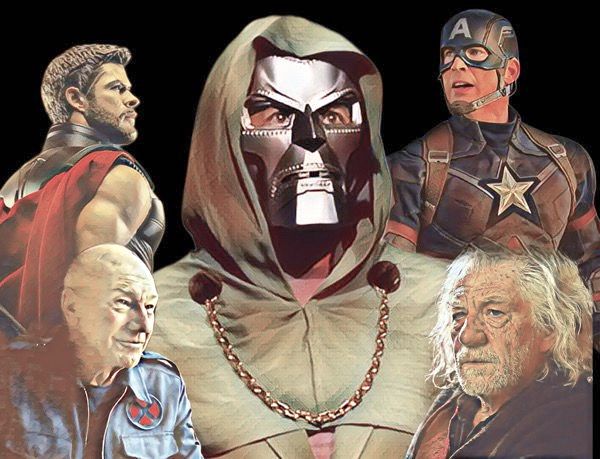
The third focal point is even more symbolic: the possibility of appearances by the original X-Men, tied to the pre-MCU era. Here, the move is clearly strategic. It is not about formally introducing mutants into the MCU yet, but about acknowledging, within the cinematic text itself, that Marvel has a history beyond the MCU, one that the multiverse now allows the franchise to touch. These appearances would act as bridges rather than solutions, preparing the ground for a more organic integration down the line.
What all these rumors share is the absence of any suggestion of long-term or permanent returns. The goal is not resurrection, but calibration. Familiar faces and symbols are being used as narrative stabilizers, not as shortcuts. Marvel seems increasingly aware that the multiverse cannot sustain a saga on novelty alone. It needs memory, contrast, and recognizable figures to help audiences understand where the emotional center of the story still lies.
If Doomsday truly operates on this register, with carefully controlled, limited appearances, it may function not as a nostalgic catharsis but as a fine-tuning of the franchise’s axis. Not to suggest that everything comes back, but to clarify what is being left behind — and what can finally move forward.
Descubra mais sobre
Assine para receber nossas notícias mais recentes por e-mail.
 miscelana.com