
In nearly 100 years of the Academy Awards, it is certain that more than once there has been deadlock, or, simply, injustice. In the ceremony’s 98-year history (completed in 2026), there have been only two ties in the acting categories: in 1932, with Frederic March and Wallace Beery, when the rules were still confusing, and in 1969, with Barbra Streisand and Katharine Hepburn. But for anyone passionate about Hollywood history, nothing compares to this day to the Best Actress race of 1950.
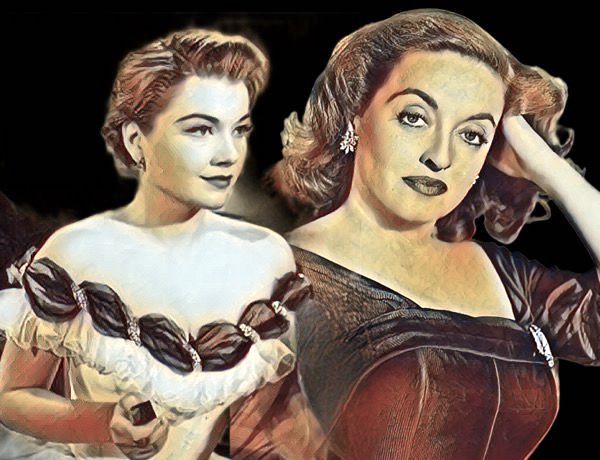
That year is often cited as the strongest competition in the category’s history. Gloria Swanson delivered one of the most iconic performances in cinema, Bette Davis was at the height of her dramatic maturity, Anne Baxter embodied ambition in its rawest form, yet it was Judy Holliday who won with an extraordinarily intelligent comedy. To this day, the debate oscillates between “mistake” and “boldness” on the Academy’s part. Here’s my personal take: for me, it should have been another tie, and not between Baxter and Holliday.
When Hollywood Didn’t Know What to Choose
Although 1939 is often labeled “Hollywood’s greatest year,” and 1975 is remembered as a moment of political turning point, the 1950s are a far more uncomfortable mirror of the present (2025) than we usually admit.
Cinema in the early 1950s stood at once at the height of its symbolic power and under structural threat. It was a massive, confident, technically sophisticated industry, but one that already sensed the world around it was changing too fast. And yes: television was deeply unsettling.
While cinema was still the primary form of collective entertainment, television had already emerged as a concrete threat. In 1949, fewer than 10% of American households owned a TV set; within just five years, that number jumped to over 60%. By 1960, television had entered nearly every living room, offering a powerful alternative for entertainment from the comfort of the couch. For that reason, the 1950 Oscars can be seen as the last ceremony under the near-total dominance of the big screen. And what a year it was.
The films in contention were All About Eve, Sunset Boulevard, The Heiress, Battleground, and Twelve O’Clock High. Also strongly represented in other categories were Born Yesterday, Caged, The Third Man, Champion, and White Heat. How could anyone be fair in the face of so many classics?
More than 75 years later, there is still no consensus. It was a year in which the Academy was forced to do something rare: compare performances that did not belong to the same idea of cinema, the same conception of womanhood, or the same possible future for Hollywood.
That is why, unlike so many retrospective debates, 1950 has not aged poorly. It has aged restlessly.
The “worst” category of all was precisely Best Actress. The five nominees were not competing for the same award. They were competing for the meaning of the award itself.
Veterans and Newcomers
Bette Davis arrived in 1950 with All About Eve as someone reclaiming the center after being pushed to the margins. Hollywood had already tried to discard her, labeling her difficult, old, and unviable. Margo Channing is born precisely out of that awareness. There is no naivety in this performance. Davis did not portray the fear of aging; she portrayed the intelligence of someone who knows that aging in Hollywood is a carefully executed project of erasure. Every pause, every razor-sharp line, every slightly exaggerated gesture carries the weight of someone who understands the rules of the game better than those who pretend to control it. And it’s always worth remembering: Margo was only 40 years old.
There is a lesser-known curiosity worth noting. Davis refused any attempt to soften Margo. She insisted that the character be witty, cruel when necessary, and profoundly lucid. She wanted no easy redemption. This refusal helps explain why the performance became so frequently cited — and, paradoxically, so difficult to reward. The Academy still did not know what to do with women who did not ask for empathy.
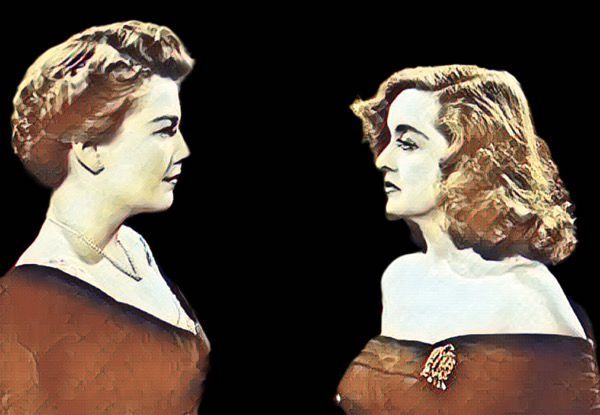
In the same film, Anne Baxter constructed Eve Harrington as a product of silent ambition. Unlike classic villains, Eve does not enter the story as a threat; she offers herself as a mirror. Baxter worked with strategic restraint: the voice slightly too low, the calculated gaze, the smile that lingers a second too long. Her performance has aged interestingly, because today we recognize in Eve a type of female character contemporary cinema has fully embraced — the woman who manipulates systems, not individuals. In 1950, however, Baxter paid an invisible price: splitting votes with Davis and portraying a female ambition that still needed to be narratively punished.
Yes, the person who “took” the Oscar (which many argue Davis deserved) was her own co-star. Not coincidentally, studios to this day go to great lengths to avoid having two actors from the same film competing in the same category. Had Baxter, as the “ascending” figure, been placed in Supporting Actress, would history have changed? We will never know.
Meanwhile, Gloria Swanson did something radically different in Sunset Boulevard. Norma Desmond is not merely a character in decline; she is the embodiment of the star system gazing at itself with horror and nostalgia. Swanson embraced exaggeration as language, not as a flaw. Every gesture that feels too large is deliberate; every theatrically charged look is a reminder of a cinema that no longer existed. Reports from the time suggest many voters felt deeply uncomfortable with the film precisely because of this; it placed them inside the narrative not as spectators, but as accomplices to a system that discards its idols.
It is difficult to overstate the impact of that in 1950. To award Swanson would have meant validating a critical gaze on Hollywood at the height of its self-confidence. Today, the performance is considered canonical, but at the time, it seemed to look backward when the industry desperately wanted to look ahead. Not coincidentally, the 2025 Oscar race between Demi Moore and Mikey Madison was compared to 1950: The Substance was sharply precise in its critique of youth obsession; a newcomer in a romantic comedy felt safer.


Amid all this, Eleanor Parker is often forgotten, perhaps the most unjustly ignored presence in the race. In Caged, Parker moves through the female prison system without glamour or promise of moral redemption. Her transformation over the course of the film is not uplifting; it is corrosive. Parker understood that incarceration not only breaks bodies, but identities. It is a physical, progressive performance, nearly documentary by the standards of the time. Many contemporary critics recognized its power, but the Oscar was not yet ready to reward such an unromanticized female realism.
And then there is Judy Holliday, too often reduced, unfairly, to the “light option.” Born Yesterday is a comedy, yes, but Holliday builds Billie Dawn as a process. Her character learns. She learns publicly, by making mistakes, by being underestimated. What makes the performance extraordinary is not the humor itself, but the precision with which intelligence emerges without disrupting comedic rhythm. Nothing here is improvised in the loose sense of the word; it is an exercise in timing, intonation, and pause.
There is a revealing curiosity: Holliday came from the theater and had originated Billie on stage, adjusting the character based on audience reaction. When she transitioned to film, she refined the work, making the transformation less explicit and more organic. The result is a performance that seems simple, and precisely because of that, deceives.
Holliday’s victory is often labeled a surprise. That says more about our historical prejudice against comedy than about the Academy’s decision. Among five proposals for female cinema, Holliday’s offered something rare: transformation without tragedy, intelligence without punishment, growth without annihilation. It was an elegant response to an impasse that had no perfect solution.
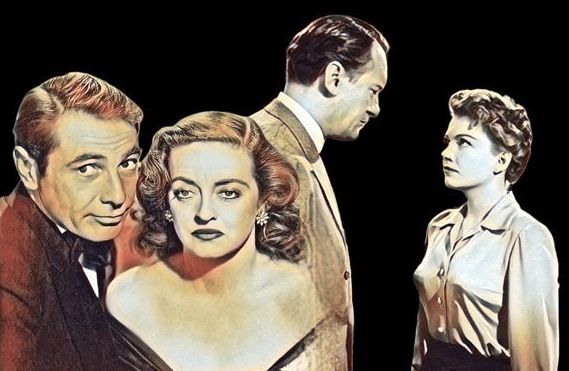
What makes 1950 singular is not the impossibility of identifying a single “correct” winner. It is the fact that all the alternatives remain correct, depending on the question being asked. Do we want to reward the confrontation with aging? Davis. A critique of the star system? Swanson. Modern female ambition? Baxter. Radical social realism? Parker. Comic intelligence as emancipation? Holliday.
Few Oscar years allow for this kind of reading without collapsing under the weight of hindsight. 1950 endures because it refuses closure. It remains a rare portrait of a moment when Hollywood, perhaps without realizing it, placed not only actresses in contention, but the future of female performance in cinema itself.
That is why it still matters. Not as an answer, but as an open question. And in my view, we lost the chance to make history and eternally honor the legendary Swanson and Davis, each with an Oscar.
Descubra mais sobre
Assine para receber nossas notícias mais recentes por e-mail.
 miscelana.com