
One of the creative minds behind Radiohead, guitarist and composer Jonny Greenwood has become one of the most admired figures in contemporary film music — another rock musician whose move into soundtracks has produced a genuine, lasting impact on cinematic language. As is often the case, major directors tend to work repeatedly with composers they trust (Spielberg/Williams; Burton/Elfman; Nolan/Zimmer; Fincher/Reznor–Ross). In the case of Paul Thomas Anderson, Greenwood doesn’t just fill that role — he has become a structural part of the director’s authorial identity.
From the beginning, their collaborations have been consistently praised. Still, some artists have a straightforward relationship with the Oscars: nomination, campaign, win, speech. Jonny Greenwood has never belonged to that group. His film career is defined by friction — with the image, with the audience, and, above all, with the classical idea of what a film score is supposed to be. Perhaps that is why his absence from the Oscar winners’ list says less about Greenwood himself and more about the limits of the Academy. That may finally change in 2026. According to many critics’ forecasts, the score for One Battle After Another has emerged as a clear frontrunner across the season’s major bellwethers, from the Critics’ Choice Awards to the Golden Globes, even in a highly competitive year.

Since Bodysong (2003), his first fully authorial film score, Greenwood made it clear that decorative music was never his goal. His scores do not guide emotion; they occupy physical space. But it was with There Will Be Blood that this aesthetic project became unavoidable. The music does not accompany Daniel Plainview’s rise — it makes it uncomfortable. Abrasive strings, obsessive repetitions, threatening silences. Nothing seeks immediate empathy. It is a score that interferes, confronts, and refuses to remain invisible.
The paradox begins there. There Will Be Blood won the Critics’ Choice Award, earned major European honors, charted commercially, became an academic reference point, and was described by Rolling Stone as part of “a sonic explosion that reinvented what film music could be.” Hans Zimmer famously called it “recklessly, crazily beautiful.” And yet, the score was deemed ineligible for the Oscar due to the use of pre-existing material. A technicality that became a founding myth: the work that changed the game was excluded from the game’s most visible contest.
Greenwood’s partnership with Paul Thomas Anderson continued to deepen this confrontational logic. In The Master, he pushes dissonance and obsessive rhythm even further, openly engaging with twentieth-century European art music. Not coincidentally, this is the period when he draws closer to Krzysztof Penderecki, one of his most important influences. The album that brings together Penderecki’s compositions with Greenwood’s own work is not an academic detour — it confirms that Greenwood’s musical thinking is far closer to contemporary European composition than to Hollywood’s symphonic tradition.
Even when he flirts with something seemingly more accessible, Greenwood never abandons discomfort. In Inherent Vice, he uses an unreleased version of “Spooks,” a Radiohead track never officially issued, reinforcing a sense of uncanny familiarity — something recognizable yet perpetually out of place. Nothing here exists to passively package nostalgia.
With Phantom Thread, Greenwood reaches a rare kind of poisonous elegance. The score sounds classical, almost romantic, but carries a constant undercurrent of unease, perfectly aligned with the protagonist’s obsession and control. It earned Greenwood his first Oscar nomination, along with major recognition elsewhere, including an Ivor Novello Award win. The Academy Award, however, went to Alexandre Desplat for The Shape of Water.
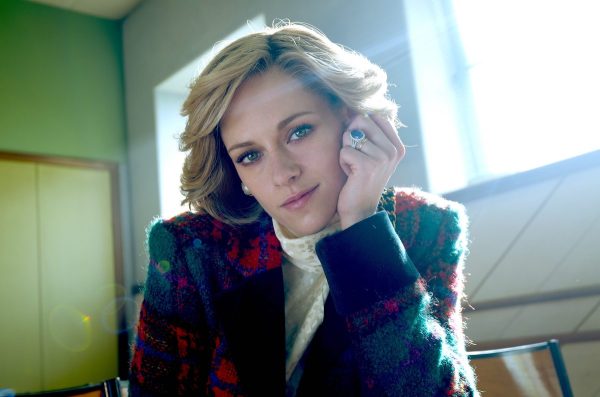
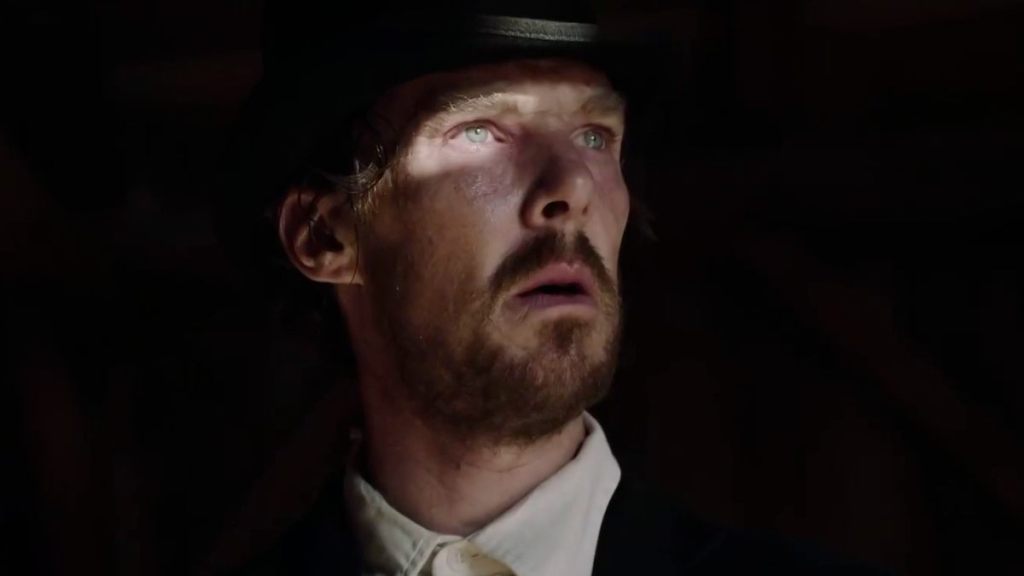
The pattern repeated. Greenwood was nominated again for The Power of the Dog, a score that reinvents instruments, treats the cello like a banjo, incorporates software-controlled player piano, and sustains a relentless sense of generic tension. He lost once more — this time to Hans Zimmer for Dune. During the same period, Greenwood composed Spencer, where Baroque and jazz collide as a sonic metaphor for Diana’s emotional confinement. Widely nominated and awarded outside the Hollywood mainstream, the score failed to make the Oscar shortlist, once again exposing the Academy’s discomfort with more radical musical proposals.
Greenwood is consistently recognized: Oscar, BAFTA, Golden Globe, Grammy, Critics’ Choice, Satellite Awards, and Hollywood Music in Media Awards. But he tends to win where music is judged as language, not as emotional effect — at the British Independent Film Awards, the Ivor Novello Awards, the World Soundtrack Awards, and the Berlin Film Festival. He is not overlooked; he is selectively rewarded, most often outside Hollywood’s most traditional frameworks.
His discography makes this unmistakable. The scores for There Will Be Blood, The Master, Inherent Vice, Phantom Thread, You Were Never Really Here, Spencer, The Power of the Dog, and now One Battle After Another are not disposable seasonal products. They are released on vinyl, CD, and digital formats by respected labels, chart commercially, remain in print, and are performed in concert halls. Greenwood hasn’t built a résumé — he has built a coherent body of work, with aesthetic continuity spanning more than two decades.

That may be precisely why the Oscar has hesitated for so long. The Academy still responds most readily to music that organizes the viewer’s experience, underlines emotion, and delivers clear catharsis. Greenwood writes music that disorganizes, creates friction, and leaves uncomfortable residue. The recognition is there — the nominations prove it — but final consecration has always seemed to slip away.
This time, however, the landscape is different. With One Battle After Another, Greenwood enters the season not as a cult outsider but as a declared frontrunner across much of the awards conversation. Whether the statuette finally arrives remains to be seen. But one thing is already clear: in the short-term logic of awards season, the Oscar may hesitate — in the long arc of film history, Jonny Greenwood has already won.
Descubra mais sobre
Assine para receber nossas notícias mais recentes por e-mail.
 miscelana.com