
Hollywood will show up. It will smile for the cameras. It will celebrate the return of the Golden Globes’ “good energy” after years of crisis. And, almost certainly, it will repeat a ritual as predictable as it is revealing: making jokes about foreign journalists—their accents, their habits, their supposed “strangeness,” their allegedly questionable taste—while unashamedly accepting the trophies, the red carpet, the attention, and the symbolic legitimacy that the very same association provides.
To me, this has always sounded like something beyond humor. It is not just irony. It is a kind of structural xenophobia wrapped in affection—the “good-natured roast” that would never be aimed at American critics, nor at the popular vote, nor at the industry’s own peers. Critics may be wrong. Audiences may be fickle. But the foreign press, historically, becomes the punchline.
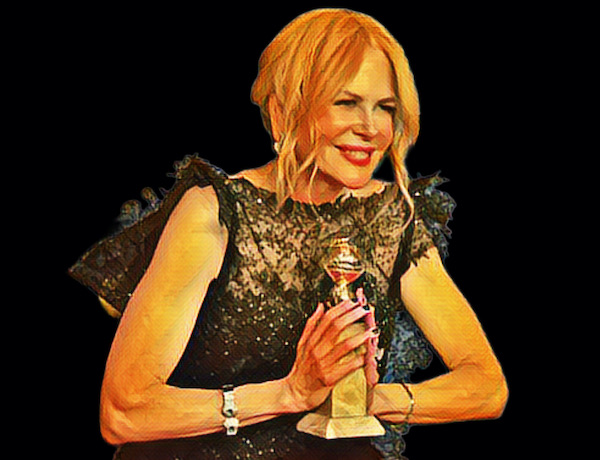

The examples are far too numerous to be a coincidence. Speeches that mock “heavy accents,” “broken English,” “European bad taste,” or supposed cultural incomprehension. Hosts who turn the HFPA into an exotic character: a curious, displaced, almost folkloric audience. Very few winners resist the temptation to turn the institution that consecrates them into an easy target—always with the caveat that it is “just a joke,” “with affection,” “nothing personal.”
But that is precisely where the gesture reveals itself. Power is not mocked without consequence; only what is already perceived as peripheral becomes fair game. The Golden Globes may be coveted, but their voters have never been treated as equals. And that says a great deal about Hollywood.
The industry’s relationship with the Golden Globes has always been ambivalent. On the one hand, it is an unparalleled showcase: the first major party of the season. This red carpet inaugurates campaign narratives, the award that organizes the race to the Oscars and the Emmys. On the other hand, it is constantly delegitimized: allegedly erratic voting, celebrity favoritism, a lack of critical rigor, and institutional opacity. What is striking is that this mistrust never turns into rupture. On the contrary, everyone keeps going, posing, and thanking. The method is criticized, but the stage is enjoyed. Authority is questioned, but the seal of approval is accepted. And, almost always, the criticism is aimed not at the awards system as a whole, but at the foreign origins of those who make it up.
It is not that the Golden Globes are free of problems. They never have been. Since their consolidation in the postwar period, they have occupied a peculiar place: less solemn than the Oscars, less “artistic” than European festivals, more informal, more televisual, more permeable to studio marketing. Over the decades, they have accumulated accusations of aggressive lobbying, conflicts of interest, lack of diversity, questionable voting, and opaque governance. The credibility collapse in the early 2020s did not come out of nowhere. It merely exposed an old problem: a powerful award without the level of scrutiny demanded of comparable institutions within the United States. The response was the promised “renewal”: governance changes, an expanded voting body, ethics rules, a restructured broadcast model, and brand repositioning. A genuine effort at survival.
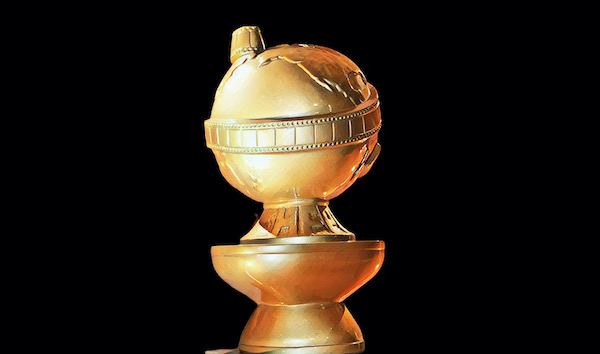
Yet it is impossible to ignore how much that crisis also revealed something deeper: Hollywood’s discomfort with the fact that one of its main stages of international legitimation is not controlled by Americans.
There is a clear asymmetry in the kind of humor practiced there. No recurring jokes are made about the public’s “cultural ignorance,” nor about the supposed elitism of American critics. Nor is a caricature built of the Oscars, the SAG Awards, or the People’s Choice. The preferred target is “the foreigners.” The refrain is always the same: “they don’t get us,” “they like strange things,” “they talk funny,” “they don’t really know what’s good.” The subtext is just as constant: the center of culture is American; the rest merely looks on from the outside. This dynamic turns an international institution into a kind of exotic mascot and reinforces a symbolic hierarchy: Hollywood as the norm, the world as variation. It is not open hostility. It is worse: structural condescension.
We arrive at this 2026 edition with the Golden Globes still in the process of rebuilding its identity. The ceremony wants to prove that it is modern, ethical, relevant, connected to a global market, and to an industry in transformation. It wants to be, once again, the beginning of awards season, not an embarrassing footnote. What we are likely to see tonight is a carefully rehearsed narrative of renewal and credibility, a visible effort to balance cinema and streaming, blockbusters and auteur work, Hollywood and the international market, alongside speeches about diversity, belonging, and a “new moment.” And, very likely, the old conditioned reflex: jokes about the HFPA, about accents, about “weird foreigners,” as if the past could be exorcised through humor.


The awards will remain strategic. They serve to legitimize favorites early, reposition campaigns, and take the industry’s temperature. The Golden Globe does not decide the Oscar, but it shapes the conversation. It organizes expectations. It creates narratives of consensus, of momentum, of the underdog. The risk is that, in its eagerness to prove normalcy, the ceremony will repeat the very codes that made it problematic: celebrating diversity in rhetoric while reinforcing, in form, an old cultural hierarchy.
The Golden Globes have always been an uncomfortable mirror of Hollywood. A coveted and derided prize. An elegant party laced with irony. A stage of consecration where the jury itself becomes the joke. In 2026, amid its renewal, the question is not only whether the institution has become more ethical or more representative. It is deeper: is Hollywood willing to treat the foreign press as a legitimate part of its ecosystem, or will it continue to use humor as a way to maintain distance and superiority? Because there is nothing innocent about accepting the trophy, applauding the party, and at the same time ridiculing those who grant it. Perhaps the true maturity of the Golden Globes will lie not only in new rules or new voters, but in the day when that joke ceases to be automatic.
Descubra mais sobre
Assine para receber nossas notícias mais recentes por e-mail.
 miscelana.com