
We spend the entire year complaining about how predictable awards shows have become. About the feeling that everything is decided before the red carpet even begins, that the favorites walk into the room already knowing they’ll walk out with a trophy. In 2026, however, that predictability had a rare flavor for Brazil: for once, it worked in our favor.
The Golden Globes ended with a clear portrait of the season and, for the second year in a row, that portrait placed Brazil at the center of the narrative. Wagner Moura won Best Actor in a Motion Picture – Drama for The Secret Agent, making history, and the film also took Best Motion Picture – Non-English Language. It wasn’t a fluke. It wasn’t a symbolic gesture. It was a victory within the industry’s own logic, in what is traditionally the toughest category of the night.
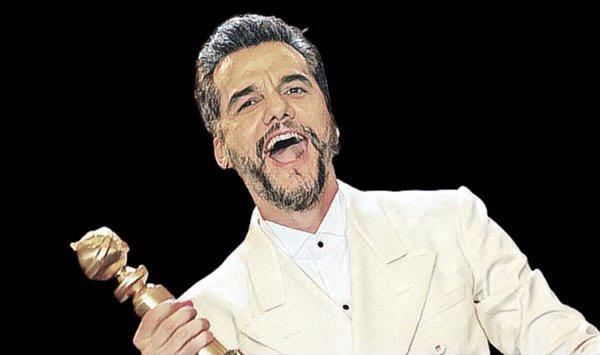
The impact of this sequence is hard to overstate. In 2025, Fernanda Torres had already won Best Actress in a Drama. In 2026, Brazil returns to the main stage, now with a celebrated actor and a dense, political film set during Brazil’s dictatorship. Moura’s speech was direct: memory, generational trauma, values that endure through difficult times. It wasn’t a prize despite the subject. It was a prize because of it. For the first time in a long while, we were not treated as an exotic exception but as part of the center of the conversation.
If Brazil represented confirmation, the night’s biggest surprise came with Hamnet winning Best Picture – Drama. Anyone who reads my columns knows this is an “Oscar film,” one that always had potential, but the race was clearly between Sinners and One Battle After Another, leaving Hamnet with the look of a dark horse. In practical terms, nothing really changes. The 2026 OOscarsalready seem largely mapped out. What the foreign press award confirms is Hamnet’s strength within the year’s top five.
The film’s victory was accompanied by another decision that had already been taking shape behind the scenes: Jessie Buckley won Best Actress in a Drama for her performance, definitively consolidating her position as one of the Oscar frontrunners.


The shape of the night becomes even clearer when you look at the full set of winners. And there were some surprises. I myself had been betting on Amy Madigan for supporting actress, but Teyana Taylor looked just as shocked as the rest of us when she won. Stellan Skarsgård took Best Supporting Actor for Sentimental Value, effectively ending any real hope of Frankenstein breaking through with Jacob Elordi. I don’t know if these wins will change the Oscar outcome, but they certainly made the night more interesting.
Paul Thomas Anderson confirmed his dominance by winning both Director and Screenplay; Timothée Chalamet took Best Actor in a Musical or Comedy for Marty Supreme; Sinners won Cinematic and Box Office Achievement and Original Score; KPop Demon Hunters won Best Animated Feature and also took Original Song for “Golden.” And, as I predicted back in January 2025, Rose Byrne would return from Berlin with strong momentum. It happened: she won Best Actress in a Musical or Comedy for If I Had Legs I’d Kick You. Today, she is the main “threat” to Buckley, though I’m not sure how decisive that threat really is.
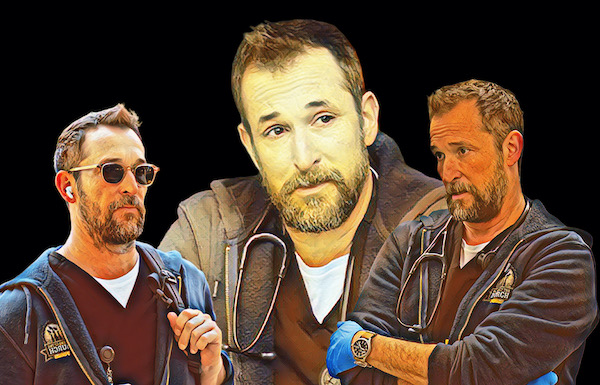
On television, The Pitt was named Best Drama Series and earned Noah Wyle the award for Best Actor in a Drama Series. My unpopular take remains: even as a good show, it is “not all that.” There were more original and more impactful options. For example, Rhea Seehorn won Best Actress in a Drama Series for Pluribus, a series far more discussed than just “another hospital drama.”

As expected, The Studio won Best Musical or Comedy Series and secured Seth Rogen the Best Actor award in the category. Jean Smart won Best Actress in a Musical or Comedy for Hacks, and Adolescence won Best Limited Series, dominating the acting categories. In a way, the victory of the absent Michelle Williams as Best Actress in a Limited Series for Dying for Sex was a surprise. She is magnificent, no one denies that, but it wasn’t a hugely popular series. It was curious.
Another absent winner was Ricky Gervais in the television stand-up category, and in the debut of the new award, Good Hang with Amy Poehler won Best Podcast.
The speeches and gestures of the night helped set the tone. Nikki Glaser, who delivered a strong opening and steered the ceremony smoothly, closed the show with a visual tribute to Rob and Michele Reiner, wearing a This Is Spinal Tap cap and quoting lines from the film, blending mourning and pop culture with the precision the Globes tend to have when they want a memorable closing image.
And about the party itself: for the first time in many years, no one made jokes about the foreign press. The world really is international now. It no longer made sense. Aside from the fact that the only winner who was played off the stage with music was, fittingly, Kleber Mendonça Filho, who took a little too long in his speech, the ceremony was surprisingly smooth.
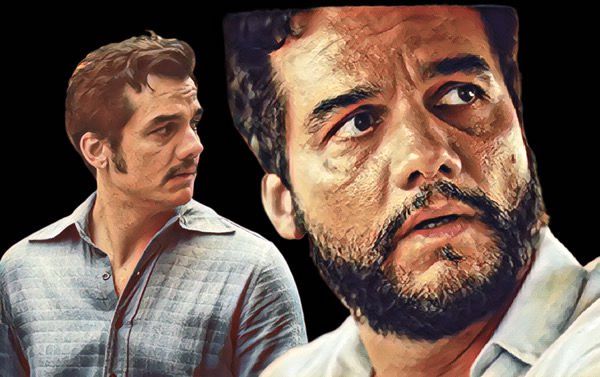
It was a great night for Brazilian cinema, one that guarantees narrative and relevance. Wagner Moura leaves not just as a winner, but as someone the industry has chosen to embrace in one of the most competitive races of the year. The Secret Agent may already look like the year’s “announced winner,” but Wagner still needs to be among the five Oscar nominees. I’m betting he will be, even in a year that seems to belong to Timothée Chalamet.
That is why, even with a long season still ahead, the night was historic for Brazil not only because we won, but because we won again. Because what once was an exception is beginning to feel like continuity. The predictability that so often excluded us this time said exactly what we wanted to hear. In 2026, the favorite also spoke Portuguese.
Descubra mais sobre
Assine para receber nossas notícias mais recentes por e-mail.
 miscelana.com