
Until March, Wagner Moura’s public life is a carefully choreographed parade: awards, red carpets, back-to-back interviews, studio campaigns, and the familiar ritual of awards season that turns the artist into a narrative. But behind the image of consecration, what emerges is something less glamorous and far more revealing: a great deal of work. Not a celebratory hiatus, not a pause befitting an “international star,” but an intense, methodical phase of production, almost industrial in its discipline.
This moment is rare because it is not merely symbolic. Wagner enters 2026 with five projects already confirmed, two of them in post-production—that is, ready to enter the world—and three others in early stages, outlining the next arc of his career. Recognition has not put him in waiting mode; on the contrary, it has become leverage for a phase of authorial and political expansion.
The most advanced title is 11817, in post-production, with a release planned for 2026. Directed by Louis Leterrier, it is a large-scale science-fiction project with elements of horror, designed for the global circuit. In the cast, Wagner shares the screen with Greta Lee. This is Wagner in international showcase mode, inserted into studio cinema, engaging with popular genres and a clearly industrial logic. It is not a “smaller” film within his trajectory; it is proof that he now occupies a rare space: that of an auteur actor who is also a marketable name.
Also in post-production is The Last Day, in which he plays a character named Peter. The project maintains a more reserved profile but points toward a restrained, dramatic register, with potential for the festival circuit before commercial release. (So far, details about the cast beyond Wagner have not been widely disclosed.) It represents the other pole of his current phase: less spectacle, more emotional density. The coexistence of these two films—one large-scale, one more intimate—already says much about how Wagner organizes his career: not by categories of prestige, but by a balance of language and impact.
At the other end of the timeline is Last Night at the Lobster, in pre-production, and perhaps the most significant project in terms of artistic identity. Here, Wagner not only acts: he directs and produces, assuming full creative control. The adaptation of Stewart O’Nan’s novel, produced by Killer Films (Christine Vachon), is a drama about work, exhaustion, and dignity—one last shift before a restaurant closes. The cast includes his two Apple TV+ co-stars, Elizabeth Moss and Brian Tyree Henry, reinforcing the sense of an author-driven project in the making. There is no spectacle, no pyrotechnics: there is humanity under pressure. It is a clear gesture of maturity: using the symbolic capital he has earned to make a cinema of observation, political in form and theme, without slogans.
Also in pre-production is Angicos, a Brazilian project whose title carries historical weight. The reference to the episode that marked the death of Lampião suggests a film about memory, power, and state violence—territory Wagner knows well and, more than that, deliberately chooses to inhabit. So far, the full cast has not been publicly announced, but Moura’s involvement signals a project of artistic ambition and political density. After The Secret Agent, returning to a narrative tied to Brazilian history does not feel accidental, but coherent: it is not about “going back to his roots,” but about reaffirming a through-line.
Finally, Say Her Name, also in pre-production, extends this same commitment into an international context. The title, charged with meaning within movements for racial justice in the United States, points to a project of strong social density. Here, he works alongside Alicia Vikander, Victoria Pedretti, Sinclair Daniel, Ezra Barnes, and Conrad Ricamora. The framing of the project places it squarely within a body of work that interrogates violence, collective trauma, and institutional responsibility—themes that have run through Wagner’s recent filmography with rare consistency.
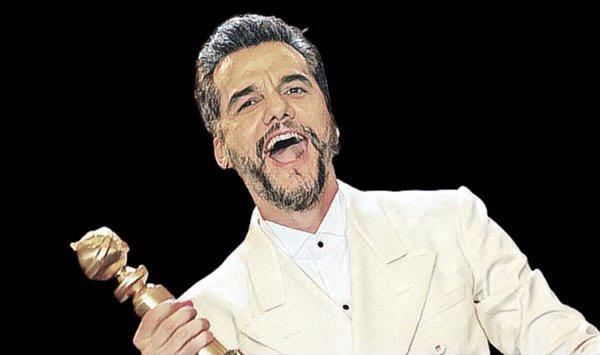
What unites these five projects is not genre, scale, or market, but a fundamental choice: not to step away from the work while the world applauds. Until March, he will be in the spotlight—making history as the first Brazilian actor to win at Cannes and the Golden Globes, and, at the same time, on sets, in editing rooms, and at pre-production meetings. Awards and campaigns shape the public narrative; the films define the actual trajectory.
Wagner Moura is living through one of those moments when a career could easily become comfortable. He chooses the opposite. Between the spectacle of consecration and the discipline of creation, it is clear which of the two truly defines him.
Descubra mais sobre
Assine para receber nossas notícias mais recentes por e-mail.
 miscelana.com