
Chadwick Boseman’s death in 2020 was not merely unexpected. It was structurally destabilizing. Rarely in recent film history has a loss struck at once the popular imagination, a billion-dollar franchise, and an entire generation that had just found, on screen, a hero who was also a symbol. This was not simply the passing of an actor, but the interruption of an artistic and political project that was still expanding.
In November 2026, Boseman would have turned 50. In August, his absence will reach six years. Between these two markers, there is not only the passage of time: there is a career that reached the center of global culture and was cut short precisely as it began to redefine its own limits.
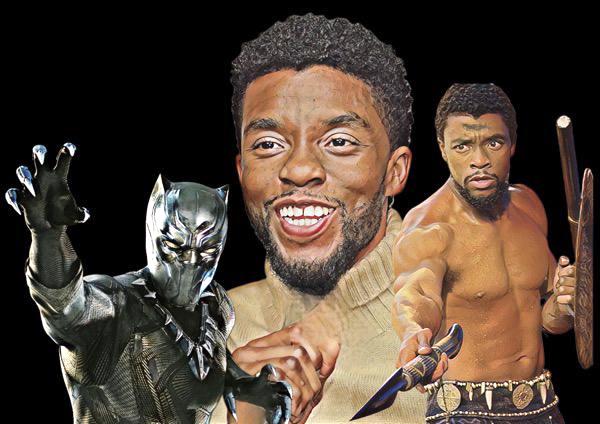
Chadwick Boseman did not emerge as a star. He was educated at Howard University, one of the most important historically Black universities in the United States, and studied directing, playwriting, and classical theater. He began by writing and staging plays, more interested in structure, language, and character construction than in exposure. That intellectual foundation never left him. Even as he moved into television and film, his work carried the sense of a project: choices that were not random, but cumulative.
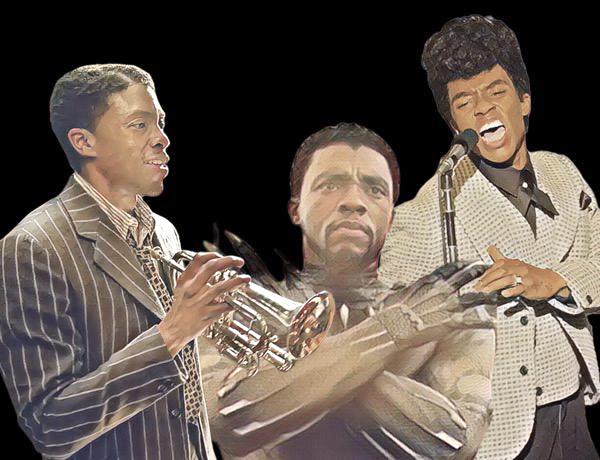
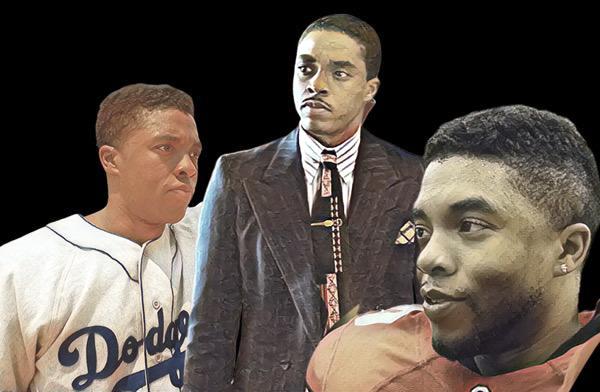
His film career is organized around a very clear axis: portraying Black historical figures who had been underrepresented or reduced to footnotes. Jackie Robinson in 42 (2013), James Brown in Get On Up (2014), Thurgood Marshall in Marshall (2017). Three central figures in American history, three roles that demanded not only charisma but symbolic responsibility. Boseman never played them as “illustrated biographies.” There was always a control of tone: an effort to turn icons into men, and men into political figures without turning the gesture into rhetoric.
It is impossible to separate this trajectory from the fact that only became public on the day of his death: since 2016, he had been living with advanced-stage colon cancer. He filmed, trained, did press tours, built one of the most important characters in contemporary cinema, while undergoing surgeries, chemotherapy, and hospitalizations. His silence was neither marketing nor image management. It was a choice of privacy—and, more than that, of autonomy over his own body and his own narrative. He refused to turn illness into a public identity.
It is in this context that Black Panther (2018) takes on another dimension. The film’s success is well known: over $1.3 billion at the box office, seven Academy Award nominations, three wins, a cultural landmark that went beyond the logic of “representation” to become a phenomenon of belonging. Wakanda was not merely a setting; it was an exercise in political imagination: an African nation never colonized, technologically advanced, aesthetically sovereign. The impact was not only symbolic. Black Panther shifted the center of gravity of the blockbuster, proving that a film led by a predominantly Black cast, with a specific cultural identity, was not “niche,” but universal.
At the heart of that earthquake was T’Challa. Chadwick Boseman built the character through restraint rather than grandiosity. His Black Panther is not the expansive hero, nor the charismatic leader of catchphrases. He is a king in formation, torn between tradition and transformation, between inheritance and responsibility. That restraint—almost austere—gave the character a rare density within the superhero genre. He was not merely a symbol; he was a conscience.
For that reason, his death in August 2020 was not only an emotional shock. It was a structural one. Marvel lost not just an actor, but the ethical center of a franchise that had become a cultural pillar. The mourning was collective. And for the first time in its history, the studio faced a decision that was not merely narrative, but moral: to replace or not to replace.
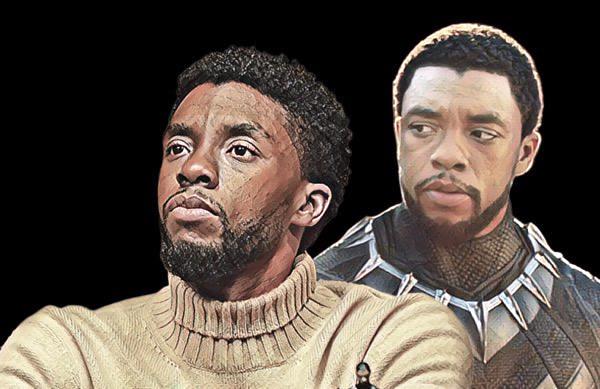
The choice not to recast T’Challa was perhaps the most accurate creative decision of the MCU in its recent phase. Wakanda Forever (2022) transformed absence into a theme. The film does not attempt to fill the void; it confronts it. The grief of Shuri, of Ramonda, of Okoye, of Wakanda itself mirrors our own. Instead of continuing the story as if nothing had happened, Marvel accepted that its universe had been wounded—and that certain presences are irreplaceable not by contract, but by meaning.
Since then, the question of T’Challa’s “heir” has never fully disappeared. Rumors resurface cyclically: a son introduced in Wakanda Forever, multiverse variations, alternate returns, backstage theories about how Marvel might reintroduce the character without “replacing” Boseman. But what these rumors reveal is not merely fan curiosity; it is the industry’s difficulty in dealing with a specific kind of absence: one that cannot be resolved by strategy.
Because Chadwick Boseman’s legacy lies not only in the character, but in what he represented at the moment he represented it. He reached the center of pop culture without ever performing superficiality. He did not build his image on controversy, nor on overexposure. His public figure was one of dignity, rigor, and historical consciousness. That is uncommon in the contemporary star system—and perhaps that is why his presence was so singular.
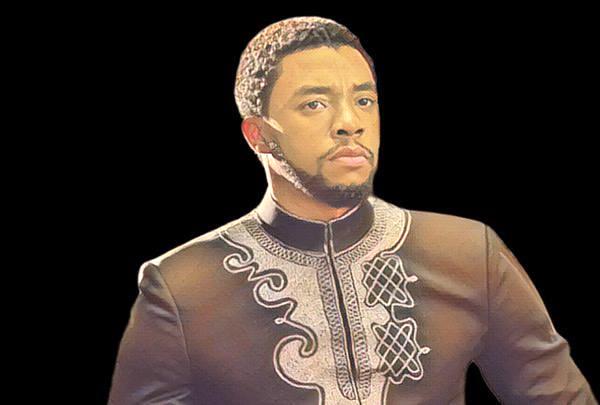
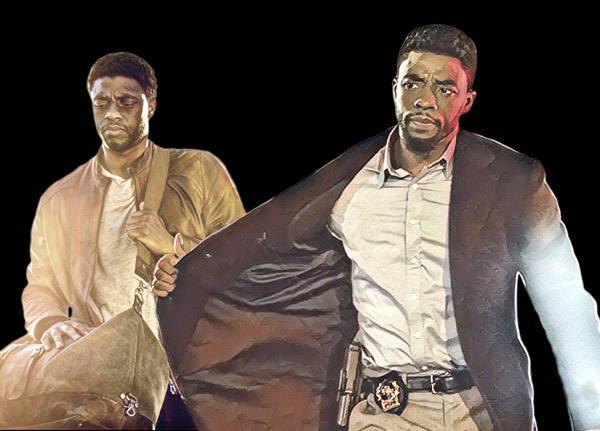
There is also the dimension of interrupted possibility. Boseman was 43 when he died. He was at the height of his visibility, yet still at the beginning of his artistic maturity. His final works, such as Da 5 Bloods (2020) and Ma Rainey’s Black Bottom (2020), for which he received a posthumous Oscar nomination, suggested a phase of greater risk, of less idealized, more fractured characters. It is not only what he did that weighs; it is everything he might have done.
Even so, his name remains inseparable from Black Panther. Not as a limitation, but as a landmark. Some actors pass through franchises; there are others who become their very memory. Chadwick Boseman belongs to the latter group. Wakanda, T’Challa, the contained gesture, the gaze that carries doubt and authority at the same time—all of this has become part of a collective imaginary that crosses generations.
When he would have turned 50, in 2026, the question will not be “what else would he have done?” but “what remains?” And what remains is rare: a brief career, coherent, ethical in its choices, politically conscious without being didactic, popular without being disposable. An actor who understood early that representation is not merely appearing on screen, but deciding how, why, and in the service of what.
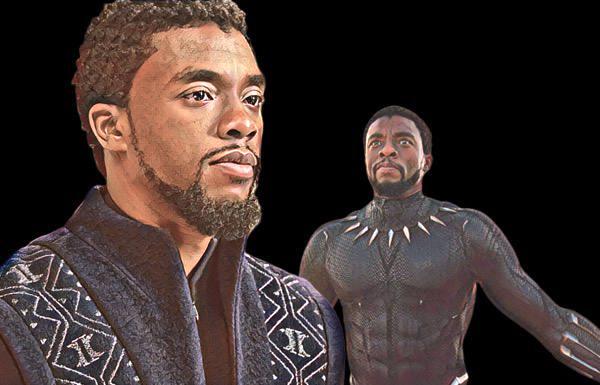
There are legacies measured in awards, box office, and records. Chadwick Boseman’s is measured in something more difficult: in the way he altered expectations—about who can be a hero, about how power is constructed, about what it means to occupy the center without abandoning gravity. And perhaps that is why, even six years later, the feeling is not only one of loss, but of continued presence. Not as a frozen myth, but as a living reference.
Chadwick Boseman did not reach 50 years of age. But he reached something few ever do: becoming greater than the time he was given.
Descubra mais sobre
Assine para receber nossas notícias mais recentes por e-mail.
 miscelana.com