
Almost a year later of many speculations, there are two ways to read Kathleen Kennedy’s departure from the presidency of Lucasfilm. The most immediate one is factual, almost bureaucratic: after 14 years at the helm of the studio behind Star Wars, she steps down from the role and becomes a full-time producer. The other — the one that truly matters — frames this moment as the closing of a historical cycle, marked by ambition, reinvention, conflict, and by a question that ran through her entire tenure: what does it mean to lead a cultural myth in the 21st century?
Kennedy was never merely “the executive who handled the reboot.” She arrived at Lucasfilm in 2012, personally chosen by George Lucas, with a résumé that already placed her among the most important producers in the history of Hollywood. Before Star Wars, there was Amblin, Spielberg, E.T., Jurassic Park, Back to the Future, Schindler’s List. A career forged at the intersection of popular cinema and artistic ambition, industry and creative risk. That was the perspective she brought to a franchise that, at that moment, needed to learn how to exist again.
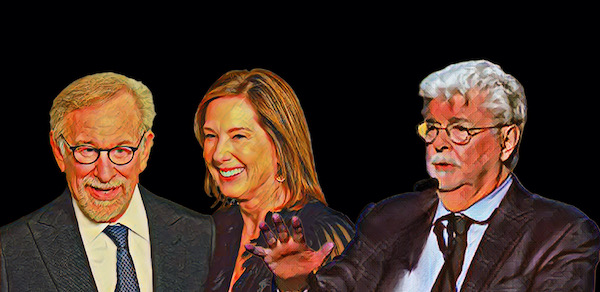
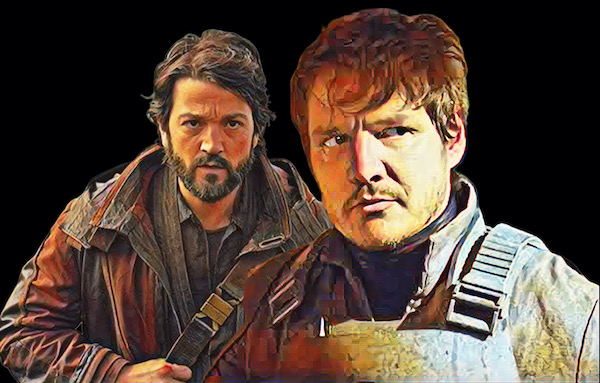
The first move was overwhelming. The Force Awakens did not merely resurrect Star Wars — it repositioned the saga at the center of contemporary pop culture, introduced new faces, broke records, and proved that the universe created by Lucas still had the power to captivate a new generation. Rogue One followed, with its darker tone, and with it came the construction of a larger ecosystem, one no longer dependent solely on theatrical releases. The Mandalorian turned television into a new prestige territory for the franchise, while Andor demonstrated that Star Wars could be political, adult, and dense without losing its identity.
But Kennedy’s leadership was never simple or universally embraced. At the same time that she guided some of the saga’s greatest successes, she also stood behind its most contested moments. Solo: A Star Wars Story became the franchise’s first major box-office flop. The sequel trilogy exposed tensions of creative vision, changes in direction, and a third film that attempted to reconcile incompatible expectations from audiences, the studio, and the narrative itself. Projects were announced and shelved, directors came and went, and a sense of instability increasingly accompanied Lucasfilm behind the scenes.

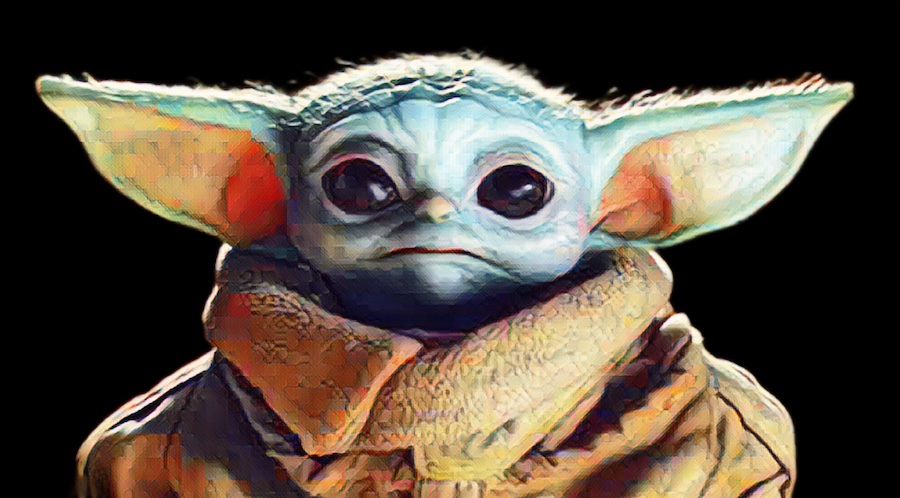
Still, to reduce this era to a balance sheet of “hits and misses” is to miss what truly matters. What Kennedy actually did was transform Star Wars from a film saga into an expanded universe of stories, formats, and voices. She made room for female leads, for characters from diverse backgrounds, for narratives that shifted the center of the traditional mythology. This unsettled part of the fandom, sparked accusations of a “social agenda,” and provoked backlash over departures from decades of novels, comics, and extended lore. But it also redefined who could see themselves reflected in that world.
There is something deeply revealing in this clash. Kennedy governed Star Wars not as a museum curator, but as someone who believed that myths survive only if they are rewritten. Not every rewrite works. Some generate resistance, noise, frustration. But the alternative — stagnation — is often far more lethal in the long run.
Since 2025, rumors of her departure had circulated persistently within the industry. Not as a sign of failure, but as an acknowledgment that a cycle was drawing to a close. The phase of reconstruction and expansion had been consolidated. The next challenge would be to bring coherence to an increasingly fragmented universe and to respond to an audience fatigued by excess. Kennedy chooses to leave at a moment when her legacy is complete: she does not exit the story, but returns to the place where she has always been irreplaceable — production. She remains involved in the upcoming films, The Mandalorian and Grogu and Star Wars: Starfighter, while handing over the studio’s day-to-day leadership.

And this is where Dave Filoni enters. His rise is not a mere administrative detail; it is a declaration of intent. Filoni is, above all, a creative heir to George Lucas. He joined Lucasfilm in 2005, helped build the animation division, became the architect of The Clone Wars and Rebels, co-created The Mandalorian with Jon Favreau, and emerged as the primary guardian of Star Wars’ internal mythology. For many fans, he represents the franchise’s canonical conscience: someone who understands its symbols, its rules, its invisible threads.
By taking on the roles of president and chief creative officer, alongside Lynwen Brennan on the operational side, Filoni signals a clear shift in emphasis: less dispersion, greater narrative cohesion; fewer isolated bets, more continuity of arcs. It is a direct response to the criticisms that marked the final years of the Kennedy era. The promise is of a Star Wars that is more integrated, more self-aware of its own history.
But it is impossible to speak of this future without acknowledging what came before. Kathleen Kennedy does not leave behind a “clean” legacy, free of conflict or division. She leaves behind a living one. A Star Wars that expanded as never before, that experimented with formats, tones, and protagonists, that failed in public and succeeded on a historic scale. She led the franchise to more than $5 billion at the box office, established streaming as the new heart of the universe, and, above all, faced the most difficult challenge of all: steering a myth under the constant gaze of a global audience — passionate, vocal, and often hostile to change.
When Kennedy steps down from the presidency of Lucasfilm, it is not merely an executive who leaves. It is a philosophy of leadership: the belief that great universes are not preserved through immobility, but through friction. The future now belongs to Filoni and the new structure. But the present of Star Wars — with its characters, its contradictions, its risks — bears, indelibly, the mark of a producer who dared to reshape the myth. And in franchises of this magnitude, daring is always an act of courage.
Descubra mais sobre
Assine para receber nossas notícias mais recentes por e-mail.
 miscelana.com