
Of everything one might have expected from A Knight of the Seven Kingdoms, after so many years waiting for its release, what ultimately imposes itself is a petty, coarse, and scatological decision, designed to shift the conversation away from the undeniable quality of the adaptation — long-awaited by fans — and toward backstage production drama. Yes, the so-called “poop scene” is not a tonal misstep born of carelessness. It is intentional, calculated, kept under wraps, and engineered to provoke. And precisely for that reason, it becomes as revealing as it is troubling.
The scene takes place right at the beginning, in an episode that until then had been exemplary in its restraint and respect for the source material. Dunk steps away from the main road, the camera follows him in a lateral shot, almost embarrassed, stripped of glamour or heroism. The gesture is banal, bodily, and explicit. At the same moment, the dialogue references the capital of Westeros and, as if that were not enough, the score invokes the central theme associated with Game of Thrones, composed by Ramin Djawadi. The association becomes unmistakable. Dunk defecates while the franchise’s sacred music plays. The metaphor does not require interpretation. It imposes itself.
This is where the scene stops being merely scatological and becomes commentary. Not about Dunk. Not about Egg. But about Game of Thrones.
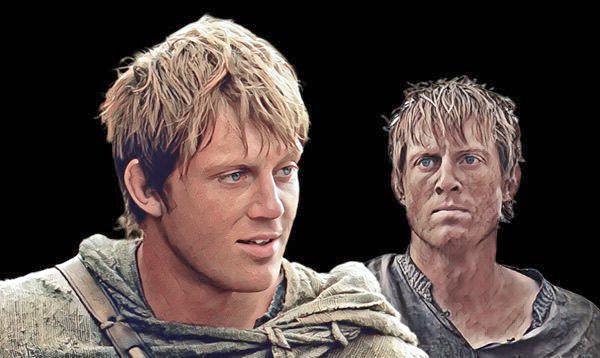
It is a gesture of symbolic rupture. A visual declaration of contempt — or, at the very least, aggressive distancing — from the immediate legacy of the parent series. The idea seems to be, in the most literal and bodily terms possible, that The Knight of the Seven Kingdoms does not want to carry that weight or that emotional inheritance. The problem is that, in doing so, the series does not free itself from its own limitations. It binds itself. The scene may be speaking about Game of Thrones, about House of the Dragon, or even — and this is not incidental — about the accumulated resentment of the platform, the author, and those involved toward fans who have often become aggressive and relentlessly demanding. What, after all, does it really mean to watch Dunk relieve himself outdoors to the sound of the franchise’s theme?
There is yet another unavoidable layer to this scatological metaphor, perhaps the most uncomfortable of all: its portrait of the fans themselves. Over the past few years, the universe of the series has lived under constant online pressure, often aggressive, aimed not only at creative decisions but at specific individuals. Showrunners harassed on social media, actors attacked for narrative choices they do not control, hate campaigns disguised as “legitimate criticism.” This climate has culminated in an increasingly unhealthy relationship between parts of the fandom and George R. R. Martin, who has repeatedly faced public demands about finishing the literary saga, including explicit, cruel, and unsettling questions about what would happen “if he died before completing the books.” The metaphorical defecation also carries this accumulated contempt, this gesture of exhaustion toward an audience that stopped behaving like readers or viewers and began acting as auditors, judges, and creditors. It is not only Game of Thrones being evacuated at that moment. It is the very idea that artistic creation should exist under constant threat.
But to understand why this scene exists, it is necessary to return to the origin of the fracture.
When George R. R. Martin entrusted Game of Thrones to David Benioff and D. B. Weiss, there was a clear agreement. They would adapt published books, and Martin would follow the process, sharing the general direction of the story. For years, it worked. The series had ground beneath it because there was text. The world moved forward because there were pages.
The collapse began when the books ran out, and the series did not. From that point on, Benioff and Weiss worked with outlines, general endpoints, and private conversations — what Martin himself described as the “architecture” of his story, not its execution. They did not invent the ending out of thin air. But they also did not have the author’s prose, time, or emotional density to fill in the gaps. The result was a conclusion that no one could fully defend, not even Martin, and one he could not directly accuse either. After all, the central beats came from him. The problem was the path taken to reach them.
After that, the Game of Thrones universe entered a state of suspension. Spin-offs were announced and abandoned. The series never made it off the ground. HBO hesitated until it chose House of the Dragon, anchored in Fire & Blood, a closed book, albeit a fragmented one. The promise was control, fidelity, and reconciliation.
It is in this context that Ryan Condal enters the picture. Condal arrived as a declared fan, an obsessive student of the material, and someone initially willing to listen to Martin. That relationship, however, deteriorated profoundly and irreversibly. Today, it is not merely cold.
Martin stated publicly, in an interview with The Hollywood Reporter, that his relationship with Condal is “abysmal.” He said the showrunner does not respond to his messages, does not listen to his notes, and no longer includes him in creative decisions. This is not a minor disagreement. It is a rupture. They do not speak. They do not collaborate. They do not build together. The author has returned to the position he most fears: that of a spectator to a universe he created but no longer controls.
That context changes everything.
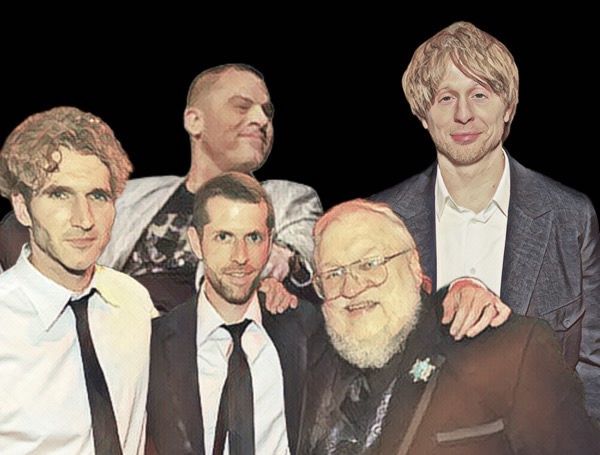
A Knight of the Seven Kingdoms emerges precisely as the project in which Martin feels heard again, openly praising the fidelity of the writing, the human scale, and the restraint of the adaptation led by Ira Parker. Parker does not come from the peak of Game of Thrones, nor from the implosion of its ending. His trajectory within HBO is more erratic and, precisely for that reason, revealing.
Before Dunk and Egg, Parker was part of the writing staff of The Nevers, a series that became one of the network’s most problematic recent cases. The Nevers failed in ratings, lost its identity after the departure of its creator, underwent narrative restructurings, and ended up cancelled, leaving behind neither a creative legacy nor a loyal audience. Parker was therefore involved in a project marked by instability, loss of authorial control, and decisions made under institutional pressure.
He also spent time in the writers’ room of House of the Dragon, participating in the effort to reposition Westeros after the trauma of Game of Thrones. That experience matters. Parker saw up close what it means to work in a universe where the original author no longer has an effective voice, where decisions are made despite — rather than in dialogue with — Martin. He also saw how the weight of the past contaminates every choice, every scene, every silence.
It is from this accumulation that Dunk and Egg become, for Parker, more than an adaptation. They become an assertion. He understands these stories as road narratives, stories of the body, of failure, of ordinary humanity. Scatology emerges, then, as a deliberate attempt at desacralization — a programmatic gesture meant to say that this Westeros is not the realm of palaces or grand speeches.
Parker justified the scene by stating that it was meant to be literal. Ser Duncan is not yet a knight, not yet “Ser,” not yet a hero. He soils himself with fear at the thought of becoming one. Scatology, according to the showrunner, physically translates that condition: a body that fails under the weight of the heroic ideal.
Within Martin’s universe, the argument holds. The books are filled with references to feces, urine, smells, and physical humiliation. Game of Thrones has always treated the body as a battlefield, far removed from the clean nobility of classic fantasy. The problem, therefore, is not scatology itself. It makes sense in Martin. It makes sense for Dunk.
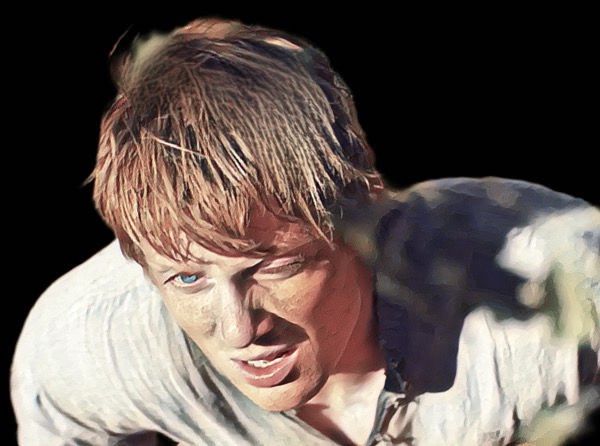
The problem lies in the specific choices of framing, music, and symbolic association. By coupling this intimate, degrading moment with the Game of Thrones theme and direct references to the larger franchise, the scene stops being merely literal or psychological. It becomes external commentary.
What could have been a gesture of humanization turns into an affront. Dunk’s fear speaks less about heroism and more about legacy, inheritance, and resentment. Scatology, so common in Martin’s world, loses its narrative function and assumes a metalinguistic role. We are no longer simply watching a character fail. We are being invited to react to a reckoning.
The final irony is cruel. The Knight of the Seven Kingdoms is, in essence, everything Game of Thrones forgot how to be in the end. Human. Restrained. Morally ambiguous without cynicism. The “poop scene” does not reinforce that. It shouts where the text had been whispering.
Perhaps that is what is most disturbing. It is not the crudeness itself. It is the fear it reveals. The fear of still needing to define itself against Game of Thrones. The fear of not trusting that the story, on its own, was already enough. And it should never, never, have exposed the brilliance of Ramin Djawadi to that gesture. Perhaps that, for me, is the scene’s truly unforgivable offense.
Descubra mais sobre
Assine para receber nossas notícias mais recentes por e-mail.
 miscelana.com