
If we were to play the viral game of 2016 versus 2026 using Prince William and Prince Harry as mirrors, the result would likely feel less nostalgic than melancholic. The two brothers who once embodied the fraternal harmony idealized by their mother, Diana, Princess of Wales, now stand on opposite sides not only because of life choices, but because of different, and only seemingly irreconcilable, readings of the past. It is telling that, in January 2026, while testifying in his lawsuit against the tabloids, Harry brought me back to one of the most sensitive fault lines in the brothers’ rupture: how the final years of Diana’s life are understood and contextualized.
In court, Harry said the press continued to come after him and that its practices turned Meghan’s life into an absolute misery. In his written statement, he described how constant surveillance pushed him into a state of isolation and extreme paranoia, eroding any sense of safety. This was not merely a personal account. It was the description of a mechanism. One in which relentless pursuit produces fear, withdrawal, and distrust as predictable and, in his view, rational effects.
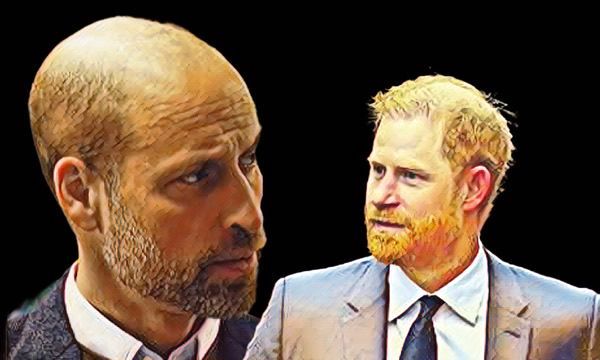
William’s reading of Diana follows a more ambiguous path and, perhaps for that very reason, a more painful one. In 2021, when commenting on the investigation that confirmed the use of illegal practices to secure Diana’s 1995 BBC interview, he said that the fraudulent reporting fueled the fear, paranoia, and isolation his mother experienced toward the end of her life. He added something essential. This state caused pain and trauma to many people beyond Diana herself. For William, who was already a teenager and his mother’s closest confidant, the scandal was not only about ethical violations in journalism but about the cascading emotional consequences of living under constant surveillance.
This detail is often lost, and Harry generally overlooks it. William does not deny that Diana had reasons to be suspicious. But he lived through the reality that some of those fears, however understandable, were factually unfounded. One of the most cited examples is Diana’s conviction that Charles was having an affair with the boys’ nanny, Tiggy Legge-Bourke. Subsequent investigations and documents showed this was not true. Diana, however, had no way of knowing that. At the time, she fully believed it and, driven by that certainty, treated Tiggy harshly and humiliated her both publicly and privately. It is reasonable to assume that these are the kinds of episodes William has in mind when he speaks of the collateral damage of paranoia. Not as a moral judgment of his mother, but as an acknowledgment of the harm produced when fear becomes all-consuming.
Almost as an involuntary provocation, aligned with his own personal struggle, Harry emphasizes a different point. When speaking of Diana, he rejects the idea that confirming illegal practices turns her into a paranoid figure. For him, the revelation does something else entirely. It proves the fear was rational. The problem was not distrust. It was the system that justified that distrust. Where William sees suffering that overflowed and wounded others, Harry sees a woman who realized, before anyone else, that she was being hunted.
This is where the word paranoia must be rescued from the moral use that has stripped it of meaning. In common language, paranoia has become synonymous with error, exaggeration, and imagination out of control. But paranoia, in its human and historical sense, describes a state of hypervigilance. The constant feeling of being watched, evaluated, and threatened. It does not require fear to be false. Only that it be permanent.
Psychological suffering does not invalidate the objective reality of danger. Often, it confirms it. The problem is that systems of power have learned to weaponize illness as a narrative. When someone begins to withdraw, distrust, and react with fear, that behavior is reframed as proof that the person was never reliable. Trauma becomes an argument against the victim. Reaction becomes disqualification.
Harry is trying to dismantle precisely this logic. When he speaks of isolation, paranoia, and fear of retaliation, he is not asking for emotional understanding. He is stating that the system creates the psychological state and then uses that very state to discredit those who suffer from it. That was the case with Diana. It was the case with Meghan. And, according to him, it is now the case with him.
And so, ultimately, who is right? William or Harry?
Both. And that is precisely what makes this disagreement so difficult to resolve.
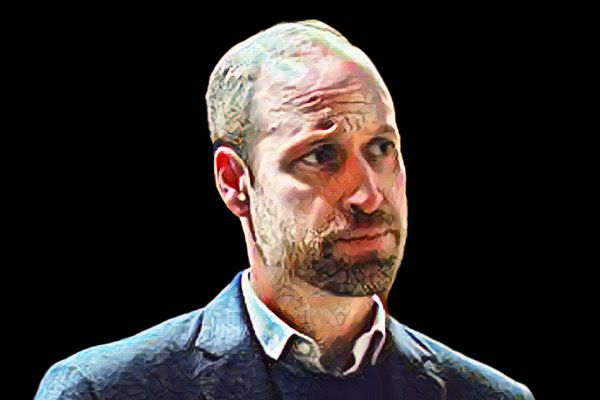
William is right in pointing out that Diana’s fear had real collateral effects, that some of her suspicions were factually unfounded, and that this state of hypervigilance caused pain to people who were not responsible for the system that pursued her. He learned early that suffering, even when understandable, can overflow. This is an uncomfortable but necessary ethical truth.
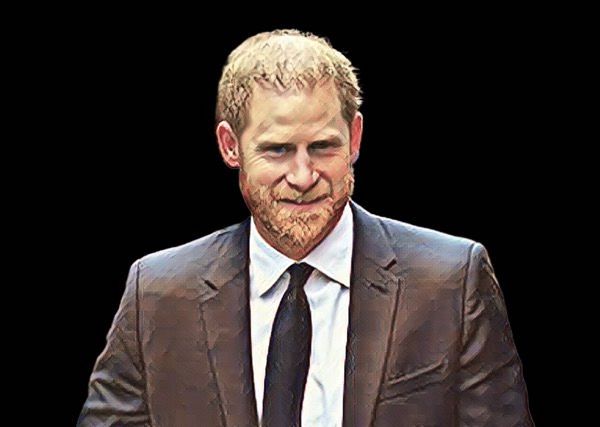
Harry is also right in refusing to accept that this overflow be used to discredit Diana’s central perception. He is right in saying that the confirmation of illegal practices does not turn fear into delusion, but into a rational response to a hostile environment. And he is right to denounce how psychological suffering is so often used as evidence against the victim herself.
The mistake lies in the demand to choose only one.
Diana could be right about the world that surrounded her and, at the same time, wrong about specific people within it. These two truths coexist without canceling each other out. William looks at the damage caused when fear spreads. Harry looks at the injustice of calling that fear an error. Each protects their mother from a different place in the same wound.
Perhaps that is the most honest answer. This is not about deciding who won a moral dispute, but about recognizing that the truth they each carry is too large to fit entirely within either of them.
Descubra mais sobre
Assine para receber nossas notícias mais recentes por e-mail.
 miscelana.com