
Paris.
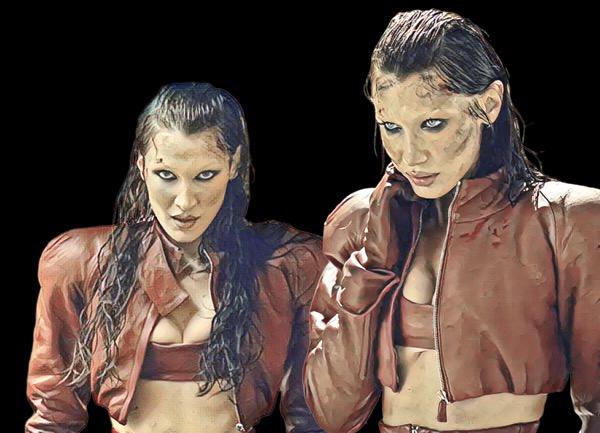
At a fashion show, the model on the runway is flawless, but something in her gaze feels wrong. She looks exhausted, as if she were burning from the inside. When she sees someone drinking water in the audience, something breaks. She jumps off the runway, lunges toward the liquid, attacks people, and kills. She runs through the streets of the French capital in desperate flight, leaving victims behind. Her motorcycle is intercepted by a car. It seems like the end. It isn’t.
Wounded, she storms into a restaurant. The thirst does not fade. She kills one person after another. Even the water in a toilet bowl becomes an obsession. Her body collapses. She kills a police officer, cries blood when surrounded, and explodes.
This is how The Beauty begins. Ryan Murphy’s new series does not ask for permission. It is graphic, grotesque, unsettling. And deliberately excessive.
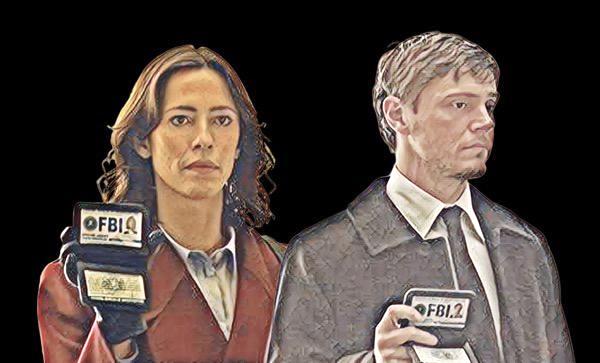
The narrative then shifts to its protagonists. Jordan and Cooper, FBI agents, appear in an intimate moment before talking about something apparently trivial: she has had breast implants. “Beauty is pain,” Jordan says. It soon becomes clear that they are not married and that their relationship is open, direct, and almost rational. She feels compelled to correct what is criticized in her body. He does not. Their dynamic seems balanced precisely because both are honest about what they want.
The next day, personal life gives way to work. Jordan and Cooper take on the investigation of what the media has dubbed the Runway Massacre. They discover that this was not an isolated incident. Similar deaths have occurred in Berlin and London. The pattern is disturbing.
In the model’s autopsy, what remains of her body reveals burned organs and signs of internal combustion. Something consumed her from the inside until she exploded. The cause is an unknown virus.
As they dig deeper, the two agents notice an even more unsettling detail: all the victims were once ordinary people, considered unattractive, invisible, and isolated. Something transformed them into idealized versions of themselves. Beautiful, desired, unrecognizable. Which still does not explain, as Cooper observes, why this transformation ends in death.
Meanwhile, in New Jersey, the series introduces Jeremy, a young man lost in digital noise. Unemployed, living with his mother, numbed by the internet, he searches for answers in forums, videos, promises of bodily transformation. On the deep web, he finds a radical alternative. At a new aesthetic center, he is identified as an incel and expresses his desire to become a “Chad,” the archetype of contemporary masculinity, the handsome, confident, desirable man.
Surgery is the only solution, and he agrees.
Still in his original appearance, Jeremy is approached by three young women at a bar. The night ends in humiliation and rejection. It is the breaking point. Driven by rage, he returns to the clinic and begins a massacre. Almost complete. The surgeon convinces him to wait for one more intervention. Jeremy accepts, torn between the desire to kill and the desire to be reborn.
Claire appears. She sleeps with him. When Jeremy wakes up, his body collapses. The transformation is brutal, painful, and almost ritualistic. He is reborn as someone else. Young, handsome, desirable. For the first time, Jeremy recognizes himself in the mirror. And celebrates.
At the same time, Jordan and Cooper discover that the virus is more lethal than Ebola. A new victim, an influencer, has died in Venice. The investigation takes them to Europe.
The Beauty makes it clear, from its very first episode, that it is not just a horror series. It is an extreme allegory about the beauty industry, the culture of performance, and the desire for transformation. In Ryan Murphy’s universe, aesthetic obsession ceases to be metaphor. It becomes epidemic.
Descubra mais sobre
Assine para receber nossas notícias mais recentes por e-mail.
 miscelana.com