
The Beauty does not hide its intentions. From its premise onward, Ryan Murphy chooses excess, grotesque imagery, and literal metaphor to address something Hollywood and society know all too well but prefer to treat as comedy, fantasy, or consumer promise. There are clear echoes of The Substance and Death Becomes Her, that acidic portrait of the 1990s in which eternal youth came accompanied by cracked bodies and corroded identities. Murphy revisits this imaginary but pushes it into the territory of global thriller, technological conspiracy, and body horror, replacing nervous laughter with physical unease.
The story begins with a public shock. Models start dying in brutal and inexplicable ways. FBI agents Cooper Madsen and Jordan Bennett are sent to Paris to investigate what initially appears to be just another media crime linked to the fashion world. What they discover, however, is a far broader and more disturbing mechanism. Behind the deaths lies a drug called The Beauty, sold as a miracle, distributed as a promise, and absorbed as the definitive solution to inadequacy. It does not merely alter appearance. It reconfigures the body from the inside, with a precise expiration date. The process is painful, consuming the organism, burning from within, and, at its limit, leads to literal implosion. Murphy abandons any symbolic subtlety. The metaphor is flesh. The critique is physical.
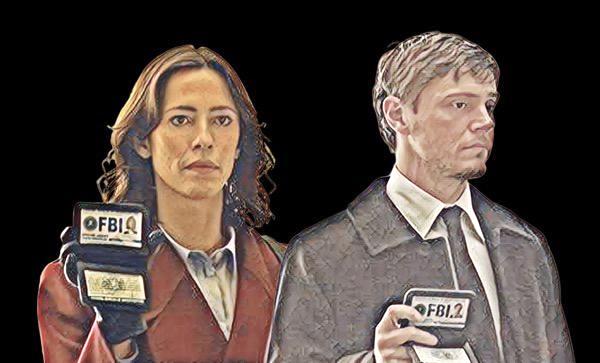
The most unsettling aspect of the series is not only the horror but the logic that sustains it. The Beauty is not an isolated intervention but a product. A technology of enhancement that promises what contemporary culture most desires: perfection, belonging, validation. Instead of treating this as futuristic fantasy, Murphy anchors the story in something recognizable. The obsession with procedures, the culture of infinite correction, the market of youth, and the medicalization of the body as a permanent project. The difference is that here the transformation is not merely aesthetic. It is contagious. The drug spreads through intimate contact, turning the pursuit of beauty into a sexually transmitted epidemic. The critique ceases to be moral and becomes biological. Obsession becomes a social disease.
This gesture brings The Beauty closer to The Substance, but also radicalizes it. If, in that film, the body was already a battlefield between desire and identity, here it becomes a literal territory of war. The promise of being better demands a measurable price. There is an internal clock, a duration. It is not about staying young but about consuming oneself in the name of an ideal that was never neutral. Murphy’s horror is not in artifice. It is in recognition.

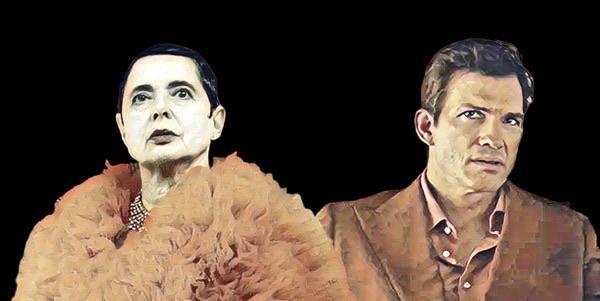
In this context, the presence of Isabella Rossellini is not merely prestige casting or a reference to the classic Death Becomes Her (in which she played the “witch” who sells youth to Meryl Streep and Goldie Hawn). It is a commentary. Rossellini carries in her personal trajectory everything the series puts under tension. Daughter of a cinema legend, model, actress, and face of Lancôme for years, she was pushed aside by the industry as she aged, precisely for no longer fitting the ideal she helped sell. Years later, she returned to the center of the debate for having been discarded by that same system. Averse to procedures, plastic surgery, and corrections, she became, without seeking it, a symbol of silent resistance to a market that transforms age into failure. In The Beauty, her presence is not decorative. It functions as an ethical counterpoint. An actress who represents everything the beauty industry has historically tried to erase.
Murphy builds this universe with the ambition of an international thriller. The series moves between Paris, Venice, Rome, and New York, transforming capitals of fashion, art, and glamour into scenarios of collapse. What should be a showcase of aesthetics becomes a stage of decomposition. The global scale is not merely visual. It reinforces the idea that the obsession with a beauty standard is neither local nor fleeting. It is a transnational, economic, and cultural system that reproduces itself with the same efficiency on runways, in clinics, on social networks, and on screens.
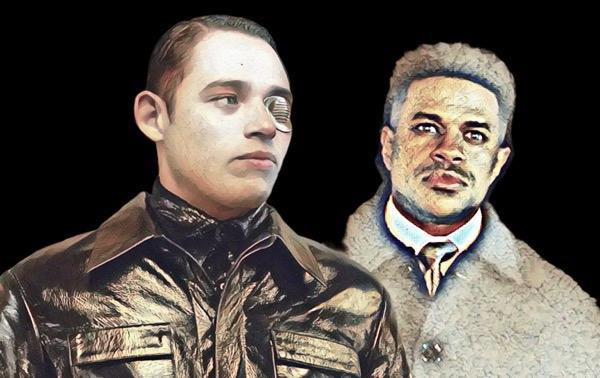
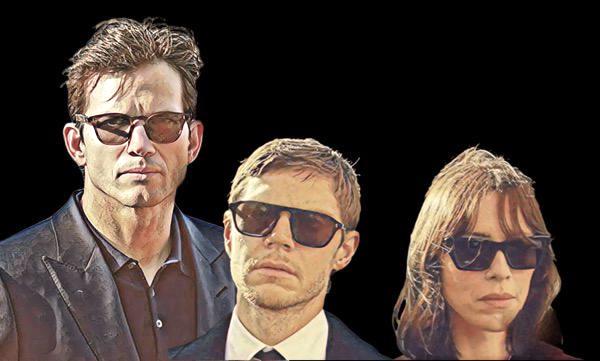
The cast sustains this machinery with precise choices. Evan Peters assumes the narrative center as Cooper Madsen, the agent who tries to impose some order on a world that implodes from within. Rebecca Hall plays Jordan Bennett, his partner and intellectual counterpoint, someone who investigates not only the crimes but the logic that makes them possible. Ashton Kutcher appears as The Corporation, the tech billionaire who embodies the most modern face of the old dream of total correction. Anthony Ramos, as The Assassin, personifies the violence necessary to keep the machinery running. Jeremy Pope represents the displaced individual who seeks belonging and ends up captured by a system that confuses transformation with redemption.
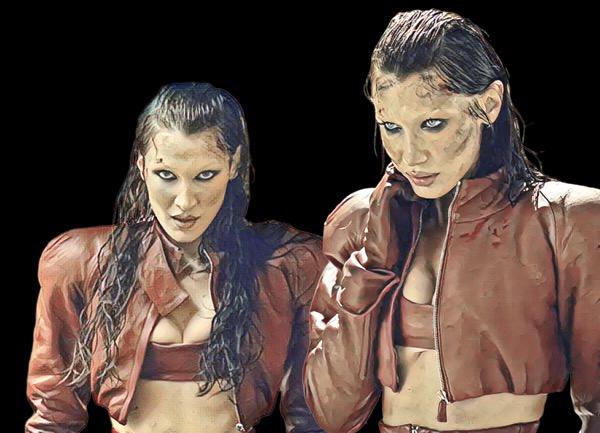
Around them, the series constructs a mosaic of appearances that reinforces its cultural commentary. Bella Hadid, Meghan Trainor, Ben Platt, Vincent D’Onofrio, Jessica Alexander, Nicola Peltz Beckham, and many others do not enter merely as recognizable names. They expand the mirror that the series offers its audience. The Beauty does not speak only about characters. It speaks about an industry that produces faces, bodies, and narratives about what it means to be desirable, acceptable, and visible.
Murphy’s most provocative gesture, however, lies in the way he fuses two universes that rarely meet with such literalness: the disease of aesthetics and the imaginary of contamination. Bodily transformation is not just a procedure; it is a virus. The pursuit of perfection ceases to be an individual choice and becomes something transmitted, imposed, and infiltrated into the most intimate bonds. Beauty as an epidemic. Appearance as pathology. By turning desire into pain, consumption into combustion, and promise into physical collapse, Murphy constructs a brutal fable about our time. A series that not only criticizes the beauty industry but also exposes the mechanism that profits from the permanent feeling of inadequacy.
It is in this territory, between spectacle, horror, and cultural commentary, that the series establishes itself. And it is from this landscape that the conversation with its cast unfolds. The conversation below is not merely promotional. It functions as another layer of the work itself, an opportunity to hear, from within, how actors and creators articulate a project that treats aesthetics not as surface but as power, market, and violence.
BRAVO: How do you think The Beauty reflects the current cultural landscape?
Rebecca Hall: I think that, in many ways, Ryan Murphy has an instinct for the spirit of the times, for what is current, for what we are all discussing, and he turns that into something subversive, provocative, and even more worthy of debate. I think there is a lot to be said about this pursuit of perfection and what it means, and also about the commodification of beauty, because I believe human beauty is a conceptually complicated idea. It is not like nature. It is not like looking at a sunrise or something objective. It is subjective. So the idea that you can pay for perfection and, in doing so, hand over your own notion of beauty to someone who is receiving your money and perhaps wants more of it is complicated. What does that mean? Where does it lead? How does it shift? What does it change? Because, frankly, I think keeping people in a state of inadequacy is more profitable.
Ashton Kutcher: I think we live in a world where GLP-1 drugs are everywhere. The demand for Ozempic, Wegovy, Mounjaro, and all these medications, some for health issues, others purely for aesthetic results. And then we have this growing demand for plastic surgery, including cosmetic surgery tourism, and people modifying themselves to achieve a look, a feeling, a vibe they believe will give them some kind of advantage, or maybe simply make them happy. And you start to wonder whether that is really so wrong. Then you add to that genetic editing, which is already happening today, which can make you healthier or correct, for example, sickle cell anemia or some other genetic defect. You start putting all of that together into one thing, and it is an injection, and it is called The Beauty. And the question is: what are you willing to sacrifice for it? What risks are you willing to take? I find that incredibly powerful. And I think Ryan, as has already been mentioned, always has his finger on the pulse of the decisions we all make every day. Which skincare cream am I going to use? What kind of shampoo am I using? All of these are everyday decisions. The series goes underneath that, explores it, and makes you question yourself and your worldview.
Anthony Ramos: The other day, my stylist told me: We have a photoshoot coming up, you should get a facial. I got there, and he said: They gave your face a flush, right? And I was like: what, was I swollen before? And he said: a little. And there is Emsculpt, and there are collagen injections in the body. I think we live in a world today where it has become devices, Botox, lipo, Ozempic, and there are so many things available to us that can enhance our beauty or turn us into the person we would like to look like on the outside. And I think society often tells us how we should look on the outside. And, instinctively, we put that pressure on ourselves. So this is part of our culture in a very big way, and I think the series speaks about that on a deep level.
Evan Peters: I also think there is a thread running through many of Ryan’s projects, which is the idea that what makes you you, what makes you unique, is precisely what makes you interesting and something to be celebrated. I think, in the end, some episodes really reinforce that. There is no one better than Ryan to convey that message. It makes you question things.
Jeremy Pope: I love a work of art that makes the audience ask themselves: What would you do if there were a drug or something you could take that would make you feel like the best version of yourself? I think the series starts in a very vain, physical way. But then we talk about a child who might have an illness and has not been able to fully live, and, as a parent or observer, what would you give to see someone step into their beauty and their light? Many things are being projected onto us by social media, by the news. I think it is an active conversation about where you stand in relation to beauty, about your perspective on yourself, the inner work, and the outer work.
BRAVO: After acting in the series, did your relationship with your own body or with the idea of perfection change?
Ashton Kutcher: I do not know if, for me, it came after working on the series. I think when I decided to do it, I thought a lot about what beauty is. The series does not try to define it. It lets the audience define it. I started asking myself: What do you consider beautiful? For me, imperfection is beautiful because imperfection is a representation of potential. We are all imperfect, and that does not matter. Having worked as a model and in the fashion industry, I met what I thought were the most beautiful people in the world, and each of them could find something they wanted to change. Whether it is physical appearance, the choices you made, or the way you behaved, we are all these wonderful works in progress. And I think that is beautiful. The series made me find this honest place within myself, where I started to accept my own imperfections and to be ambitious about change.
BRAVO: Evan and Rebecca, what is the dynamic between Jordan and Cooper?
Rebecca Hall: They work together and are best friends with benefits. They both think there is nothing beyond that, although that is a complete lie, and they simply refuse to be vulnerable with each other. There is a lot left unsaid, and they should just deal with it.
Evan Peters: You end up rooting for one of them to say: I do not want you to see other people, I only want to see you, I love you. Cooper is more by-the-book, and Jordan is very fun and witty. They balance each other out.
BRAVO: Anthony and Jeremy, what is the impact of the relationship between The Assassin and Jeremy?
Anthony Ramos: Jeremy reminds The Assassin of himself. There is a level of empathy that The Assassin feels for Jeremy and connects with. He spends a lot of time alone. He is an assassin and does this alone. He sees a kindred spirit in this guy, whom, at first, he should kill. Jeremy also reminds him of someone he loves. There is a level of loneliness and emptiness that Jeremy fills in the Assassin’s soul.
Jeremy Pope: The Assassin has spent a lot of time alone. And the same goes for Jeremy, who is described as an incel, searching for connection and affection. He finds someone who sees him and appreciates the strangeness he brings. We dig into the truth of these humans that some would call villains. For them, these are the right choices. There is a moment when The Assassin thinks: I need someone. And for Jeremy, it is as if he were saying: I have always needed someone to see me for who I am.
BRAVO: Ashton, do you see The Corporation as a villain or as someone who truly believes he is helping humanity?
Ashton Kutcher: I learned a long time ago that you cannot judge your character. When you play the character, you have to do it from the perspective that he believes he is doing something right. That he believes there is some benevolent necessity in his actions. I need to look at the character as someone who thinks this will help people live better, happier, more fulfilling lives. You can look at it and say it is not right to kill people, but every so-called villain can rationalize their behavior.
BRAVO: What was it like filming in Italy?
Anthony Ramos: Italy was my favorite part of filming in Italy. The food, the landscape, the architecture, the people. We were all staying in the same place, living together. That changed the look and the feeling of the series.
Rebecca Hall: Being annoyed about having a call time at 4:30 in the morning and then getting into a water taxi and seeing Venice as the sun rose. It was not an ordinary experience of going to work.
Evan Peters: We were able to film at the Trevi Fountain at three in the morning, with no one there.
Jeremy Pope: Closing the Trevi Fountain, hearing it in silence, absorbing the architecture. It made the series feel truly international.
Ashton Kutcher: Every time I go to Europe, I am reminded of how young America is. What was considered beautiful a thousand years ago has changed. Fashion, architecture, materials. And this story needed to be part of the series.
BRAVO: At what point did you realize that the story is not as futuristic as it seems?
Ashton Kutcher: Today, companies are trying to create a medication that is a fountain of youth. Do you think everyone is going to wait for FDA approval? It is not that far away.
Anthony Ramos: Definitely not.
BRAVO: Evan, what is it like being on the side of “good”? And what are your characters’ goals?
Evan Peters: It is a relief. When he presented the idea to me, he said there would be big action sequences and a complicated romance with Jordan. He said he just wanted me to be normal, which was very challenging. At first, the goal is to find out why people are exploding and what is happening. Then it becomes personal. The stakes increase, and he has to act on his own and figure out how to do that without help.
BRAVO: What was the stunt work and the most intense scenes like?
Anthony Ramos and Evan Peters: We basically learned the fight on the day, filmed it from three angles, and prayed. We were also adding character moments within the action.
Jeremy Pope: It became more like a ballet. Instead of just portraying body horror or pain, it was about expressing what it means to inhabit this new body. The training and the stunt team were essential.
Ashton Kutcher: My hardest scene was sitting in a hot tub and eating 27 slices of pizza in one day. (laughs)
Descubra mais sobre
Assine para receber nossas notícias mais recentes por e-mail.
 miscelana.com