
When it was released, in 1936, Modern Times became a rarer and more unsettling film, one that moves forward in time alongside us, as if its relevance were renewed with every economic crisis, every technological leap, every diffuse feeling that the world has become too fast and too inhuman. Ninety years later, the final bow of Charlie Chaplin’s Tramp does not sound like a farewell, but like a warning, and, paradoxically, like comfort.
Chaplin made Modern Times at a moment of profound historical transition. Sound cinema had already become the norm, Hollywood was accelerating its own internal industrialization, and the world was still bleeding from the effects of the Great Depression. It was also a personal turning point: the artist who had ruled the silent era sensed that the character who had made him universal was under threat, not only from sound, but from a new logic of production and consumption that seemed to swallow everything, including the individual.
It is no accident that the film opens with an image of a flock of sheep, which dissolves, in a direct cut, into factory workers pouring out of the subway. Chaplin was never subtle in the conventional sense; he was clear, direct, and almost didactic when he wanted to be. Modern Times begins as satire, but grows into a diagnosis. Laughter here is a form of resistance.
The Body as a Battlefield
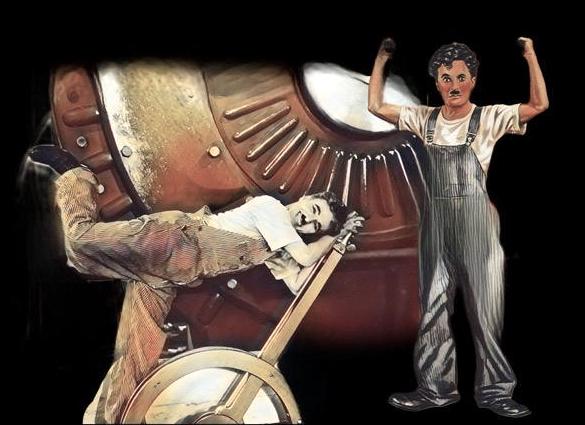
The film’s most famous sequence — the Tramp tightening bolts on an assembly line until he suffers a nervous breakdown — crystallizes what Chaplin grasped with unsettling precision: industrial modernity demands not only labor, but disciplined, synchronized, repeatable bodies. The human body becomes an extension of the machine, and when it fails, it is discarded.
Chaplin turns this process into choreography. Every mechanical gesture of the Tramp carries physical comedy, but also exhaustion, wear, and alienation. The character does not collapse because of personal weakness; he breaks because the system has no room for humanity. When he is literally swallowed by the gears, the gag becomes the definitive visual metaphor of the twentieth century — and, frankly, of the twenty-first as well.
The film obsessively returns to this cycle: work, collapse, prison; freedom, hunger, another attempt at work; hope, frustration, flight. Prison, in fact, appears paradoxically more stable than the “free” world. Inside, there is food, routine, and predictability. Outside, economic chaos reigns. Chaplin touches a raw nerve of capitalist crisis: when society fails, punishment can feel safer than freedom.
Ellen, the Gamin, and the Reinvention of Affection
With the introduction of Ellen, played by Paulette Goddard, Chaplin shifts the film from pure social commentary toward something more intimate and emotional. The Gamin is not merely a romantic interest; she is a mirror, accomplice, survivor. Orphaned, hungry, pursued, Ellen understands the modern world not as an abstraction but as a concrete threat.
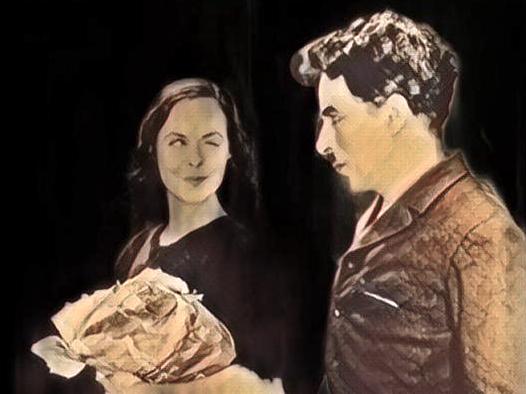
There is something radically modern in the way Chaplin builds this relationship. They do not dream of wealth, status, or success. They dream of a simple shack, food on the table, and a minimum of dignity. The famous “domestic dream” imagined by the Tramp — with doors that do not close and chickens wandering in through the window — is deliberately precarious. There is no cruel irony there, only lucidity: the modern dream has been reduced to survival.
And yet, Chaplin insists on tenderness. Their love is not idealized; it is practical, solidaristic, and improvised. They stay together not because the world improves, but because, together, it weighs a little less.
Silence, Sound, and the Refusal to Yield
Modern Times is technically a “part-talkie,” but Chaplin makes a point of keeping the Tramp silent. The voices we hear come from machines, recordings, loudspeakers, and authorities. Human speech appears mediated by technology, depersonalized. When Chaplin finally “speaks” on screen, it is through a nonsense song, mixing French, Italian, and pure sound. It is not communication; it is performance. Not discourse, but body.
This choice is neither nostalgia nor stubbornness. It is an aesthetic and political stance. Chaplin understood that giving the Tramp a literal voice would anchor him to a language, a territory, a fixed identity. Silence kept him universal. In a world increasingly regulated by commands, slogans, and orders, the Tramp resists by not speaking.
Politics Without Pamphlets
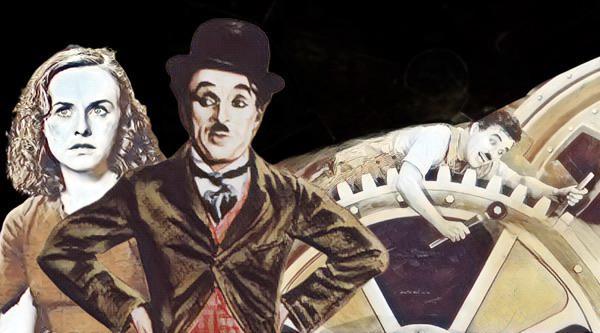
From its release, Modern Times was accused of being communist, subversive, and dangerous. It was banned in Nazi Germany, unsettled conservative sectors, and provoked heated debate. Yet Chaplin never offered closed ideological solutions. He presents situations, exposes absurdities, and trusts the viewer.
The critique of industrialism is not doctrinaire; it is humanist. The problem is not the machine itself, but its use without regard for life. Chaplin understood early what we still struggle to articulate: technology without ethics amplifies inequality. The obsession with efficiency can crush what is most essential: time, care, pause, and error.
Perhaps that is why the film has been claimed by such diverse currents over the decades. French philosophers named an intellectual journal after it. Filmmakers, comedians, animators, and writers recycled its images. Modern Times became a language.
A Farewell That Becomes Legacy
There is something deeply moving in knowing that this was the Tramp’s last film. Chaplin knew it. Every gag functions like a loving goodbye, as if he were packing his creation away before letting it walk alone into cinema history.
The final scene — the two of them walking down the road at dawn — refuses classical closure. There is no triumph, no concrete promise. There is movement. There is persistence. “Never give up,” says the Tramp. Not as a motivational slogan, but as an act of existential stubbornness.
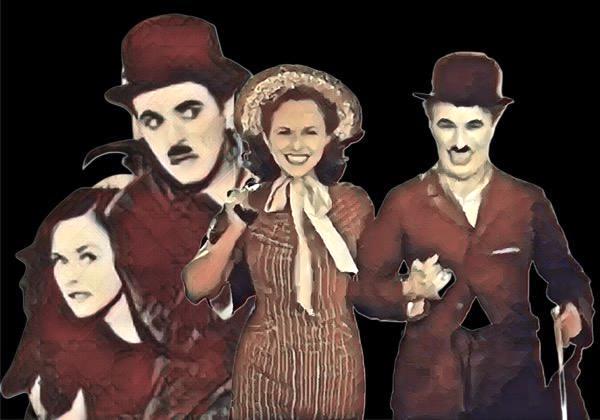
Ninety years later, Modern Times still looks back at us. In a world of algorithms, toxic productivity, burnout, precarious labor, and constant surveillance, Chaplin seems less a chronicler of the past than an uncomfortable contemporary. We laugh, yes. But we laugh with the uneasy sensation of recognizing our own routine in those gears spinning too fast.
Perhaps that is the film’s greatest victory: to remind us that, even when everything conspires to turn us into replaceable parts, it is still possible to walk. Even without knowing exactly where. Even when tired. But together.
Descubra mais sobre
Assine para receber nossas notícias mais recentes por e-mail.
 miscelana.com