
Amid so many classic stories being remade, Netflix’s decision to bet on a lesser-known work was a smart one. The detective is neither Poirot nor Miss Marple. The Seven Dials Mystery is not among Agatha Christie’s most celebrated titles. In fact, it is the continuation of another novel that is also far from being one of her most popular. And yet, perhaps precisely because of that, it may be one of the most strategic choices.
When streaming platforms decide to revisit Christie, they are not simply looking for the perfect mystery. They are looking for characters that speak to the present, atmospheres that can be reinvented, and stories that allow creative freedom without the weight of an untouchable canon. Published in 1929, The Seven Dials Mystery offers exactly that: a Christie who is less monumental and more restless, less crystallized and more permeable to the anxieties of her time, and, curiously, of ours.
Youth as rupture
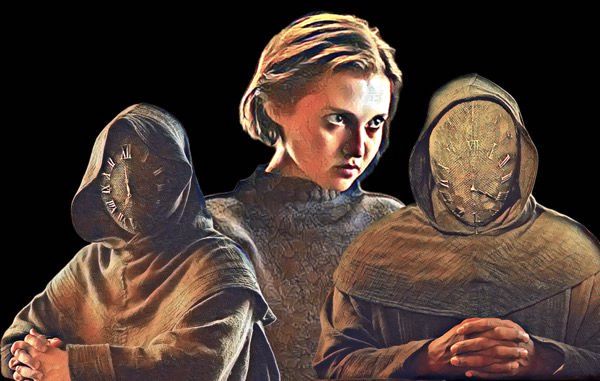
Lady Eileen “Bundle” Brent is an unlikely heroine within Christie’s universe. Young, aristocratic, ironic, impulsive, she does not fit into the tradition of the brilliant detective nor into the figure of the mature observer that Miss Marple would later embody. Bundle belongs to another imaginary: that of the interwar youth, who sees the world as a game but gradually begins to realize that the rules of that game are dangerously real.
In Seven Dials, the mystery ceases to be merely an elegant puzzle and becomes a threat, part of a broader political mechanism. Christie constructs this shift with the skill of someone who never reveals secrets directly: for those familiar with the writer’s formula, everything should seem clear from the start, yet it is precisely the least suspicious elements that hold the decisive revelations. Even though the series introduces changes, the experience still allowed me to identify the culprits quickly, and yet, the pleasure remained in suspecting, erring, revising hypotheses, and, above all, realizing that the true mystery lies less in the final solution than in the architecture of the journey.
It is at this point that the adaptation finds its ideal protagonist in Mia McKenna-Bruce. The actress creates a Bundle who is not only the heir to an aristocratic world but also a product of its contradictions. There is lightness, insolence, and vulnerability in her performance, but also an intuitive intelligence that never imposes itself overtly. McKenna-Bruce avoids turning Bundle into a classic heroine or an artificially modernized figure. Her interpretation preserves something essential: the sense that the character is always one step ahead—not because of genius, but because of restlessness.

Between Chimneys and Seven Dials: an aristocratic universe in crisis
As mentioned earlier, Seven Dials is, in practice, an indirect continuation of The Secret of Chimneys (1925). The two novels share characters, settings, and, above all, an atmosphere: that of a British aristocracy trying to preserve its relevance in a world that no longer revolves around it.
In both, Christie explores castles, traditional families, political intrigues, and networks of power. But while Chimneys still carries a certain fascination with the elite, Seven Dials reveals something different: a subtle, almost melancholic irony. The aristocracy is no longer the center of the world; it is merely a stage where invisible forces begin to operate.
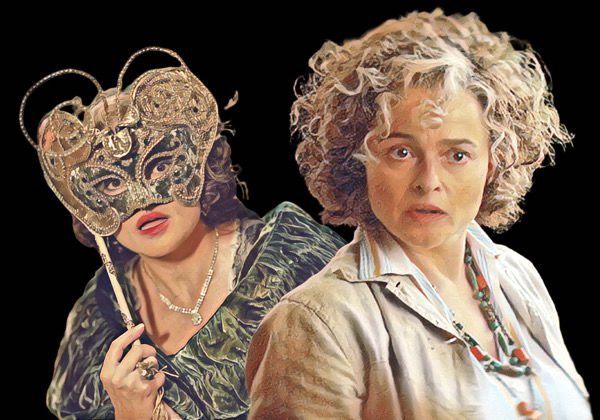
In this sense, the casting of Helena Bonham Carter is more than accurate; it is symbolic. The actress, who has already expressed her desire to play Miss Marple, finds here a role that dialogues with Christie’s tradition without submitting to it. Her presence brings emotional density and moral ambiguity to the narrative, functioning as a bridge between the author’s classic universe and the contemporary reinterpretation proposed by the series. Bonham Carter embodies an aristocracy that is not only elegant but also aware of its own decline, and it is precisely this awareness that makes her character vital to the story.
Christie and the fear of collapse
Published in 1929, Seven Dials emerges in a moment of historical tension. Europe was still processing the trauma of the First World War. The fear of communism, the decline of traditional elites, and political instability permeated the British imagination.
The secret group “Seven Dials” is not merely a narrative device. It symbolizes the paranoia of a society that senses something is about to crumble. Christie, often reduced to the label of an author of elegant enigmas, reveals here a less comfortable facet: that of a writer attentive to the fissures of her time.
It is no coincidence that the book blends espionage, secret societies, and threats to the state.
The mystery is no longer simply about who killed whom. It becomes another, more unsettling question: who controls the world when old structures fail?
Christie’s “B-side” and its contemporary power
For decades, Seven Dials was seen as a minor novel. Critics pointed to a confusing plot, an excess of characters, and solutions less memorable than those of Christie’s great classics. But perhaps that is precisely its value.
Unlike Murder on the Orient Express or And Then There Were None, Seven Dials is not a perfect work. It is a living one, full of edges, ambiguity, and youthful energy. And that is exactly what streaming platforms are looking for today: stories that can be reinterpreted, expanded, and stretched.
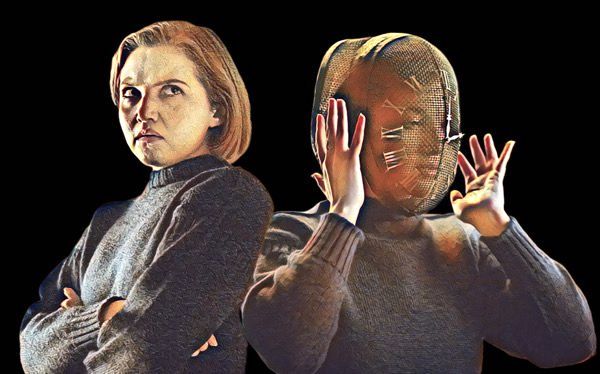
Bundle Brent, with her mix of privilege and unease, seems tailor-made for the twenty-first century. She is the heir to a world she does not fully understand, yet one she begins to question. It is not difficult to see in her the prototype of so many contemporary protagonists: young women who move between tradition and rupture, between inheritance and autonomy.
Where Seven Dials fits within Christie’s oeuvre
If we look at Agatha Christie’s trajectory, Seven Dials occupies a specific and revealing place.
In the 1920s, she experimented with genres and tones. She wrote adventure novels, espionage stories, and political intrigues, often starring young heroines. This period includes works such as The Man in the Brown Suit, The Secret of Chimneys, and Seven Dials. Only later would she consolidate the classic mystery model that would make her immortal.
In this sense, Seven Dials is less a deviation and more a clue. It reveals a Christie in motion, not yet fully crystallized in the figure of the “Queen of Crime,” but already deeply aware of the social transformations reshaping England.
Why Seven Dials now?
To adapt Seven Dials today is more than revisiting a forgotten book. It is to recover a Christie who dialogues with contemporary themes: youth, privilege, invisible power, conspiracy, and the collapse of traditional structures. It is to transform a 1929 novel into a mirror of a world that, nearly a century later, once again feels the same kind of vertigo.
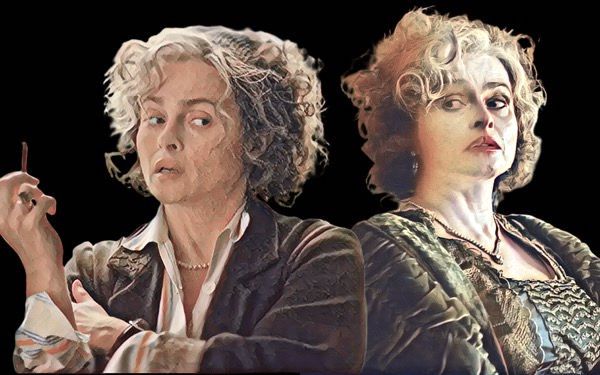

By choosing Seven Dials, streaming is not merely adapting Agatha Christie. It is choosing a specific Agatha Christie: less comfortable, more political, more open to reinvention. And yes, with the potential of a franchise.
Perhaps that is the final irony.
The book that was never considered one of the author’s great classics may be precisely the one that best translates the spirit of our time.
Descubra mais sobre
Assine para receber nossas notícias mais recentes por e-mail.
 miscelana.com