
We really stay with the common folk in A Knight of the Seven Kingdoms. The second episode does introduce princes, but this is not a story about kings, dragons, or great wars. It is a story about what happens on the margins of History.
We open with a flashback and yet another image designed to spark internet debate: this time, the size of Ser Arlan of Pennytree’s “chivalry,” Dunk’s mentor. As he recalls his final days with the old knight, Dunk searches almost obsessively for validation to enter the tournament at Ashford. Someone other than Dunk himself needs to remember Ser Arlan — but no one does, or can. Egg, always suggesting he is more than he appears, urges him to keep trying.
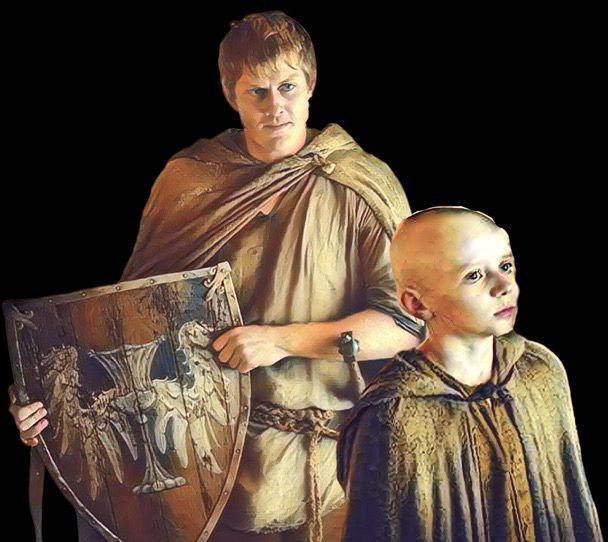
The lords’ refusals — Florent, Hayford, Tyrell — are not merely narrative devices; they are symbolic. In Westeros, to exist is to be remembered. And Ser Arlan, like so many hedge knights, seems condemned to oblivion. Dunk’s pain is not just practical but existential: with every rejection, it is as if Arlan dies all over again. Egg grasps this with brutal clarity when he suggests that if no one remembers Arlan, perhaps he was an ordinary knight after all. In truth, we will never know, because the flashbacks never reach Ser Arlan’s youth.
It is in this context that the Targaryens arrive. The entrance of Baelor (Hand of the King and heir to the Iron Throne), Maekar, and Aerion transforms Ashford. Ser Duncan is left awestruck, while Egg grows quietly nervous, discreetly finding tasks that keep him away from the crowd. The tournament ceases to be merely a local spectacle and becomes a political event. The Targaryens represent the top of the hierarchy: the world seen from above. Dunk, by contrast, embodies Westeros seen from below — so far below that his first encounter with Prince Aerion comes when the prince mistakes him for a servant.
Having made little progress, Duncan decides to seek Prince Baelor himself. He manages to enter the castle, where he discovers the reason behind Maekar’s bad mood: two of his sons arrived earlier, but both have gone missing.
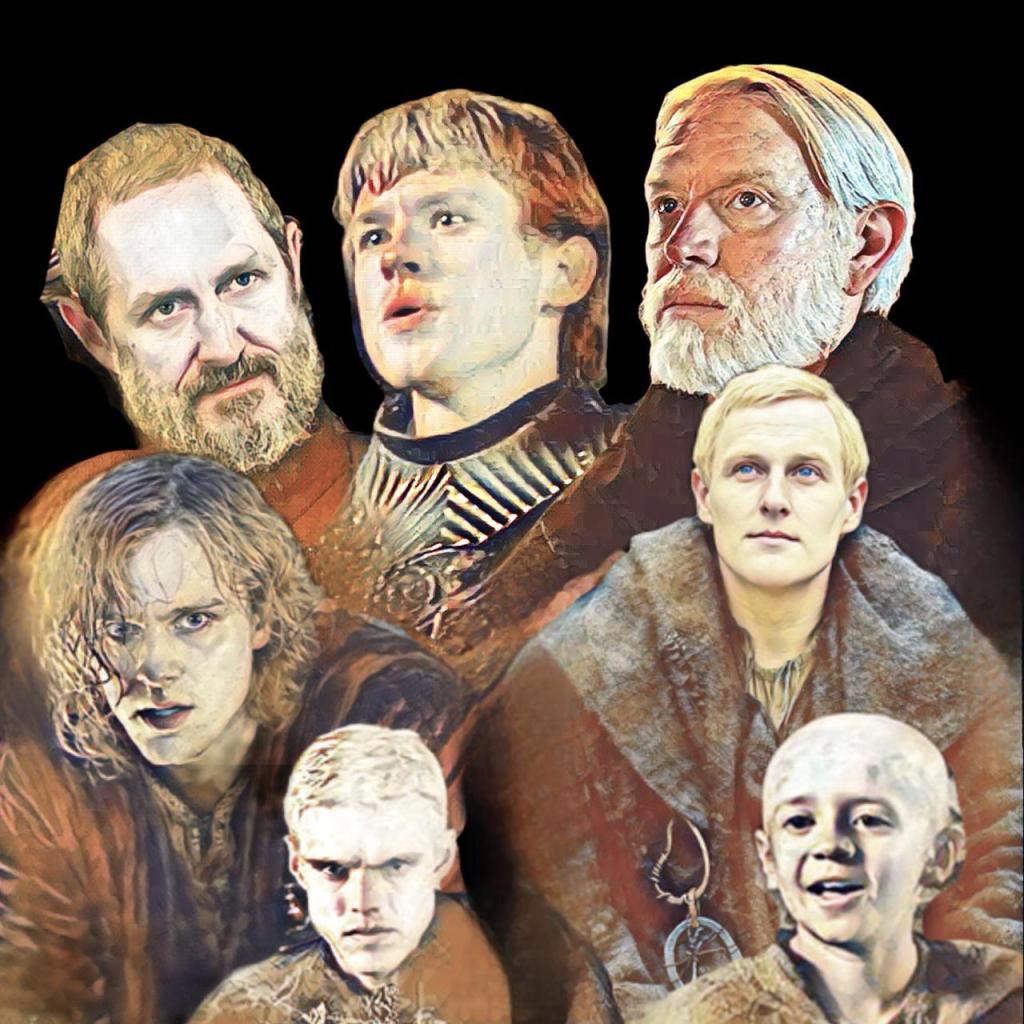
Knowing he must be direct, even aware of Maekar’s tension, Ser Duncan explains his situation. Baelor is the only one who remembers Ser Arlan. More than that, he legitimizes Dunk, allowing him to enter the lists. This moment is more than a narrative victory; it is the first time Dunk realizes that Arlan’s memory can exist beyond his own devotion.
Dunk must now create a sigil of his own. Here, the episode becomes more intimate. In Westeros, a sigil is not a mere aesthetic detail; it is a condensed identity, the visual narrative of a lineage. Yet Dunk does not know who he is. His conversation with Tanselle, the artist and puppeteer, reveals this fragility: he cannot name his own story. The sigil that emerges — an elm tree and a shooting star — is less a symbol of glory than a quiet tribute to Arlan and to the wandering life they shared. And, of course, he can only articulate it with Egg’s help.
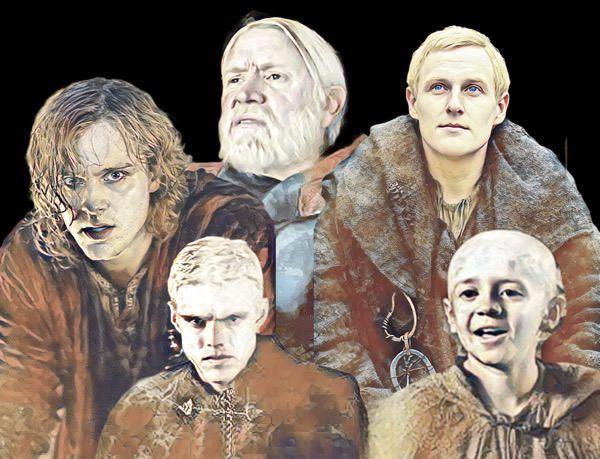
When the games finally begin, the first night of competition thrills Egg but leaves Duncan uneasy. Alone with the boy, the hedge knight declares himself Ser Arlan’s legacy — and the episode finds its thesis. Dunk does not merely want to compete; he wants to prove that the life of a forgotten man mattered. In a universe where kings and princes fight for the right to write History, A Knight of the Seven Kingdoms chooses to tell the story of those who were never granted that right.
That is precisely what makes Dunk such a rare protagonist in Westeros. He does not fight for the throne, but for memory. He does not seek to rule, but to be remembered. In a world where almost everything is driven by ambition, he is driven by something more fragile and, therefore, more human: the desire that someone, somewhere, will remember the name of Ser Arlan of Pennytree.
Descubra mais sobre
Assine para receber nossas notícias mais recentes por e-mail.
 miscelana.com