
In A Knight of the Seven Kingdoms, a series that shifts the Game of Thrones universe from the spectacle of war to the more intimate territory of honor, politics, and human choices, two characters disrupt one of the most crystallized images of House Targaryen: silver hair, pale eyes, and an almost mythical appearance that has always functioned as a symbol of power and distance.
Prince Baelor “Breakspear” Targaryen and his son, Valarr, emerge as visual anomalies—dark-haired Targaryens—and, precisely because of that, reveal something deeper than genetics: the fragility of the idea of purity, the politics of blood, and the destiny of a dynasty that was never as homogeneous as it wished to appear.
Baelor is not merely a different kind of Targaryen. He is, perhaps, one of the most sophisticated princes in the history of Westeros. As the son of King Daeron II, he carries on his face the legacy of House Martell. The marriage between Daeron and Mylessa Martell was not simply a romantic union but a decisive political gesture: the integration of Dorne into the Seven Kingdoms not through conquest, but through blood. Baelor’s body is therefore a political treaty. He embodies the project of reconciliation between North and South, dragons and sun, fire and sand.
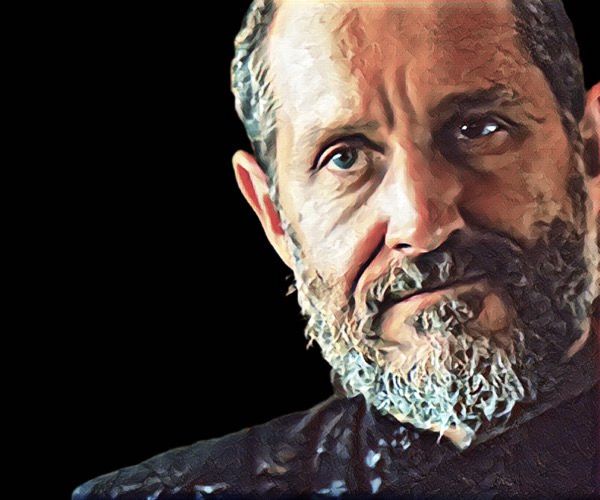
But in Westeros, appearance is never neutral. Because Baelor does not correspond to the idealized Targaryen aesthetic, he becomes a silent target of suspicion and resentment. His nickname, “Breakspear,” is born of war, but his very existence is, in itself, a symbolic rupture. In A Knight of the Seven Kingdoms, this visual difference acquires dramatic weight. While Dunk observes tournaments, codes of honor, and small intrigues, Baelor represents another kind of nobility: less theatrical, more ethical. He is not the dragon of destruction, but the dragon of conciliation.
Valarr inherits this ambiguity. Also dark-haired, also displaced from the traditional Targaryen imaginary, he is the heir to a lineage that never had time to consolidate itself. If Baelor is the political project, Valarr is the interrupted promise. After his father’s death at the Tourney of Ashford, he becomes Prince of Dragonstone, but barely has time to assume that role: he dies soon after, a victim of the Great Spring Sickness, the epidemic that devastated King’s Landing and killed thousands.
Instead of dragons or palace intrigues, it is disease that interrupts the continuity of this lineage. Westeros does not lose only a prince, but a possible future.
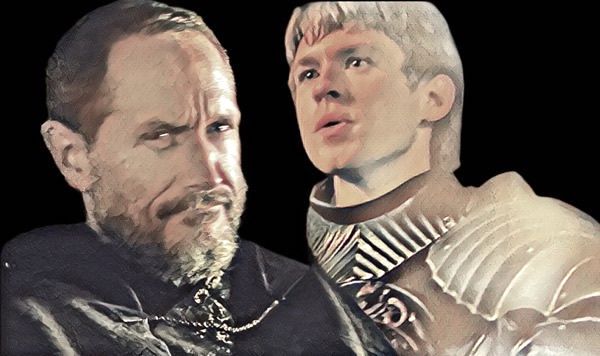
With Valarr’s death, succession does not follow the logic of conciliation. The throne passes first to Aerys I, Baelor’s brother, and later to Maekar I, another son of Daeron II. If Baelor and Valarr represent diplomacy, mixture, and political vision, Maekar represents another response to chaos: rigidity, discipline, and military pragmatism.
History does not choose the dragon who negotiates, but the dragon who endures.
There is an even deeper irony in this genealogy. Baelor and Maekar are great-grandsons of Rhaenyra Targaryen and Daemon Targaryen, the couple whose civil war nearly destroyed the dynasty during the Dance of the Dragons. If Rhaenyra and Daemon represent the apex of Targaryen obsession with blood, power, and legitimacy, Baelor and Valarr represent its opposite: the attempt to transform fire into politics, dragons into diplomacy, purity into mixture.

It is as if, over generations, Rhaenyra’s lineage had been forced to learn how to survive: first through fire, then through politics, then through discipline.
At this point, the very idea of “dark-haired Targaryens” becomes even more complex when observed through the difference between books and adaptations. In George R. R. Martin’s novels, atypical Targaryens were primarily defined by dark hair. The distinction was never about skin color, but hair—a recurring genetic marker throughout the saga.

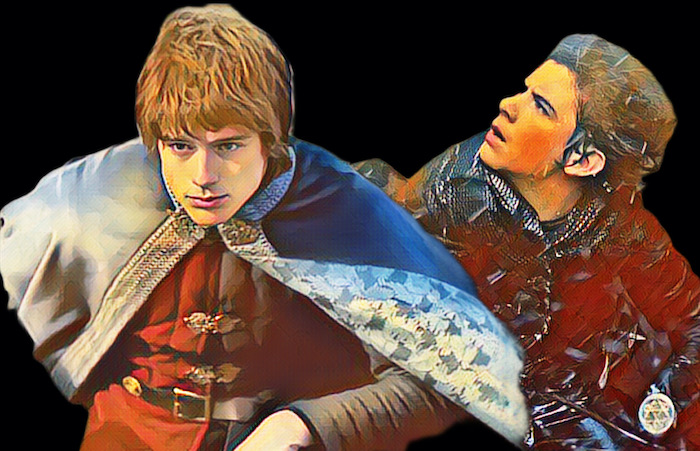

In House of the Dragon, however, the series introduces a new layer by transforming the Velaryons into a Black family with platinum hair. In the books, the Velaryons were white, which made the legitimacy of Rhaenyra’s children more ambiguous. In the series, by contrast, the bastardy of her sons with Laenor Velaryon becomes visually unequivocal: they have dark hair but do not inherit their father’s appearance nor Rhaenyra’s silver hair.
The adaptation thus shifts the axis of genetic proof. Instead of skin, hair becomes the main marker of legitimacy, exactly as in Game of Thrones, when Ned Stark discovers that all legitimate Baratheon children had dark hair, while Cersei’s blond children revealed their Lannister origin.
This logic, however, contains a narrative trap. As Rhaenyra herself explains to Luke, they are Targaryen. It is rare, but possible for a Targaryen to have dark hair—Jon Snow is proof of that. Appearance may suggest bastardy, but it does not determine it.
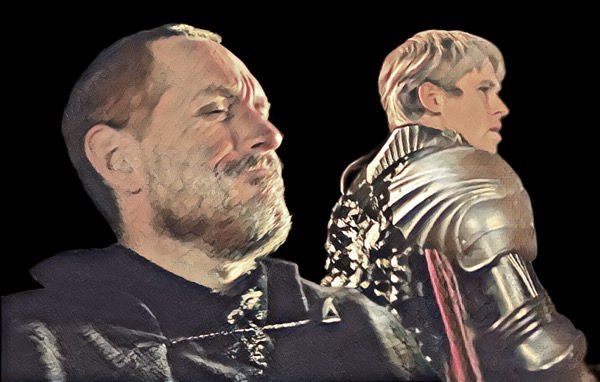

This is where Baelor and Valarr become even more fascinating. Unlike their silver-haired siblings and cousins, they also deviate from the dynasty’s visual stereotype, but carry no suspicion of illegitimacy. They are legitimate Targaryens—and, paradoxically, the ones who most challenge, with their own faces, the myth of purity that sustains the House of the Dragon.
Perhaps that is why Baelor and Valarr are so unsettling to the Targaryen myth. They prove that power does not need to be silver-haired, mythical, or isolated. It can be hybrid, political, and imperfect. And, paradoxically, more human.
In A Knight of the Seven Kingdoms, these two dark-haired Targaryens are not merely casting choices or canon details. They are a visual thesis. A disturbing reminder that the blood of dragons was never as pure as legend suggested—and that, perhaps, the best Targaryens were precisely those who strayed farthest from the stereotype.
In the end, Baelor and Valarr represent not only a genetic exception but a political hypothesis that Westeros never had time to test. History chose other dragons: harder, more rigid, more faithful to the myth. But perhaps, as so often in Martin’s saga, the true tragedy lies not in the fall of monsters, but in the premature death of the men who might have been kings.
Descubra mais sobre
Assine para receber nossas notícias mais recentes por e-mail.
 miscelana.com