
Since Ryan Murphy announced his intention to retell the love story of John F. Kennedy Jr. and Carolyn Bessette-Kennedy amid the revival of 1990s nostalgia, the reaction has been less curiosity and more suspicion. Before it even became a series, Love Story was already a source of controversy.
The couple, who died tragically on July 16, 1999, when the plane piloted by John crashed into the ocean near Martha’s Vineyard, became one of the great icons of the final decade of the millennium. Not only because of their beauty, elegance, or cultural influence, but because the Kennedys occupy a singular place in the United States. They are treated as a kind of uncrowned royalty, a democratic aristocracy that blends political power, glamour, and tragedy.
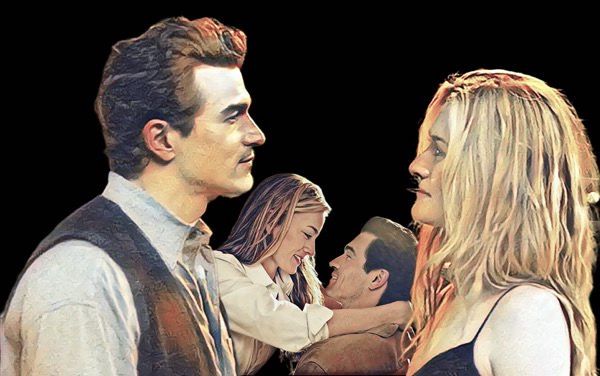
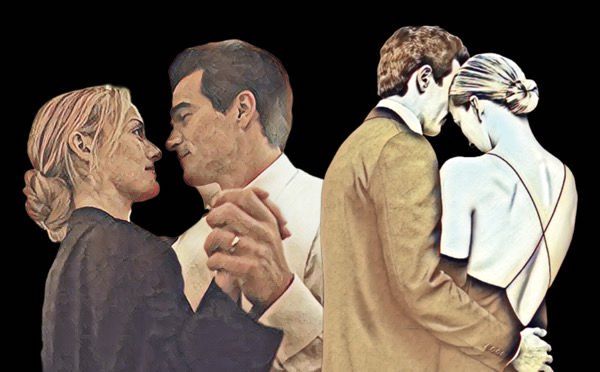
Murphy’s chosen title is deliberately romantic. The launch strategy is, too. The series premieres on February 12 in the United States on FX and Hulu with three episodes, then continues with weekly releases until the finale on March 26. Internationally, it arrives on Disney+ from February 13. The proximity to Valentine’s Day is part of the plan, but it also sharpens the contradiction. Few stories were as intense, premature, and exposed as that of John and Carolyn. It was love, without doubt. But was it a love story that truly fits the most sentimental date on the cultural calendar?
The controversy surrounding the series is not only about the couple but about the very act of retelling the myth. This is not merely about narrating a familiar story, but about disputing its meaning. Who has the right to reinterpret the Kennedys? The family, the cultural industry, or the public that transformed this surname into a collective narrative?
John F. Kennedy Jr., heir to the legendary and not always glorified legacy of John F. Kennedy, grew up under the shadow of the tragedy that haunts his family. The boy who saluted his father’s coffin became, decades later, America’s prince. Handsome, wealthy, and charismatic, John seemed destined to embody a modern version of Camelot. Yet his personal life was never shielded. Every romantic relationship was filtered through the relentless gaze of the press and the decisive influence of his mother, Jacqueline Kennedy Onassis, whose presence shaped and, at times, controlled his emotional life.
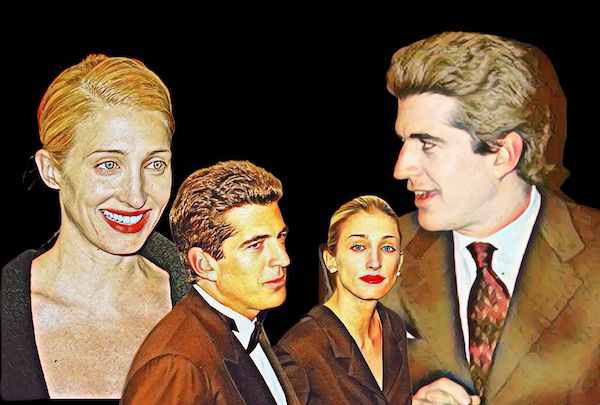
Before Carolyn, other women had already experienced the weight of being involved with a Kennedy. Among them was Daryl Hannah, an older, independent, and already famous actress whose relationship with John was intensely followed by the press. Daryl represented a type of woman who confronted the Kennedy myth more directly, visibly, and less assimilably. In the dramatic logic of the series, she appears as a counterpoint to Carolyn. If Daryl challenged the Kennedy universe, Carolyn was absorbed by it.
Jacqueline Kennedy Onassis never met Carolyn. Jackie died in May 1994, when the relationship was still in its early stages. Jackie was present more as a myth than as an active character. Even in her absence, she remained a decisive force in John’s life. Carolyn entered this universe when the maternal figure still dominated the public and intimate imagination of the Kennedy heir, but without enough time to dispute that space directly. Jackie was less a mother-in-law than a ghost, less a person than a legacy.
Carolyn Bessette came from another symbolic place. A publicist at Calvin Klein, she was not born under the spotlight. She was pulled into it. Her rise in fashion coincided with the transformation of her image into an object of global fascination. Minimalist, enigmatic, and resistant to exposure, Carolyn paradoxically became one of the most photographed figures of the 1990s. Her aesthetic influence outlasted her own career. Today, every woman crossing a street in an impeccable minimalist look carries something of her cultural legacy.
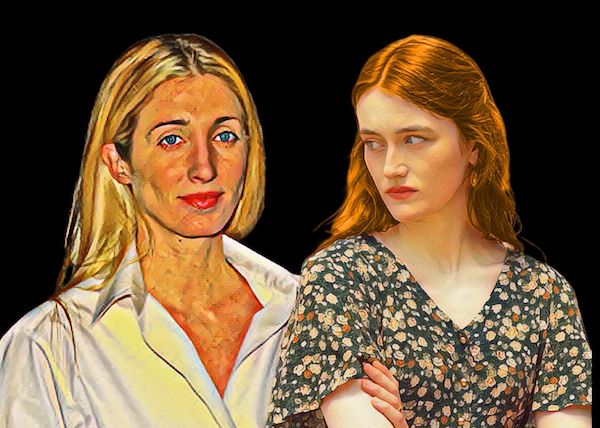
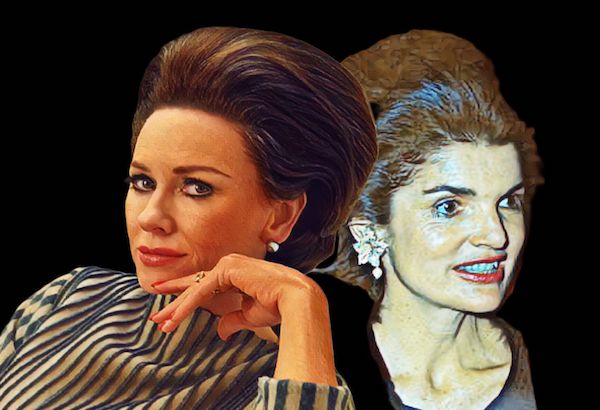
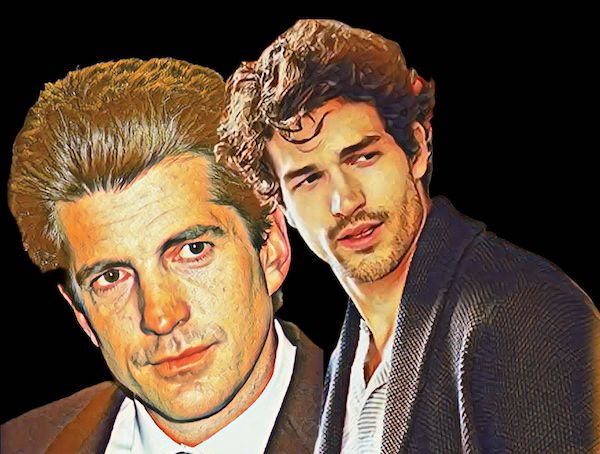
In Ryan Murphy’s series, John is played by Paul Anthony Kelly, while Sarah Pidgeon portrays Carolyn. The cast includes Naomi Watts as Jacqueline Kennedy Onassis, Grace Gummer as Caroline Kennedy, Alessandro Nivola as Calvin Klein, Leila George as Kelly Klein, Sydney Lemmon as Lauren Bessett,e and Constance Zimmer as Ann Marie Messina. Created by Connor Hines and produced by Murphy alongside Brad Simpson, Nina Jacobs, and D.V. DeVincentis, Love Story follows the couple from the beginning of their romance to the erosion caused by media exposure, professional pressure, and family tensions, culminating in the tragedy that ended their story.
From the first images released, the series faced an almost obsessive reaction. Costumes, hairstyles, gestures, and details were scrutinized with forensic rigor across social media. The pressure was so intense that the production replaced its costume designer midway through filming. The Kennedy family also reacted. Jack Schlossberg, John’s nephew, publicly criticized the project and accused Murphy of exploiting the tragedy without consulting the clan. The episode exposed an old tension. Does the Kennedy story belong to the family or to the collective imagination?
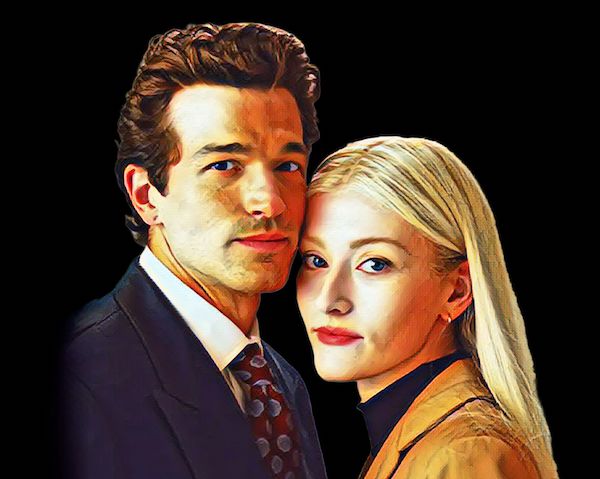
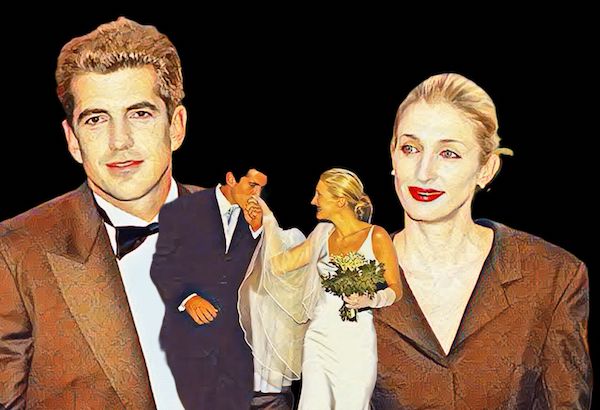
Ryan Murphy defended the project as an investigation into the price of fame and the symbolic violence of media culture. As in other works in his filmography, he does not simply recount facts but exposes the mechanism that transforms real lives into spectacle.
There is, however, a question the series cannot answer, only suggest. If John and Carolyn had survived, would their marriage have endured? Would they have separated, reinvented themselves, or followed different paths? The tragedy froze their relationship at a specific point in the narrative, preventing any ending other than a mythical one. Their story never had the chance to grow old.
Ultimately, Love Story reveals an uncomfortable paradox. John and Carolyn were, at the same time, a real couple and a cultural construction. The public is not fascinated only by their story, but by the idea they represented. An elegant, cohesive, and almost aristocratic America, something that seems to have been lost. Perhaps that is why the series provokes so much discomfort. Because retelling the story of John F. Kennedy Jr. and Carolyn Bessette is not merely revisiting a romance. It is touching a myth that many would prefer to keep intact.
Descubra mais sobre
Assine para receber nossas notícias mais recentes por e-mail.
 miscelana.com