
In the universe of A Song of Ice and Fire, most great destinies are born from grand gestures: wars, prophecies, dragons, assassinations. The story of Aegon V, or simply Egg, is the opposite of that. It begins with a small, almost trivial gesture: a shaved-headed boy asking to become the squire of a nameless knight.
Even for those unfamiliar with the world George R. R. Martin builds in The Hedge Knight, there is something clearly out of place about the boy Ser Duncan the Tall’s orders to care for his horses, and later accepts as his squire. Egg is literate, ironic, demanding in ways that do not match a humble origin, and wrapped in a vague, shadowy past. For those who already know the outcome, his identity is not merely a plot twist. The revelation is a slow, psychological, and political narrative operation, one of the most subtle and singular in the entire saga.
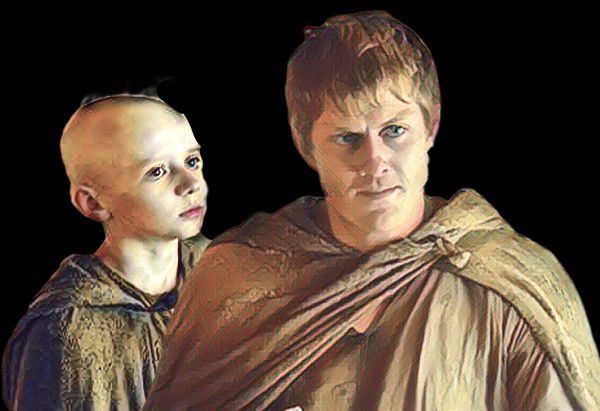
Dunk does not discover who Egg is all at once. He himself claims to be slow-witted, yet gradually senses that something is wrong, something too large to fit inside that insolent boy. From the very beginning, Egg behaves strangely for a peasant. He can read and write, knows the stories of the court, genealogies, and protocols, complains about food and drink, and speaks with refined vocabulary. This detail echoes one of the most emblematic scenes in Game of Thrones, when Tywin Lannister realizes, through her manner of speech, that Arya could not be a simple peasant girl, even without identifying her as a Stark. In Egg, the same fracture appears: language betrays origin.
Dunk interprets everything as precocious intelligence. The shaved head, a symbolic and literal gesture of escape from Targaryen identity, does not immediately raise suspicion. Only later, at the Ashford tourney, does the secret begin to unravel. When the Targaryens arrive, Egg changes. He stops being merely an insolent boy and becomes someone in danger. He avoids looking at the princes, grows tense, vigilant, almost invisible. A peasant would fear the royal family, but Egg’s fear is different. He does not fear the Targaryens as an outsider, but as someone who might be recognized.
The series offers a significant clue when Maekar appears worried about the disappearance of two sons,s who should have arrived at Ashford before the royal procession. No one has seen them. Shortly before that, Duncan had been verbally assaulted by the drunken Prince Daeron, just minutes before meeting Egg. Daeron does not recognize his own brother. Why would he? Egg’s invisibility is also political.
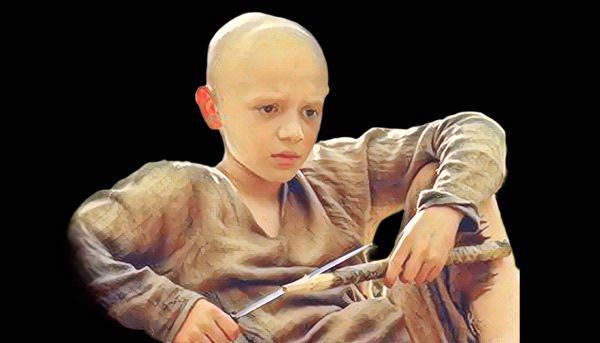
The revelation does not occur in an intimate conversation between Dunk and Egg, but publicly, when the knight comes into conflict with the royal family. After Dunk strikes Prince Aerion Brightflame to defend Tanselle, he is accused of attacking a member of House Targaryen, a crime of high treason. Dunk demands a trial by combat, and it is at this moment that Egg enters the story irreversibly. As the Targaryen princes gather, someone finally notices the boy. In the book, the recognition is gradual. Brothers, cousins, and Egg’s own father observe the child until someone understands the obvious: that boy is Aegon.
There is no melodrama. Only inevitability. Egg can no longer pretend. Confronted, he confirms it: his name is Aegon Targaryen. In that instant, Dunk understands everything. The boy he scolded, fed, protected, and treated as an apprentice is a prince.
Dunk’s reaction is not reverence but profoundly human. He feels deceived, ridiculed, and almost used by the nobility. Everything suggests he has been the victim of a cruel aristocratic joke. But Egg does not laugh. He is frightened. He confesses that all he ever wanted was not to be a prince, but a squire, to see the real world, to experience what palaces never allow. As a former squire himself, Dunk realizes he was not manipulated by arrogance, but by desperation. And that changes everything.
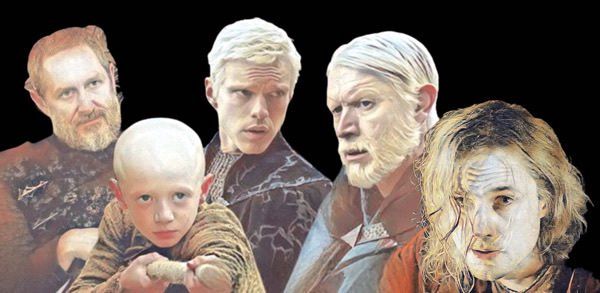
The great question then arises: why does House Targaryen allow Egg to remain by Dunk’s side? Technically, nothing would prevent them from taking him back to court. But at that moment, Egg is a peripheral prince, far from the direct line of succession, without strategic weight. As Maekar’s youngest son, he is almost politically irrelevant. The family believes it can move forward without him.
Moreover, by confronting Aerion, Dunk exposed something the Targaryens preferred to hide: the cruelty, sadism, and danger embodied by that prince. Punishing Dunk would mean publicly admitting that truth. By fighting bravely in the trial by combat, Dunk earns the respect of figures such as Baelor Breakspear and Maekar. In the end, he ceases to be merely a peasant and becomes a knight worthy of trust.
Baelor is the first to understand something others do not see. Dunk can be useful to Egg because he represents precisely what the court cannot offer: moral sense, experience of the real world, and limits. Allowing Egg to remain by his side becomes, paradoxically, a form of political education.
Egg refuses to return to King’s Landing. He argues, begs, and challenges his family. Preventing him by force would be humiliating for the Targaryens, as it would mean publicly admitting that a prince fled the court. As always, Westeros prefers silence to scandal. Officially, Egg remains a squire. Unofficially, everyone knows who he is, but pretends not to know. Without realizing it, the royal family creates something potentially subversive: a prince who knows the people.
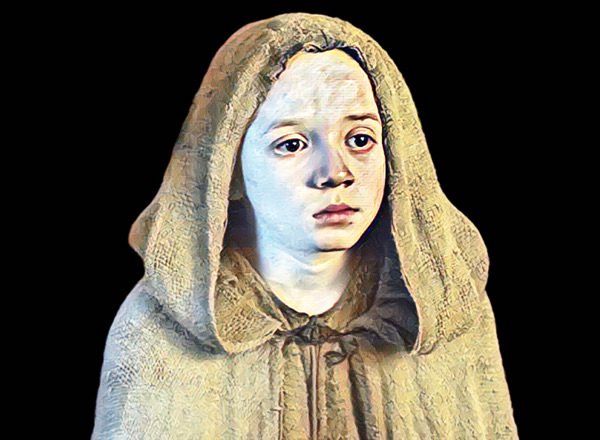
From that moment on, Egg begins to live a paradoxical existence. He is a Targaryen, yet he sleeps on the road, eats poor food, cleans armor, and learns the harshness of the world under the severe guidance of Ser Duncan. When he follows Dunk across the roads, no one imagines thatthe boy will be crowned. But it is precisely this experience that transforms him into Aegon V. When he becomes king, he tries to change Westeros. And for that reason, Westeros rejects him.
Egg grows up believing that the problem of the Seven Kingdoms is the aristocracy. In the end, however, those who destroy his project are not only the lords, but his own children. They fall in love, disobey, refuse political marriages, and repeat the gesture of rebellion that Egg himself practiced in his youth. Thus, the story of Aegon V ceases to be merely about power and becomes a reflection on limits. His reign ends in fire. His passion for History and the Targaryen obsession with reviving dragons cost him his life and that of his dearest ones, including Ser Duncan. The prince who wanted to understand the people ends up consumed by the same fire that defined his house.
Descubra mais sobre
Assine para receber nossas notícias mais recentes por e-mail.
 miscelana.com