
As published in Bravo Magazine
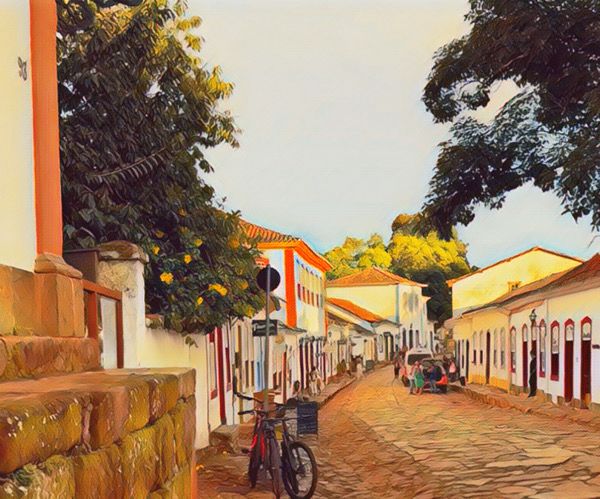
The 29th edition of the Mostra de Cinema de Tiradentes comes to an end with a rare convergence of cinema, politics, education, and public engagement. In a year shaped by the theme of imaginative sovereignty, Tiradentes once again functioned as a space of listening and symbolic dispute, reaffirming the festival not merely as a showcase for premieres but as an active site for the construction of memory and critical thought about Brazil.
The major winner of the Olhos Livres section was Anistia 79, a documentary by filmmaker Anita Leandro, which received the Carlos Reichenbach Award from the official jury and, even more tellingly, also won the Audience Award for Best Feature. The choice encapsulates the spirit of this edition. By creatively appropriating amateur footage and expanding the possibilities of each frame, the film inseparably binds form and politics. The jury highlighted the political force of the work in shifting the traditional imagery of resistance to Brazil’s civil-military dictatorship, bringing to the center images of two Black men—a rural leader and the cameraman—figures rarely accessed by the collective imagination, and affirming cinema as an active tool in the construction of memory.
On stage, Anita Leandro described the reception of the film as the most intense experience of her career. She spoke of the audience’s attentive silence in the face of a difficult subject, almost like a collective liturgy, and expressed the hope that recognition in Tiradentes would help the film reach commercial theatrical distribution. This was not merely an artistic victory, but confirmation that there is an audience for films that refuse narrative shortcuts and confront the past with formal rigor and ethical density.
The remaining awards reinforced the diversity of approaches and cinematic procedures present throughout the program. In the Foco section, dedicated to short films, the official jury awarded Entrevista com Fantasmas, by LK, for its ability to articulate cinema, city, and memory through humor and absurdity, addressing preservation, urban gentrification, and the precarization of labor through a radical economy of means. The Canal Brasil Award for Shorts went to Grão, by Gianluca Cozza and Leonardo da Rosa, recognized for dismantling stereotypes and portraying a youth walled in by invisible melancholy, creating space for historically silenced bodies to dare to feel.
The Helena Ignez Award for Female Achievement was given to Gabriela Mureb for Crash, a film that proposes a profound reflection on the use of sound and the act of seeing an image, offering a rare synthesis of aesthetic experimentation and political positioning. Among the feature films in the Aurora section, the Youth Jury selected Para os Guardados, by Desali and Rafael Rocha, a work that embraces experimentation as a deviation from dominant literalism and imagines alternative paths for reality. Meanwhile, the Brazilian Association of Film Critics awarded the Abraccine Prize for Best Feature in the Autorias section to Atravessa Minha Carne, by Marcela Borela, praising the film’s formal rigor in editing and sound design in dialogue with a free, sensorial photographic language.
This centrality of imagination as a political gesture also permeated the festival’s curatorial debates. In conversation during the event, Francis Vogner dos Reis, one of the curators, emphasized that the annual theme does not function as a rigid filter for selection. Imaginative sovereignty, he argued, is neither a thematic obligation nor an imposed framework, but an open proposition intended to foster dialogue with audiences, critics, and Brazilian cinema itself. Rather than selecting films according to a theme, the curatorial process recognizes, through long-term work, the concerns already circulating among films, filmmakers, and previous editions of the festival.
Francis also stressed that these themes emerge from sustained reflection, shaped by the accumulated experience of the festival and by Brazil’s political and social context. Rather than responding to immediate stimuli, they seek to create conditions for asking better questions. In terms of filmmaking practices, he highlighted the radical diversity of production modes present in the program. Films made artisanally, with minimal resources and over extended periods, coexist alongside works produced within more traditional frameworks, supported by public funding and larger crews. What matters, he noted, is how each film invents its own mode of existence from the circumstances available and transforms that into a sensorial experience offered to the audience.
This refusal of the predictable emerges as one of the driving forces of the cinema shown in Tiradentes. Imagination, in this context, lies not in repeating what is already given but in stretching forms, narratives, and expectations. The problem is not beginning with cliché, but ending with it. In contrast to conventional industrial cinema, these films embrace risk and estrangement, including the spectator’s right not to immediately identify with the experience proposed.
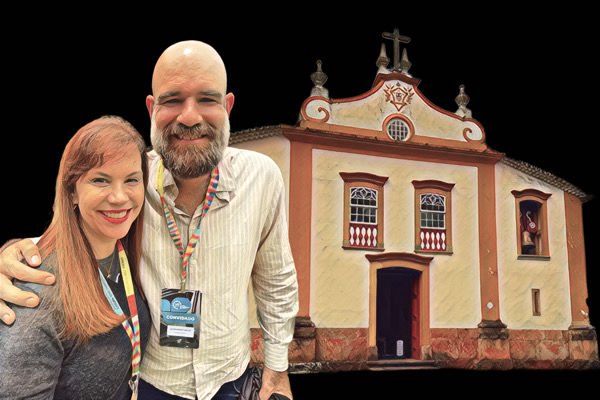
The relationship between creative autonomy and circulation also surfaced in conversations with industry professionals. For Leonardo Lacca, casting director of O Agente Secreto, the recent international trajectory of Brazilian cinema is less the result of strategy than of consistent creative processes. According to him, the work did not originate from discussions about awards or campaigns, but from a commitment to freedom and precision, allowing recognition to emerge organically.
Lacca also drew attention to an aspect often overlooked in public debate but essential to the credibility of period films and auteur cinema. Vocabulary, costume, production design, and above all, bodies matter. Overtly contemporary markers can undermine the verisimilitude of a film set in another time, and words carry historical and affective layers that cinema must learn to listen to. Sometimes, he observed, a single word can say more about a period than explicit concepts.
Throughout the festival, international recognition of Brazilian cinema appeared less as an aspirational goal and more as a reflection of a movement still in the process of resolving itself internally. There is evident pride in external circulation and attention abroad, but the urgency remains inward-looking, focused on production models, audience formation, public policy, and the capacity of Brazilian cinema to imagine itself before seeking external validation.
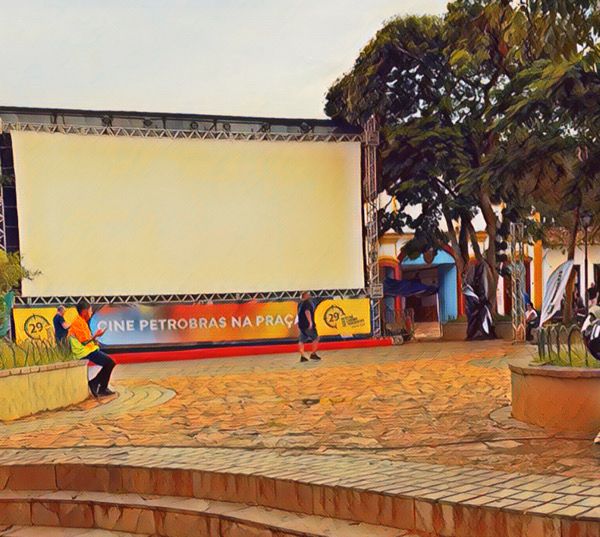
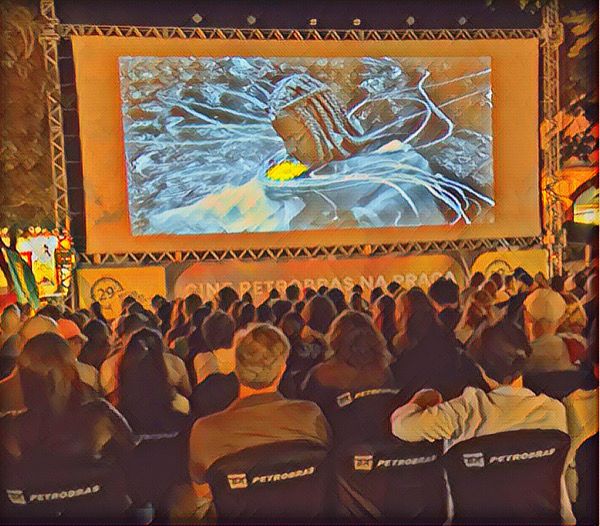
The numbers help measure the scale and impact of this edition. More than 38,000 people participated in activities over nine days of free programming, energizing the historic city and its surroundings. An estimated ten million reais were injected into the local economy, with hundreds of Minas Gerais-based companies contracted and thousands of direct and indirect jobs generated. A total of 137 Brazilian films from 23 states were screened, all in premiere status, across 21 sections and special programs, alongside an extensive slate of educational activities and debates that consolidated Tiradentes as a strategic space for thinking about Brazilian audiovisual culture.
In the end, the 29th Tiradentes Film Festival leaves the impression of an event that grows without losing density, expands its audience and economic impact without diluting debate, and continues to affirm Brazilian cinema as a field of imagination, memory, and political contestation. In a country perpetually negotiating its past and its future, Tiradentes remains one of the few places where these conversations unfold with time, rigor, and genuine listening.
*The reporter attended the 2026 Tiradentes Film Festival at the invitation of the event
Descubra mais sobre
Assine para receber nossas notícias mais recentes por e-mail.
 miscelana.com