
Since The White Lotus is the name of a fictional hotel chain, its settings are never neutral. In Hawaii, the resort exposed cultural appropriation; in Italy, myths and ruins mirrored the guests’ inner conflicts; in Thailand, violence and trauma collided with the promise of spiritual enlightenment. The next — and perhaps final — season, set in the south of France, follows the same logic: the chosen historic address will hardly function as mere backdrop. As always, the hotel is meant to operate both as a character and as a symptom.
Before becoming the new address of contemporary television’s sharpest satire, the Château de la Messardière had already lived through a narrative of its own, shaped by affection, loss, ostentation, and reinvention. Built in the 19th century by Gabriel Dupuy d’Angeac, a wealthy cognac merchant, the château was conceived as a wedding gift for his daughter Louise. An intimate gesture meant to celebrate a domestic future was abruptly interrupted by the premature death of her husband.
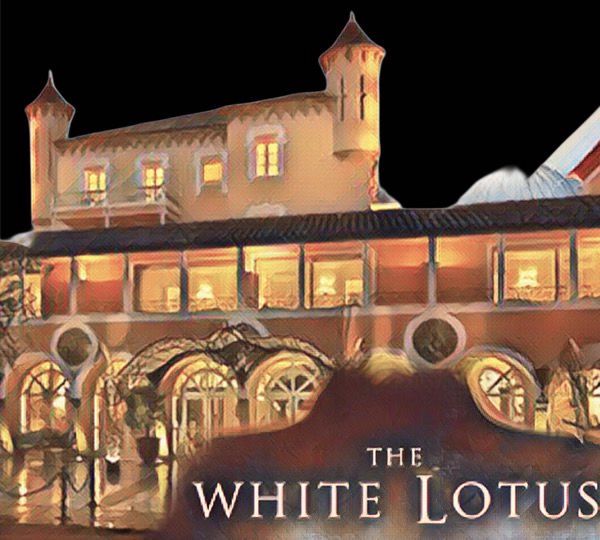
Widowed, Louise was forced to transform the residence into a hotel, not out of aesthetic ambition, but out of necessity. From that point on, the building ceased to be a home and became a stage. In the 1920s, amid the era’s excesses, La Messardière established itself as the preferred address of the Parisian aristocracy summering in the south of France. Lavish parties, discreet encounters, privilege treated as landscape. Like many structures tied to Europe’s elite, the château also endured periods of decline: changes in ownership, abandonment, erasure.
A major restoration finally came in 1989, preserving the building’s historical character while adding new layers of style and function. Since joining the Airelles collection in 2019, the Château de la Messardière has returned to the center of contemporary luxury. Surrounded by olive trees and pine groves, overlooking Pampelonne Bay, with nightly rates now comfortably exceeding €1,300, it occupies a symbolic position in Saint-Tropez: secluded enough to suggest exclusivity, visible enough to assert power. A space where luxury is never neutral, only carefully staged.
This is precisely the kind of environment The White Lotus turns into narrative raw material. In its fourth season, set in France, the château will anchor the new dramatic machinery created, written, and directed by Mike White. And the cast announced so far reinforces the sense of a more aristocratic, more European, and potentially darker chapter.
Among the confirmed names are Helena Bonham Carter, whose presence brings an entire repertoire of irony, melancholy, and eccentricity perfectly aligned with the spirit of the place; Steve Coogan, a specialist in characters driven by vanity, embarrassment, and self-delusion; Alexander Ludwig and AJ Michalka; and Chris Messina, who is joining the ensemble in advanced negotiations. The group is rounded out, for now, by Caleb Jonte Edwards and Marissa Long, both with roles kept under strict wraps.

As is tradition for the series, there is still no confirmation of a returning character linking this season to previous ones — a role previously filled by Jennifer Coolidge, Natasha Rothwell, and Jon Gries. Charlotte Le Bon’s name has surfaced repeatedly in behind-the-scenes speculation, particularly given her fluency in French and unresolved narrative connections, but nothing has been officially confirmed. For now, the open threads remain and invite speculation about what might resurface in the conclusion.
Ultimately, the choice of the Château de la Messardière works as more than a luxury setting. It echoes the very logic of The White Lotus: a place born of affection, marked by loss, shaped by ostentation, and endlessly reinvented to sustain an idea of privilege. A space where the past never fully disappears — it simply watches, in silence, as something inevitably begins to crack.
Descubra mais sobre
Assine para receber nossas notícias mais recentes por e-mail.
 miscelana.com