
George R. R. Martin’s oft-quoted mantra is that “a villain is the hero on the other side.” But in Westeros, there are some names whose choices leave very little room for moral gray.
Take A Knight of the Seven Kingdoms, for example. We are being introduced to Aerion “Brightflame” Targaryen, yes, that Aerion, and the most unsettling detail is how the series presents him without the varnish television sometimes applies to make monsters more “interesting.” Aerion entered history as a man so cruel that, even in the book, he seems to exist as a point without light, a character described without a single trait that suggests redemption. And yet, so far, what we see is a poisonous and particular Westerosi blend: pure-blood arrogance, the cowardice of someone who needs to humiliate others to feel powerful, performative cruelty, and those flashes of instability that make everyone else hesitate for half a second before breathing.
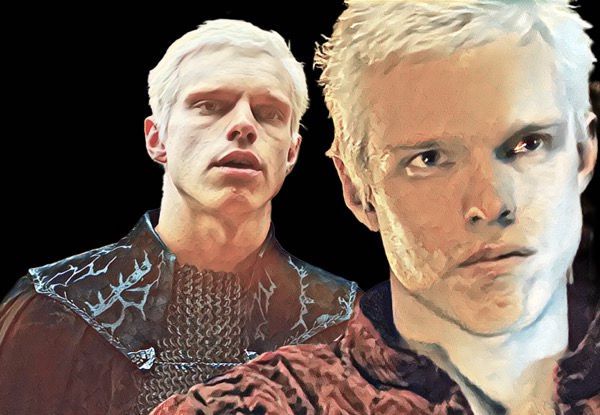
Egg tells us he grew up under the constant threat of his brother. Daeron confirms it. Uncle Baelor reacts with something close to repulsion. Even Maekar, Aerion’s father, shows little patience, as if he recognizes in his son a kind of deviation that even military discipline cannot correct. This matters because Maekar himself already carries a name associated with harshness and violence among the Targaryens. In other words, when even those raised under the logic of the clenched fist look at Aerion with exhaustion and aversion, the series is signaling something important. This is not just an “arrogant prince.” It is a domestic, intimate threat within the family itself, the kind that corrodes long before it explodes.
Still, in the expanded universe of Westeros, Aerion does not yet lead the Top 15, and there are so many that a Top 10 was never going to be enough. And that may be the most revealing part of Game of Thrones’ legacy. It is not that Aerion is “less cruel.” It is that the saga trained us to recognize other forms of evil,l even more devastating than direct violence. Evil that becomes politics. Cruelty is organized as a system. Sadism is protected by institutions. Ambition that turns people into pieces and kingdoms into testing grounds. Aerion is the monster in its raw state, terror concentrated in a single body. But by now, Westeros has shown us monsters who do not need to raise a hand to destroy an entire life and who, precisely because of that, often take much longer to fall.
1. Joffrey Baratheon
Unbeatable. Not just a villain, but a narrative experiment in juvenile sadism under absolute power. Joffrey is ground zero for cruelty in Game of Thrones. There is no ambiguity, no layered trauma, no moral dilemma that redeems him. He hurts because he enjoys it, humiliates because he can, and rules the way a child plays with ants. His sadism is public, performative, and childish, which makes it all the more disturbing. Ned Stark’s execution is not just a narrative shock, but the foundation of a world where justice ceases to exist. His death is celebrated because it represents a rare moral victory in a universe that rarely grants that kind of relief.
2. Ramsay Bolton
If Joffrey embodied childish cruelty, Ramsay elevates it to something almost artisanal. He is not impulsive, but methodical, creative, and fully aware of the suffering he inflicts. Torture, for Ramsay, is language, entertainment, and an assertion of power. What he does to Theon ranks among the most brutal experiences in recent television, not only because of physical violence, but because of the complete annihilation of identity. Ramsay represents the villain who understands fear as a refined instrument, and for that reason, his fall feels less like revenge and more like narrative necessity.


3. Aemond Targaryen
The great, tragic villain of House of the Dragon. He is not born a monster, but shaped by humiliation, resentment, and a culture that equates strength with domination. Losing an eye does not weaken him; it crystallizes his identity. Aemond believes the world owes him something and turns that belief into violence legitimized by dragons. His arc shows how Westeros manufactures villains by rewarding brutality and ridiculing vulnerability.
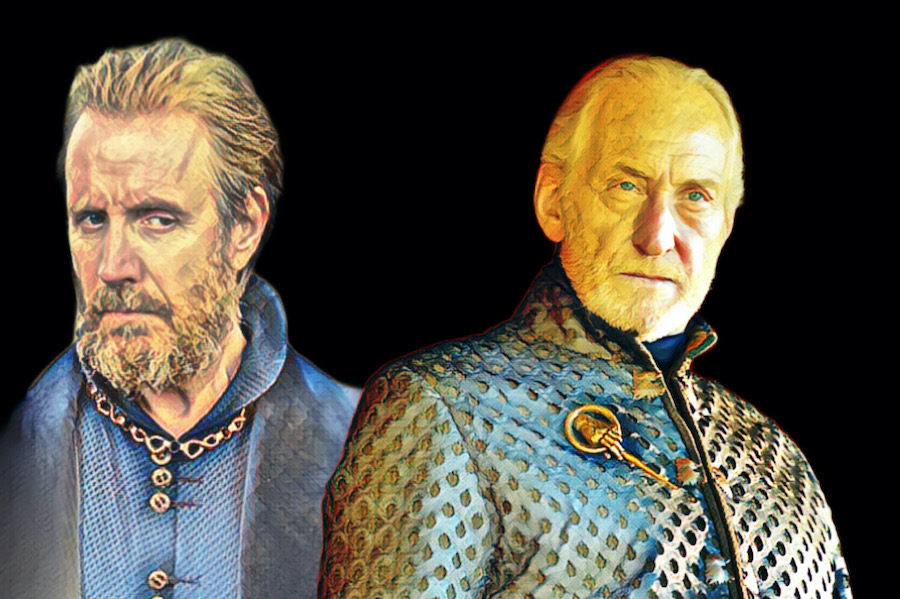
4. Tywin Lannister
Tywin may be the most dangerous villain of the saga precisely because he presents himself as rational. Everything he does is framed as necessary, strategic, and inevitable. He does not see himself as cruel, but as efficient. Forced marriages, massacres, the annihilation of entire houses, and public humiliation all become tools of order. Tywin proves that the most devastating violence is not always the loudest. His death exposes the emptiness behind authority and dismantles the illusion of greatness surrounding him.
5. Otto Hightower
If Tywin is the archetype of hard power, Otto is the institutional villain. He wields neither sword nor dragon, but moves pieces with absolute coldness, instrumentalizing children, grandchildren, and the realm itself. He is driven neither by madness nor pleasure, but by conviction. And that is precisely what makes him more frightening.
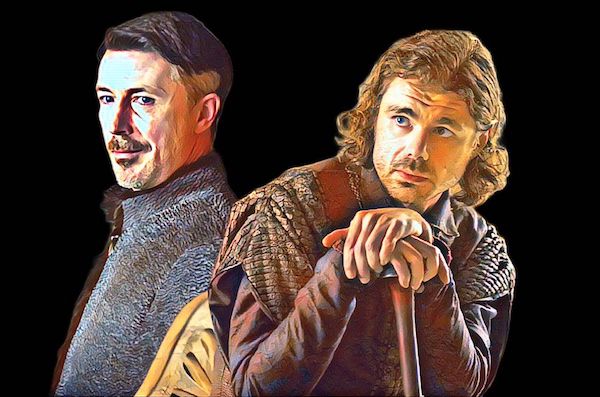
6. Petyr Baelish
Littlefinger turns chaos into method. He understands Westeros as a board where people are disposable pieces. His power comes not from strength, but from information, manipulation, and the exploitation of others’ weaknesses. What he does to Sansa is particularly cruel because it blends guardianship, desire, and control. Petyr does not create monsters, but he creates the conditions in which monsters thrive. His fall is ironic because he loses precisely by believing he controls every rule of the game.
7. Larys Strong
Larys Strong is the silent and deeply disturbing version of the political villain. He observes, waits, and acts through the vulnerabilities of others. His violence is indirect, but no less cruel. By eliminating his own family, he proves there is no ethical boundary when the goal is power and control. Larys represents the kind of evil that flourishes in the shadows and survives precisely because it avoids attention.

8. Viserys III Targaryen
Easy, easy. I know that after Paddy Considine transformed Viserys I into a misunderstood king, it is easy to forget that the first Viserys we ever met was the Third, the pathetic villain. He holds no real power, yet exercises constant violence over those beneath him, especially Daenerys. Abusive, delusional, and cowardly, he believes the world owes him a throne. His importance lies less in political action and more in the trauma he leaves behind. Viserys is the first explicit warning that Targaryen blood guarantees no greatness, only the potential for destruction.
9. Aerion Targaryen
Aerion Brightflame is a monster in the making. Cruel, unstable, and absolutely arrogant, he already inspires fear within his own family. Egg grows up under his threat, Daeron confirms the violence, Baelor reacts with revulsion, and even Maekar shows impatience. Aerion does not rule kingdoms, but he leaves scars. He symbolizes the ignored danger, the villain who could have been stopped early but was not.

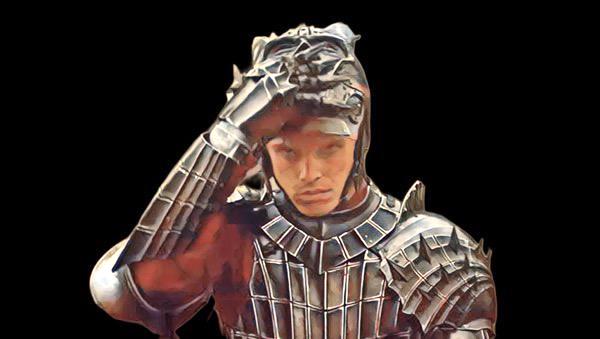
10. Ser Criston Cole
Criston Cole is one of the most morally unsettling characters in House of the Dragon. He does not see himself as a villain, but as a man of honor. His violence stems from resentment, wounded pride, and a masculinity that cannot tolerate rejection. Acting in the name of order, tradition, and morality, Criston shows how systems legitimize abuse when it comes dressed in uniform and righteous language.
11. Cersei Lannister
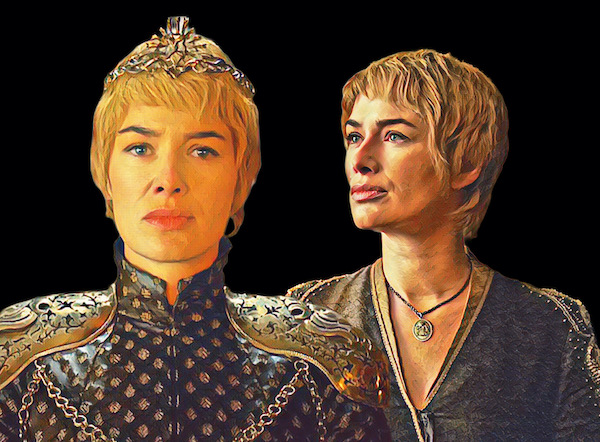
Cersei is shaped by fear, paranoia, and a desire for control. She loves, but her love is possessive and destructive. She governs through resentment and distrust, incapable of seeing beyond her own pain. The destruction of the Sept of Baelor is her most emblematic act, a gesture that fuses personal vengeance with political terrorism. Cersei is not chaotic; she is reactive, and precisely for that reason, deeply dangerous.
12. Walder Frey
Walder Frey embodies the banality of evil. Resentful, petty, and driven by vanity, he breaks the most sacred law of hospitality in Westeros. The Red Wedding is not just a massacre, but a collective trauma that redefines the moral limits of the series. His death, orchestrated by Arya, functions as a historical reckoning rather than mere personal revenge, eliminating a man who turned betrayal into policy.
13. Roose Bolton
Roose Bolton believes cruelty can be managed. Cold, calculating, and convinced of his own superiority, he raises Ramsay and believes he can control him. His mistake is classic Westeros: believing evil can be domesticated. Roose represents the villain who falls not through remorse, but through arrogance.
14. The Night King
The Night King is less a character than a concept. He embodies the end of politics, negotiation, and choice. His presence renders human conflicts irrelevant in the face of total annihilation. Even with a controversial defeat, his impact endures because he represents an absolute, silent, and impersonal threat.


15. Euron Greyjoy
Euron Greyjoy is the villain who brings horror back to spectacle. Unlike strategists like Tywin or manipulators like Littlefinger, Euron rules through excess. Violence, sexuality, power, and death merge into a constant performance of domination. He is abusive toward his family, especially Theon and Yara, and turns trauma into a method of control. His cruelty is not only physical, but psychological and symbolic. Euron wants to be seen, feared, and remembered. He represents an evil that is not content with winning; it needs to humiliate, profane, and leave scars. His presence reminds us that in Westeros, chaos can also be charismatic, and therefore, extremely dangerous.
Who Didn’t Make the List but Deserved a Mention
Craster, Meryn Trant, Septa Unella, the Mountain, the High Sparrow, Mysaria in her darkest phase, the Dothraki Khals. Westeros has never suffered from a shortage of terrible people.
What is most fascinating is how evil shifts form across the saga. In Game of Thrones, it is explicit and shocking. In House of the Dragon, it is hereditary and political. In A Knight in the Seven Kingdoms, it feels almost like a historical warning about what happens when no one stops small monsters before they grow.
And you? Would you remove anyone from this list, or add another name to this gallery that insists on making us root for someone’s end?
Descubra mais sobre
Assine para receber nossas notícias mais recentes por e-mail.
 miscelana.com