
The documentary Mel Brooks: The 99-Year-Old Man! is born less as a traditional tribute and more as an act of urgency. Not market urgency, but the urgency of time. Mel Brooks turns one hundred on June 28, 2026, and his career spans nearly the entire history of modern entertainment. From radio to television, from studio filmmaking to Broadway, from political satire to outright silliness, Brooks didn’t just witness cultural shifts; he helped provoke them.
The decision to capture this memory while he is still alive comes from Judd Apatow, one of the central figures of contemporary American comedy. Apatow doesn’t approach Brooks as a distant biographer or as a present-day critic judging the past. He approaches him as an heir. His films and television work were shaped by a kind of creative freedom that Brooks helped establish: the idea that comedy can be crude, political, self-aware, and deeply human all at once.
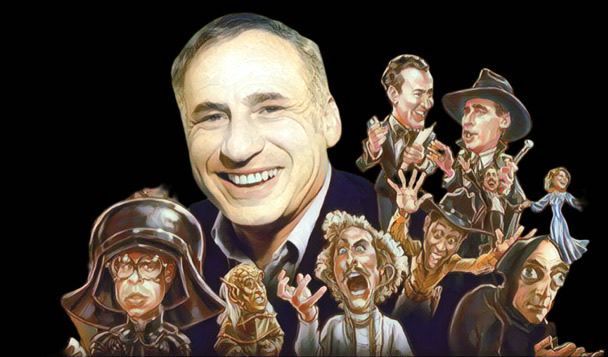
Mel Brooks is often labeled the inventor of “lowbrow” comedy, but that shorthand has never captured his complexity. His humor draws from vaudeville, Jewish comedy, genre parody, and satire as a tool of confrontation. When Brooks dismantles the Western, horror, or the musical, he isn’t just mocking cinema; he’s exposing the moral, racial, and cultural power structures embedded in those genres. Laughter, for him, has always been a survival strategy.
The series is divided into three episodes, structured less around strict chronology than around emotional movement. The first revisits his formative years, his experience as a soldier in World War II, and his entry into television comedy. The second focuses on his creative peak, when he redefined parody on film and became an unavoidable figure in Hollywood. The third is the most fragile and, perhaps, the most powerful. It deals with aging, loss, vanity, regret, and the strange experience of becoming a monument while still alive.
Critical reception was largely enthusiastic, precisely because the documentary refuses to soften the past. It does not attempt to “update” Mel Brooks or apologize for him. Some jokes are left out. Context is sometimes added. But there is never a sense of retrospective censorship. Brooks himself speaks with clarity and irony about what he would no longer do and what he would never give up. The film trusts the audience to sit with discomfort.
One of the most emotionally resonant threads centers on Brooks’s relationship with Carl Reiner. The two were best friends, creative partners, and nearly a single artistic unit for decades. The presence of Rob Reiner, Carl’s son, adds an unexpected layer of gravity. His testimony aired just weeks after the murder of his own son, a trauma never directly addressed but felt in every pause and gesture.
Apatow’s decision not to re-edit or contextualize these moments is crucial. Any attempt to frame the grief would have broken the integrity of the record. What emerges is a documentary that allows pain to exist without explanation. This resonates deeply with Brooks’s own condition: a man who has outlived most of his peers and must carry the solitude that comes with longevity.
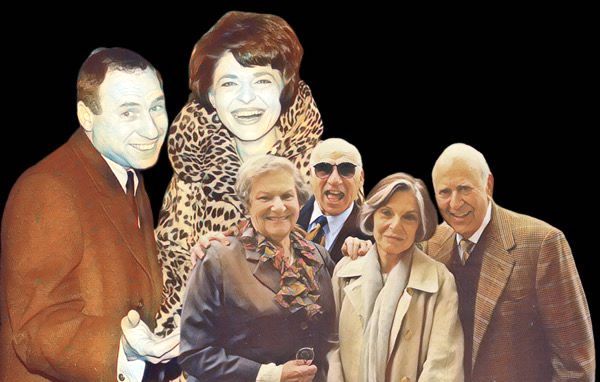
Another striking element is Brooks’s candor about his private life. He openly acknowledges being an absent father, consumed by work and creative ego. He speaks of his marriage to Anne Bancroft with both devotion and insecurity. He loved her profoundly, yet admits to jealousy over her talent and recognition. This honesty dismantles the image of the comfortable genius and reveals a man full of contradictions, unresolved emotions, and lingering vanity.
Even with dated jokes and references that now feel politically incorrect, the documentary asserts itself as an essential record. Not because it seeks to absolve Mel Brooks, but because it understands his structural importance. He didn’t just make people laugh. He demonstrated that laughter could be a way to confront trauma, oppression, and the absurdity of power.
Ultimately, Mel Brooks: The 99-Year-Old Man! is not merely the portrait of a legendary comedian, but of a man who refuses to behave according to his age. Not in denial of time, but in fidelity to who he is. For Mel Brooks, laughter has never been a youthful act. It has always been an act of survival.
Descubra mais sobre
Assine para receber nossas notícias mais recentes por e-mail.
 miscelana.com