
The Milano Cortina 2026 Winter Olympics have opened space for a curious and revealing movement in figure skating. Amid the expected celebration of Italian composers and the classical repertoire, one name has returned to the ice with striking force: Hans Zimmer. Not as an isolated exception, but as a symptom of a broader search for epic scale, narrative clarity, and catharsis. At the center of this resurgence is Gladiator, whose score turns 26 years old and feels more alive than ever.
Zimmer is not an occasional presence in figure skating. He is one of the most frequently used composers in the sport’s history, particularly in free skate programs and Olympic cycles. He shares space with Tchaikovsky, Puccini, and Bizet in the judges’ long-standing canon, but differs in one crucial way: Zimmer embodies the cinematic imagination of the twenty-first century. His music has shaped the last 25 years of popular film language and still sounds contemporary.
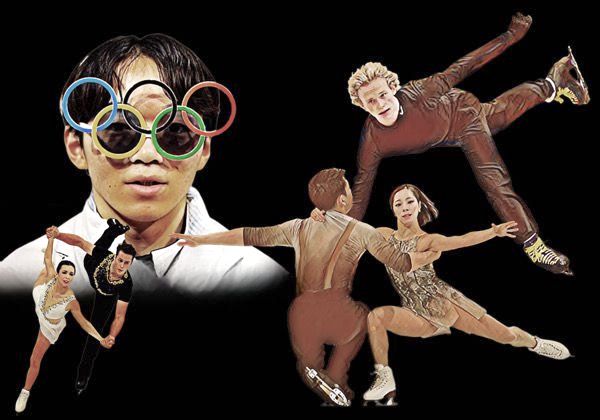
In the 2025–2026 season, this presence becomes tangible. In pairs skating, Lia Pereira and Trennt Michaud of Canada compete with a free skate built entirely around a Gladiator medley, including “The Emperor Is Dead,” “The Might of Rome,” “Honor Him,” and “Now We Are Free.” It is an openly epic choice, designed for large arenas and immediate emotional impact.
Other skaters orbit the same repertoire. Japanese skater Rio Nakata has announced a free skate based on Gladiator, reinforcing how the score has returned to circulation among athletes seeking narrative density. In ice dance, Zimmer appears through a different lens. Olivia Smart and Tim Dieck of Spain compete this season to music from Dune, confirming Zimmer as a defining aesthetic reference of the Olympic cycle, even when Gladiator itself is not the selected score.
This resurgence does not happen in a vacuum. Milano Cortina 2026 places a strong emphasis on Italian composers to honor the host nation, with Puccini and Verdi occupying a central role and “Nessun Dorma” reemerging as a symbolic centerpiece. Even so, Zimmer remains a recurring choice for programs that demand cinematic power. When figure skating wants to feel epic again, he is almost inevitable.
To understand why Gladiator holds such a privileged place, it is necessary to return to the film’s behind-the-scenes story and to the singular collaboration between Zimmer and Lisa Gerrard. When Ridley Scott invited Zimmer to compose the score, the directive was clear. The film should not sound like a traditional Roman epic. The empire depicted on screen was morally decaying, and the music needed to reflect a wounded spirituality, something more ancestral than heroic.

Lisa Gerrard entered the project precisely for that reason. She came from a trajectory entirely outside Hollywood, as co-founder of Dead Can Dance, the cult group known for blending medieval music, liturgical chants, European folk, Middle Eastern influences, and sonic experimentation. Gerrard’s voice has never been concerned with lyrics in the conventional sense. She often sings in invented languages, prioritizing emotion, breath, and physical sensation.
Zimmer gave Gerrard space to improvise freely over his themes. There was no written text and no translation. “Now We Are Free” emerged from this intuitive process. It is lament, farewell, and liberation at once. The absence of a recognizable language allows the music to cross cultures and eras without anchoring itself to any single one.
The impact was immediate. The score won the Golden Globe, received Oscar and BAFTA nominations, became a commercial phenomenon, and helped redefine epic film music in the 2000s. More than that, it created an emotional model that would be widely replicated in the decades that followed.
That model explains why Gladiator works so powerfully in figure skating. The music offers a clear narrative structure, breathing spaces, long crescendos, and a climax built not on explosion but on surrender. On the ice, this translates into programs that tell a complete story in just a few minutes, something judges and audiences instantly recognize.
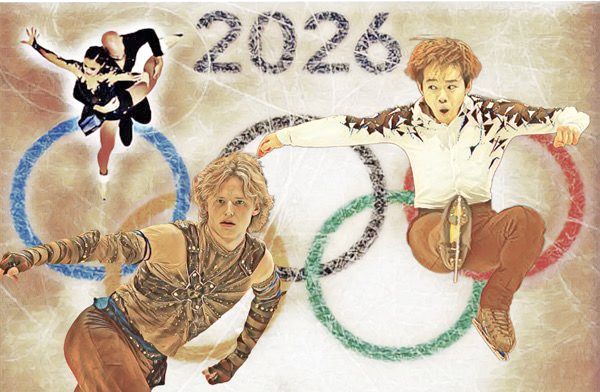
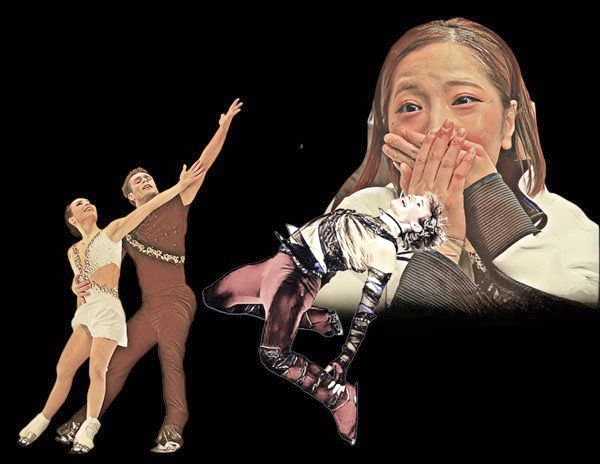
The return of Gladiator in the 2026 Olympic cycle also reveals a shift in the sport’s emotional temperature. After years dominated by raw technical display, there is now a more explicit search for emotion, catharsis, and narrative meaning. Lisa Gerrard’s voice, shaped by her Dead Can Dance roots, adds an almost ritualistic layer that resonates directly with this moment.
Lisa Gerrard was never absorbed by the Hollywood system. Even after Gladiator, she maintained her independent career and parallel projects. Perhaps that is why her contribution remains so intact. There is no concession, no attempt to please. Cinema went to her. Figure skating is now doing the same.
What we see on the ice in Milano Cortina 2026 is not the repetition of a famous score, but the reappearance of a work that continues to say something essential. Gladiator is still chosen because it speaks of loss, honor, and freedom without needing to explain itself. And Hans Zimmer, now one of figure skating’s sonic pillars, finds in it one of his most enduring creations.
Descubra mais sobre
Assine para receber nossas notícias mais recentes por e-mail.
 miscelana.com