
There is a recurring trap when discussing literary adaptations: the idea that fidelity means reproduction. It doesn’t. The greatest adaptations in history are not the ones that copy the original text, but those that understand what is essential in it and find, in audiovisual language, an equivalent way to express that core. Sometimes this requires cuts, restructuring, temporal shifts, or bold aesthetic choices. As long as the spirit of the book survives, the adaptation not only works but often becomes definitive.
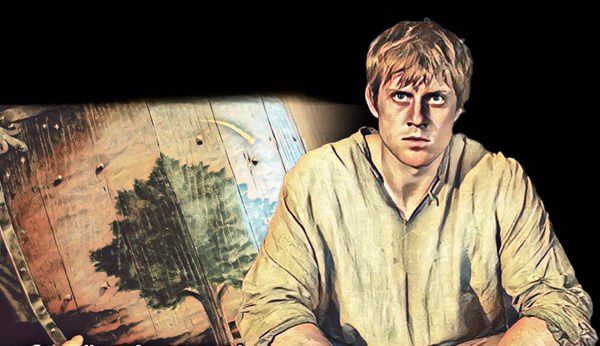
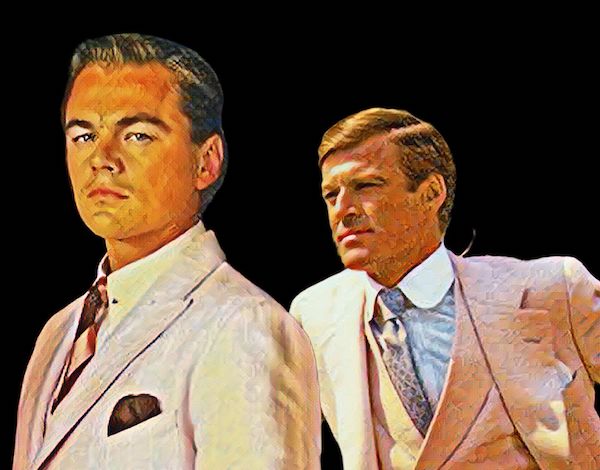
It is difficult to close a definitive ranking, since cinema and literature walk hand in hand, and subjectivity inevitably prevails. That is why the works below do not form a fixed list, nor do they aim to exhaust the subject. They are simply one possible selection among many adaptations that have proven that literature can, indeed, be transported to the screen with intelligence, respect, and personality. And that this ranking, like any good reading experience, is always subject to change.
1. The Godfather (1972–1990)
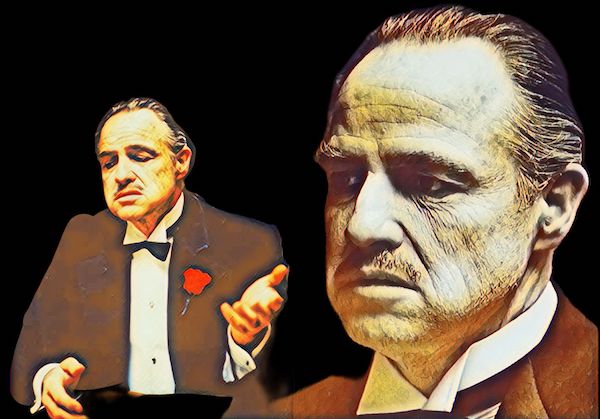
Francis Ford Coppola understands that Mario Puzo’s novel was never just about the mafia, but about power, legacy, and the moral corrosion caused by personal choices. By refining characters, silences, and structure, the films transform the book into a classical tragedy.
The second chapter, in particular, is a rare example of an adaptation that not only respects the original material but transcends it. Even the third, weaker installment draws from elements in the book, from suggested subtext and storylines that were excluded from the first two films in order to reduce their already considerable length. It is an adaptation worthy of being called perfect.
2. Romeo + Juliet and Romeo and Juliet
I know it sounds like a tie, but bear with me: two brilliant, highly personal directors dared to revisit one of the most tragic stories of all time, nearly 30 years apart. And both versions are perfect.
Today, it may sound almost amusing, but in 1968, Franco Zeffirelli “innovated” with his adaptation of Shakespeare’s classic by being the first version to cast actors close in age to the characters in the original play. Nino Rota’s score completed what can be considered a great literal adaptation of the work. The fact is that Romeo and Juliet was an absolute success, winning Academy Awards for Best Cinematography and Best Costume Design, and receiving nominations for Best Director and Best Picture, making it the last Shakespeare-based film to be nominated in that category.
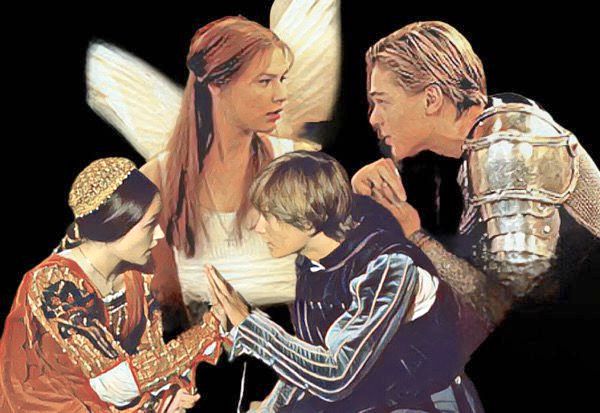
That is why, when 28 years later Baz Luhrmann chose Leonardo DiCaprio and Claire Danes for his 1996 reimagining, many people were skeptical. How could Shakespeare’s poetic text be modernized and still speak to young audiences who barely understand it? Luhrmann proved that it was possible to bring the story into the present, change the narrative framework while preserving the text intact (yes, with the same lines written at the end of the 16th century). When he turned the final monologues into a dialogue, I swear I cried as if I didn’t already know what would happen from the very beginning. It remains one of my favorite films by the director.
3. Sense and Sensibility
Jane Austen may not have been hugely popular during her lifetime, but for decades she has been one of the great favorites of both film and television, and for good reason. One of the most sensitive adaptations of her work came from Emma Thompson and Ang Lee, who chose the then lesser-known Sense and Sensibility (before 1995) instead of betting on the more popular Emma (how many versions can we debate?) or Pride and Prejudice (currently, Joe Wright’s 2005 film is considered definitive).

Thompson and Lee understand that Austen writes about emotional repression, about what is contained and left unsaid. The film translates this delicacy into silence, pauses, and minimal gestures, preserving the spirit of the novel without turning it into something illustrative or stiff. Yes, there are liberties taken—most notably the fact that Emma Thompson could never realistically have played a 19-year-old—but the result is so accomplished that it hardly matters.
4. The Great Gatsby
Two different readings, both legitimate. The 1974 film, with a screenplay by Coppola, leans into melancholy and restraint; Baz Luhrmann’s 2013 version embraces excess, spectacle, and delirium as a way of exposing the decay of the American Dream. Both are faithful because Fitzgerald allows for these interpretations. There is no single possible Gatsby.

Personally, I am torn: I believe more in Mia Farrow’s reckless Daisy than in Carey Mulligan’s passionate and insecure one. And while Robert Redford may be the Jay Gatsby described on the page, it is Leonardo DiCaprio’s performance—arguably his best—that sustains the revisionist take on the classic.
5. Game of Thrones
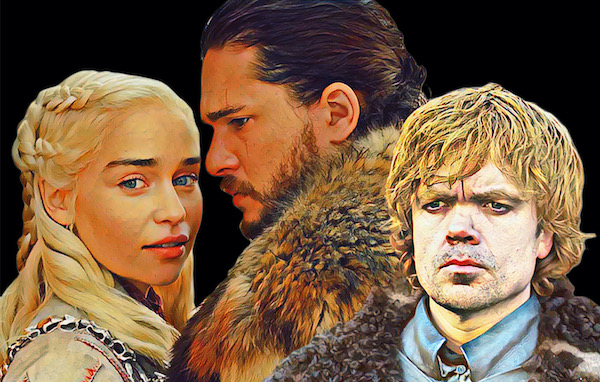
Even with a widely contested ending, the early seasons represent a landmark in the history of television adaptations. The series understood George R. R. Martin’s fragmented structure, the weight of point of view, and the centrality of everyday politics. The latter collapse does not erase the narrative intelligence that turned it into a phenomenon. It will always belong on any list of the greatest fantasy adaptations ever made. The hype and awards were deserved.
6. The Lord of the Rings
An almost textbook example of how to adapt the unadaptable. Peter Jackson cuts, merges, and reorganizes, but preserves the moral heart of Tolkien’s work. Cinema understands that the strength of the text lies not in the literal sequence of events, but in lived mythology, in the sense of journey and sacrifice. Few adaptations have made such precise choices.
Yes, purists object to what Jackson left out at the end, diverging from the book, but that material could have filled an entire additional film and risked making the saga exhausting. Throw stones if you must: I love the film version.

7. Harry Potter (2001–2011)
A rare case of a serialized adaptation that grows alongside its audience. The film saga follows the maturation of J.K. Rowling’s books, adjusting tone, themes, and emotional density over a decade. Even with inevitable cuts, the films preserve the core of the story: belonging, moral choice, and the painful transition from childhood into adulthood.
Unfortunately, the best book is also the one least faithfully adapted: Harry Potter and the Half-Blood Prince is far more impactful on the page than on screen. Still, all the others are simply perfect.

8. Interview with the Vampire
The new version of Anne Rice’s work reinterprets without disrespect. It updates historical context, race, sexuality, and power dynamics, while preserving what has always been central: guilt, desire, memory, and eternity as a curse. By embracing the unstable narrator as a structural device, the series turns literary subtext into a dramatic engine. It is—finally—the recognition of a trilogy long beloved by fans but never fully realized in cinema. On television, it has found its home.

9. A Knight of the Seven Kingdoms
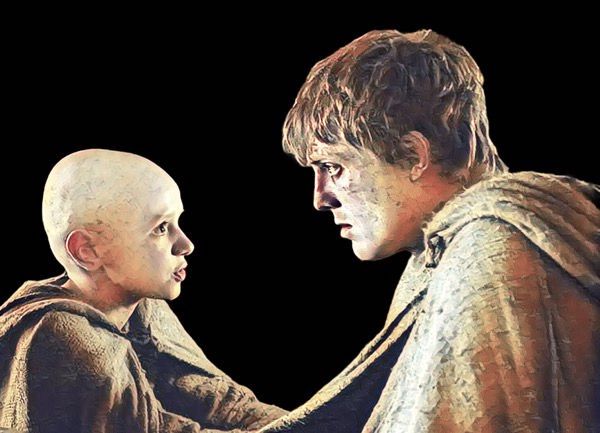
Perhaps the most human adaptation in the world of Westeros. By reducing spectacle and expanding its focus on ethics, destiny, and individual choices, the series understands that these stories are less about dragons and more about moral responsibility and quiet consequences. So far, it has been unanimously praised.
10. Slow Horses
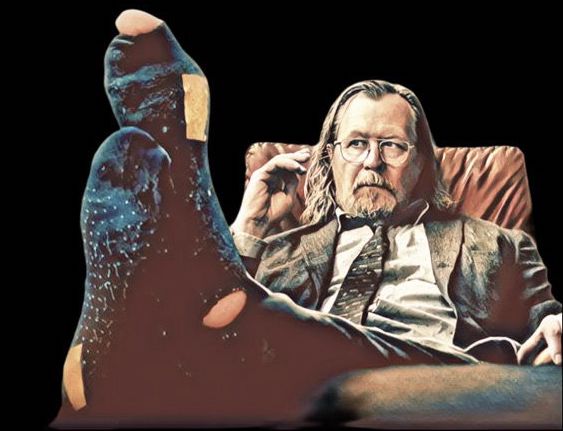
A contemporary example of a precise adaptation. The series respects the acidic humor and disenchantment of Mick Herron’s books, while understanding that television demands rhythm and character centrality. Jackson Lamb works because the adaptation knows that character outweighs plot ingenuity. Gary Oldman is simply unbeatable.
What was left out?
Many other film and television adaptations could easily occupy a place here, depending on the criteria, timing, or perspective. The idea was to focus on works that, in one way or another, attempted to adjust complex stories that needed reshaping, yet remained just as strong as their original books or plays.
In truth, lists like this are not meant to close a debate, but to keep it alive. There are as many possible adaptations as there are good books. These are just a few. Tomorrow, the ranking can—and should—change. What would yours be?
Descubra mais sobre
Assine para receber nossas notícias mais recentes por e-mail.
 miscelana.com