
In recent Oscar history, it has become more common to look at the “major” categories and point, somewhat uncomfortably, to those who “never” win. Martin Scorsese occupied that chair for decades, accumulating five losses as a director before finally winning. Al Pacino also waited a long time, enduring eight nominations before claiming his first statuette. And then there is Leonardo DiCaprio: with four consecutive losses, he still became a beloved joke and an endless source of memes while waiting for his first Oscar. The legendary Meryl Streep may have three statuettes at home, but she herself once joked about her trajectory, reminding everyone that out of 21 nominations, she lost 18 times. Still, no one, absolutely no one, surpasses songwriter Diane Warren.
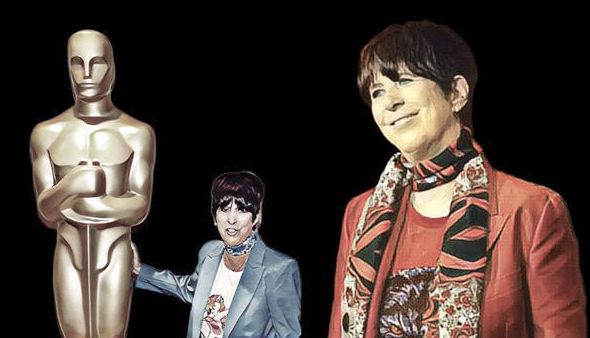
Long before she became a recurring character in this narrative of waiting, Warren knew exactly what she wanted. As a teenager in the mid-1960s, she looked at the songwriting credits for Up on the Roof by The Drifters, saw “Goffin/King,” and decided on her life’s mission. She wanted to be there. She wanted to be inside the parentheses. Not as the star, but as the author. Decades later, she would transform that youthful obsession into one of the most profitable and enduring catalogs in pop music.
There is something almost literary about her trajectory within the Oscars. Not because she lacks grandeur, repertoire, or recognition, but because the repetition of the scene has itself become a narrative. There she is, year after year, nominated for Best Original Song, celebrated by the industry, respected by her peers, photographed smiling, and yet still returning home without a competitive statuette. In 2026, the story gains another chapter that blends irony and persistence.
Poor Diane Warren, as some comments on social media jokingly put it, seen in the official ceremony photo standing directly behind Inga Ibsdotter Lilleaas, actress from Sentimental Value, composing that almost symbolic image of someone who is always near the prize but never quite holding it. The image circulated with a mix of affection and disbelief. Because the number is difficult to ignore: seventeen Oscar nominations in the Best Original Song category, not a single competitive win.
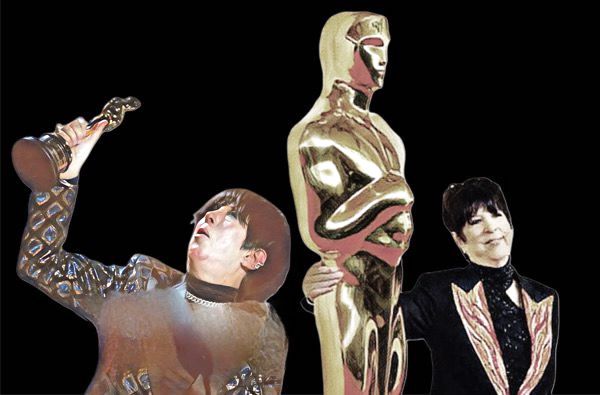
This year’s nomination is for Dear Me, from the documentary Relentless, which, not coincidentally, is a film about Diane Warren herself and her long and successful career as a songwriter. A career that truly exploded with Rhythm of the Night by DeBarge in 1985 and went on to include nine number-one hits on the American charts. The irony is so obvious it almost feels scripted. A song written for a documentary celebrating her own trajectory, her resilience, her unmistakable melodic signature. It would be hard to imagine a more fitting scenario for the Academy to finally close this narrative of the almost. In theory, it seemed like the perfect year for resolution.
But the Oscars rarely move purely out of symbolic coherence. In 2026, all signs suggest the award will go to Golden, the pop phenomenon from KPop Demon Hunters, one of those songs that transcends the film, dominates playlists, goes viral across territories, and becomes a cultural event. The Academy, which has spent years trying to balance tradition with contemporary relevance, may see Golden as a way to engage a global generation that consumes music and cinema in a fully integrated way. In that context, Dear Me returns to the place Diane Warren knows so well: that of the respected nominee watching another narrative take the stage.
Still, it is necessary to place the story in a broader perspective. Diane Warren is not merely a songwriter who collects nominations. She is an emotional architect of pop music over the last four decades. Her catalog spans radio waves, film soundtracks, cinematic romances, and late-night dedications with remarkable consistency. She wrote Unbreak My Heart, immortalized by Toni Braxton; I Don’t Want to Miss a Thing, which transformed the space melodrama of Armageddon into a sentimental anthem through Aerosmith; How Do I Live, delivered with almost epic intensity by LeAnn Rimes; If I Could Turn Back Time, made iconic by Cher; and Because You Loved Me, which solidified Celine Dion as the definitive voice of the 1990s power ballad.
Along the way, many of these songs faced initial resistance. Cher hated If I Could Turn Back Time before recording it. Toni Braxton was not immediately enthusiastic about Un-Break My Heart. Clive Davis even suggested that the rhyme between rain and pain be changed because it sounded too cliché. Warren insisted. It worked. With How Do I Live, she found herself caught between LeAnn Rimes and Trisha Yearwood, pressured by producers and studios, until the song became one of the decade’s biggest hits. Her belief in her own writing has always preceded external validation.
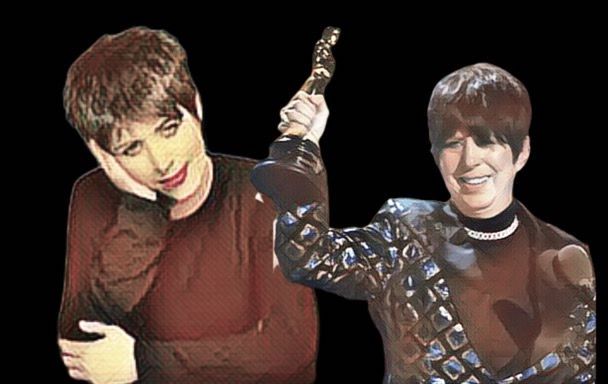
We are not talking about isolated successes, but about songs that structured entire emotional imaginaries. Diane Warren’s signature is recognizable in expansive melodic construction, in choruses that seem born to be sung with eyes closed, in lyrics that handle universal emotions without cynicism. There is something direct in her compositions, a refusal to ironize feeling. She believes in love, in loss, in resilience, in vulnerability, and she writes as someone who understands that the audience needs to believe as well.
Financially, there is no tragedy in her story. The royalties from these songs have traveled across decades, re-recordings, film and television placements, commercials, and streaming platforms. It is difficult to imagine that someone responsible for so many pop classics lives anything other than a comfortable and consolidated life. The Oscar, in this case, is not about survival or economic validation. It is about symbol, about narrative, about that final detail that transforms an extraordinary trajectory into absolute legend.
In 2022, the Academy attempted to resolve part of the equation by granting her an honorary Oscar, formally recognizing her monumental contribution to music and cinema. It was an important gesture, but it does not change the central fact: competitively, Diane Warren remains without a win. And that is precisely what keeps curiosity alive each new season. The question is not whether she deserves it. It is when the Academy will decide that this story needs a different ending.
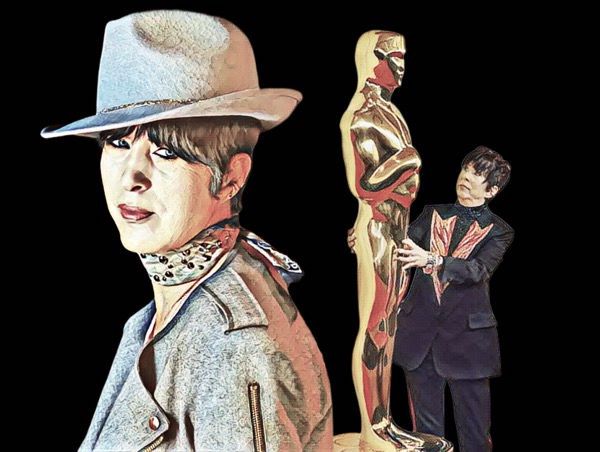
In the grand historical ranking of Oscar nominations, Diane does not lead. Names like Walt Disney and John Williams occupy almost unreachable numerical heights. Among performers, as mentioned, Meryl Streep redefined the concept of recurrence. But within the Best Original Song category, especially in the contemporary Oscars, Diane Warren has become an almost mythical figure. She embodies persistence, regularity, and the conviction that writing a great song remains a central gesture in cinema.
Perhaps 2026 will not be different. Perhaps Golden will confirm the predictions, and Diane will once again smile for the cameras with the elegance of someone who already understands the game. But there is something no result can alter: with or without a competitive statuette, few songwriters have shaped the emotional sound of cinema and pop as profoundly as she has. The Oscars may continue postponing the moment. Music history has already been written.
Descubra mais sobre
Assine para receber nossas notícias mais recentes por e-mail.
 miscelana.com