
As published in CLAUDIA
There is something curious happening to the word love. For decades, love was discussed as a philosophical, literary, and psychoanalytic concept. What is love? How can we define it? The question felt abstract, almost academic, sustained by tragic novels, intense poetry, and theories that accepted ambivalence as an inevitable part of the human experience. Today, paradoxically, in an era that measures compatibility through algorithms and reduces relationships to labels like “toxic” or “couple goals,” we find ourselves in an even more unstable place: once again trying to define love — only now under public, binary judgment.
We live in algorithmic times, and love has become something that can be evaluated. Is it healthy or not? Is it a red flag or destiny? Is it true love or emotional dependency? Subjectivity has been compressed by timelines, quick diagnoses, and instant moralizing. And perhaps precisely for that reason, it is pushing back.
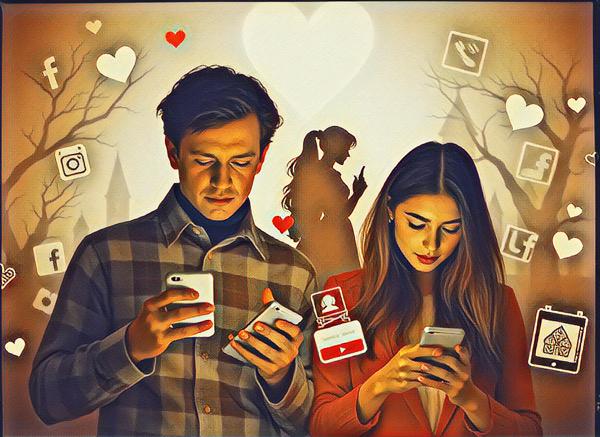
Mention Wuthering Heights and the debate begins. Is it a love story or a portrait of destructive obsession? The insistence that it is a great romance generates more conflict than agreement. Because if that is love, what do we do with emotional violence, possessiveness, and the inability to exist outside the other person? The debate reveals less about the book itself and more about our contemporary need to classify feelings.
Psychoanalysis can offer some clarity. Freud pointed to the entanglement of the life drive and the death drive. Lacan emphasized that love involves projection and lack. To love is not only to desire the other, but to desire what the other represents for us. Love and obsession are not always opposites; sometimes they are uneasy neighbors.
And here comes the inevitable example, the one that always returns with an ironic smile: Romeo and Juliet. Two teenagers fall in love in hours, defy their families, and die within days. Through a modern lens, we might speak of impulsivity, idealization, and dependency. Yet culture enshrines this story as the definition of true love in literature. Why?
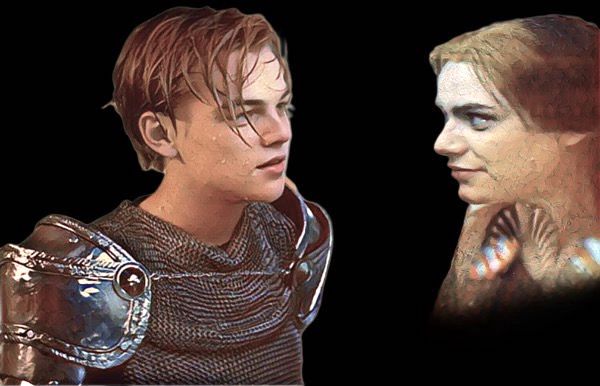
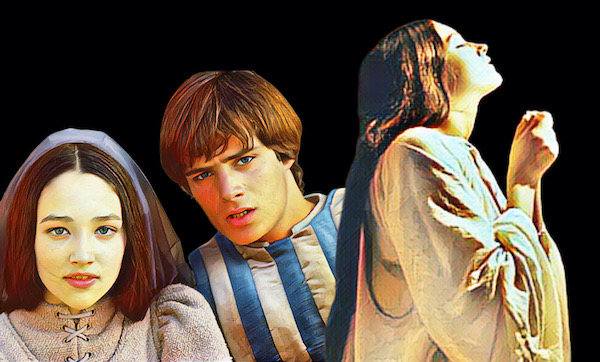
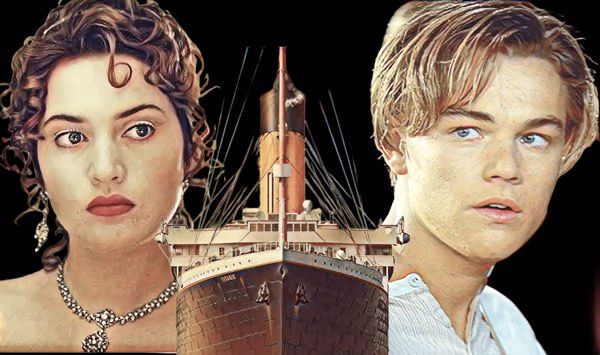
Because death crystallizes feeling. Tragedy suspends wear and tear. We will never know whether the marriage would have survived everyday life. Tragic love works precisely because it never has to confront routine. The same logic appears in Titanic, where intensity is legitimized by loss, or in Casablanca, where love means renunciation. Love is validated by impossibility.
When the narrative continues, ambiguity takes over. Before Sunrise begins as a promise of absolute connection, but the trilogy shows that love does not end at sunset; it matures, falters, and strains. Marriage Story goes even further, suggesting that love can persist even after marriage ends. Love and ending are not necessarily opposites — perhaps one of the most uncomfortable ideas for a culture that equates success with permanence.
It is in this context that Ryan Murphy’s decision to title his series about John F. Kennedy Jr. and Carolyn Bessette-Kennedy simply Love Story becomes provocative. From the outside, it is possible to say they loved each other. There are records of intimacy, magnetism, and desire. There are also reports of tension, crises, and doubts about whether the marriage would have endured. Their early deaths transform them into a myth frozen in time.
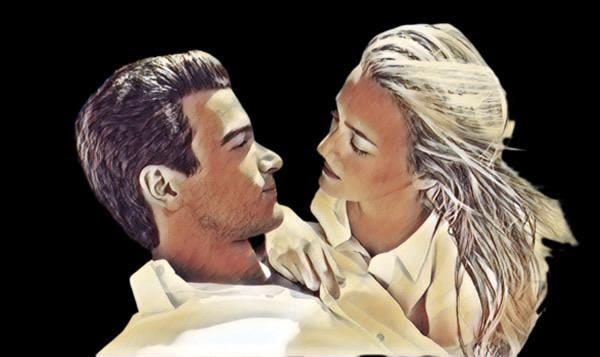
But calling that story Love Story is itself a thesis, an assertion that what they had deserves recognition as love. The inevitable question arises: Is it really? Or are we projecting onto them our own need for coherent romantic narratives?
Perhaps the problem is not whether true love exists in literature and cinema. It does. There are genuine love stories. The issue is that what we call “true” is often tied to intensity, sacrifice, or symbolic permanence, not necessarily to practical stability. Contemporary definitions of true love frequently demand constant harmony, emotional balance, and absence of conflict — promises literature has never made.
When Emerald Fennell insists that Wuthering Heights is a love story, she is defending a specific definition of love. When others reject that interpretation — as I consistently do — they are defending another. Neither position is neutral. Both reveal expectations, fears, and personal boundaries. In an age of binary judgments, defining love has become an ideological act.
Perhaps the central question is not whether something is “true” love. Perhaps it is: what kind of love are we willing to recognize as such? In a culture that tries to turn feelings into objective categories, love remains profoundly subjective. It escapes algorithms, labels, and closed definitions.
And perhaps that is its most honest nature. Love cannot be fully contained within any metric. It will always be larger than the verdict we try to impose upon it.
Descubra mais sobre
Assine para receber nossas notícias mais recentes por e-mail.
 miscelana.com