
The premiere of Love Story, Ryan Murphy’s new series about John F. Kennedy Jr. and Carolyn Bessette-Kennedy, arrives surrounded by a fascination that feels both historical and strangely hollow. Visually, it is a sophisticated, meticulous production, faithful to the imagery of the 1990s. Emotionally and culturally, however, a more uncomfortable question lingers: what exactly is the impact of this story today?
Murphy is not interested in sanctifying anyone. As in his other projects based on real figures, he prefers to expose ambiguities, conflicting versions, and unflattering truths. Drugs, alcohol, marital tensions, rumors of professional ambition, and psychological fragility appear unfiltered. The series does not demand automatic empathy nor offer a consoling narrative. The tone is melancholic, claustrophobic, and inevitably fatalistic, as if the tragedy were present from the very first scene.
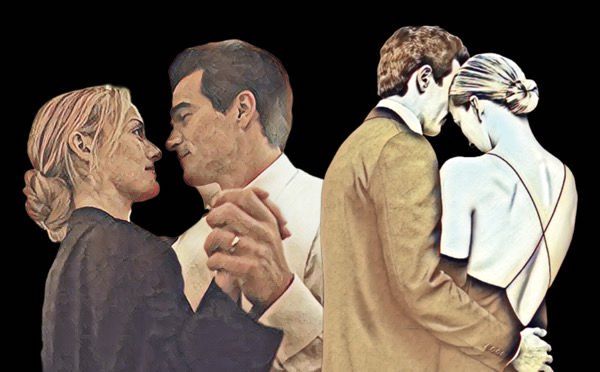
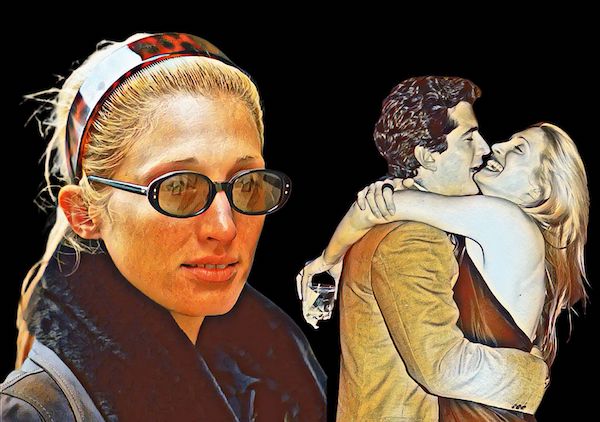
The recreation of the 1990s is perhaps the most immediately seductive element. Costumes, production design, and cinematography capture the height of analog celebrity, when weekly magazines and paparazzi still had the power to build myths and ruin reputations. Carolyn emerges as the aesthetic epicenter of that minimalist, elegant, and brutal decade, associated with Calvin Klein style and a femininity that seemed both powerful and vulnerable at once.
Naomi Watts as Jackie
I found Naomi Watts’s presence as Jacqueline Kennedy Onassis particularly interesting. Watts has already portrayed Diana Spencer on film and Babe Paley in Murphy’s series about Truman Capote, and once again, she does not try to disappear inside the character. She remains recognizable while connecting to something essential in the historical figure. She does not imitate, she translates. The trap of Jackie’s peculiar, unmistakable way of speaking was unavoidable, and Watts navigates it with elegance, suggesting the trait without turning it into caricature.
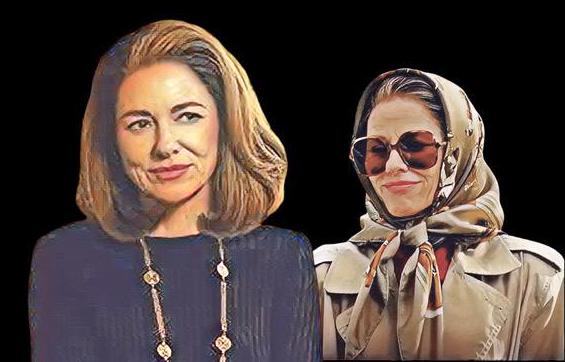
Her Jackie appears less as a frozen myth and more as a survivor of a life marked by successive public losses. The almost pathological relationship with her son is not softened. The series suggests emotional dependency, control, and a hardness that reportedly also shaped her relationship with Caroline.
This interpretation gains additional weight when we remember that the family continued to be struck by tragedy, not only in the distant past but very recently. The death of Saoirse Kennedy Hill in 2019 had already revived the perception of a lineage marked by recurring loss. And just weeks ago, the family faced mourning again with the death of Rose Kennedy Schlossberg, daughter of Caroline Kennedy-Schlossberg, after a battle with cancer, reinforcing the sense that the Kennedy name remains tied to a narrative of vulnerability and fatality across generations.
Daryl Hannah and the previous love
The portrayal of actress Daryl Hannah, played by Dree Hemingway, functions less as a fully developed dramatic arc and more as an emotional residue. She represents the earlier love that still reverberates, proof that no story begins cleanly.
Hemingway adopts a strategy similar to Watts’s, building the character through emotional proximity rather than mimicry, although Hannah’s distinctive gestures are present on screen. She appears vulnerable, out of place in the Kennedy world, and unable to compete with Carolyn’s symbolic force, yet without being vilified. At the same time, there is a suggestion of narcissism and toxicity in her relationship with John, something that, with Murphy’s signature style, feels like a pointed insinuation.

Carolyn is at the center of the narrative
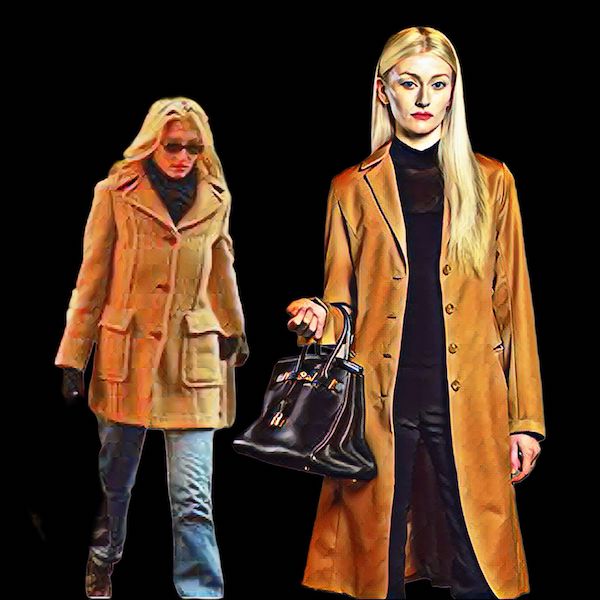
Portrayed by Sarah Pidgeon, Carolyn is the axis of the series. The performance is restrained, introspective, and marked by constant sadness. Murphy does not shield her from the negative narratives that circulated at the time. Alcohol, drug use, isolation, psychological strain, and recurring accusations of opportunism are all present. At the same time, she is not reduced to caricature. What emerges is a woman pressured by a level of visibility she never fully wanted and from which she could not escape.
John-John without total idealization
The actor most physically similar to the original is Paul Kelly as John F. Kennedy Jr., although the resemblance works more in general outline than in detail. John-John’s extraordinarily athletic physique was part of the myth and is nearly impossible to reproduce precisely. More importantly, the series does not idealize him either. His intellectual struggles, professional insecurities, and emotional dependence on his mother appear with uncomfortable clarity.
Soundtrack and saturated nostalgia
The soundtrack is simultaneously seductive and exhausting. The constant use of 1990s hits creates instant recognition but prevents deeper immersion. Instead of allowing us to inhabit the past, the music often underlines it too insistently.
The problem of cultural relevance
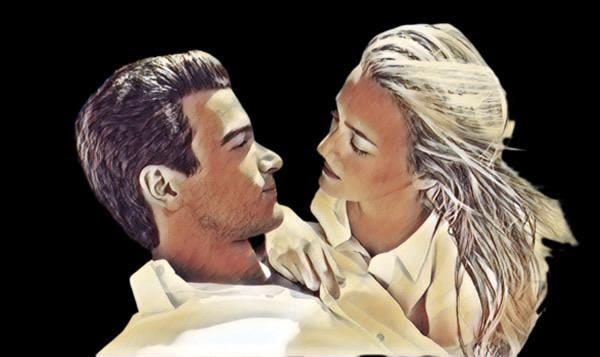
Perhaps the most delicate issue is historical distance. In the 1990s, the Kennedys still held a symbolic place in American culture. Today, that centrality is far weaker, especially for younger audiences. Reviving this tragedy is therefore an ambiguous gesture. It functions as an emotional document of an era, but not necessarily as an urgent narrative.
Across the first three episodes, the proposal remains coherent. If there is a sense of monotony, it seems to stem less from directorial shortcomings and more from the fact that we are observing figures whose symbolic impact is no longer universal. This is a story about a type of celebrity and power that has largely ceased to exist.
Love Story does not appear interested in answering whether John and Carolyn truly loved each other. What it investigates is how a private life becomes a public myth and how that myth ages. The result is an elegant tragedy, carefully staged and emotionally distant. The central question may not be whether it is a great love story, but whether it is still a story capable of telling us something essential about the present.
Descubra mais sobre
Assine para receber nossas notícias mais recentes por e-mail.
 miscelana.com