
In 1966, as European cinema searched for ways to portray a world emotionally shattered by the aftermath of war, a seemingly small French film conquered Cannes, the Oscars, and audiences worldwide. Un homme et une femme, directed by Claude Lelouch, did not look like a future classic. It was too simple, too intimate, too quiet for the logic of spectacle. Sixty years later, however, it remains one of the most profound cinematic meditations on love, loss, and the almost irrational courage required to try again.
Perhaps because the film is not really about love. It is about what survives after it.
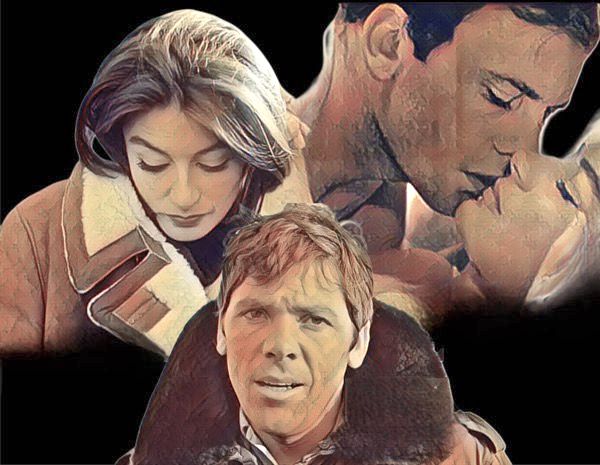
The story is minimal yet universal. Anne, a widowed script supervisor and editor, and Jean-Louis, a widowed race driver, meet because their children attend the same boarding school in Deauville. Their connection grows not from passion but from the mundane repetition of adult life: train rides, interrupted conversations, shared silences. Two strangers who recognize each other before they dare to desire each other.
This approach was radical in 1966. Romantic cinema still revolved around youth, promise, and passion as destiny. Lelouch filmed something far more unsettling: love as a late-life risk, contaminated by memory, guilt, and responsibility. To love again, for these characters, feels like a betrayal of the dead.
Grief is not background. It is the true protagonist. Anne remains emotionally tied to her late husband, whose image returns in fragments of memory. Jean-Louis lives in the shadow of a wife who took her own life, leaving behind a wound filled with ambiguity and helplessness. The film asks a question few romances dare to pose: Is it morally permissible to be happy again?
Formally, Lelouch constructs this doubt as moving memory. The alternation between black-and-white and color—often credited solely to artistic intent—also stemmed from budget constraints, later transformed into expressive language. Outdoor scenes, especially those involving the children, frequently appear in color, while intimate moments dissolve into various shades of black-and-white, as if emotional closeness requires a return to the past.
Handheld camerawork, pseudo-flashbacks, fragmented editing, and long silences create a narrative that feels lived rather than staged. We witness not just events, but how they are remembered, reconsidered, and hesitated over.
This immediacy has concrete origins. The film was written in a matter of hours and shot in just thirteen days, at a time when Lelouch was financially ruined and critically dismissed. Several of his earlier projects had failed, been censored, or abandoned. Legend has it that the idea emerged after he drove all night to Deauville in despair and, at dawn, saw a woman walking with a child along the beach. He imagined their lives, sketched a story, and decided to film it. Few origin stories better mirror the film’s theme: a narrative of renewal born from creative survival.
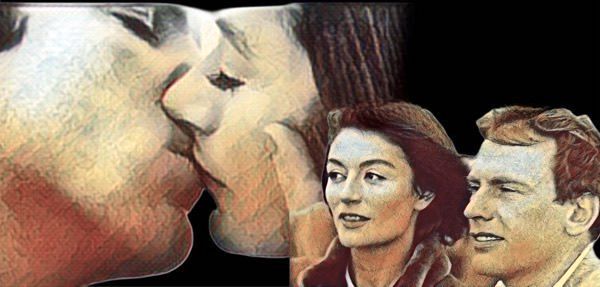
That urgency also explains the film’s improvisational freedom. Jean-Louis Trintignant actually participated in the Monte Carlo Rally while cameras filmed from inside the car. The children playing the protagonists’ offspring were friends’ children, lending rare spontaneity to their interactions. Everyday life is not decorative here; it is the emotional architecture of the story.
The score by Francis Lai, with its instantly recognizable vocal theme, reinforces the film’s suspended melancholy. The film also contains a luminous Brazilian connection: “Samba Saravah,” performed by Pierre Barouh, adapts “Samba da Bênção” by Vinicius de Moraes and Baden Powell, introducing bossa nova to European audiences within a deeply French narrative. Symbolically, Vinicius himself served on the Cannes jury that year.
The success was immediate and overwhelming: the Palme d’Or, two Academy Awards, and millions of tickets sold. Yet parts of the French critical establishment reacted with disdain, dismissing the film as overly sentimental or populist, a tension that reflects a long-standing divide between “serious” auteur cinema and emotionally accessible storytelling. Lelouch, a self-taught outsider to the core Nouvelle Vague circle, created a film that borrowed its formal freedoms without its emotional detachment. Audiences embraced it; some critics distrusted it.
Six decades later, that hybridity feels like its greatest strength. A Man and a Woman is neither a conventional melodrama nor a cold experiment. It is deeply human, concerned not with grand passion but with the fragility of rebuilding life while carrying the past.
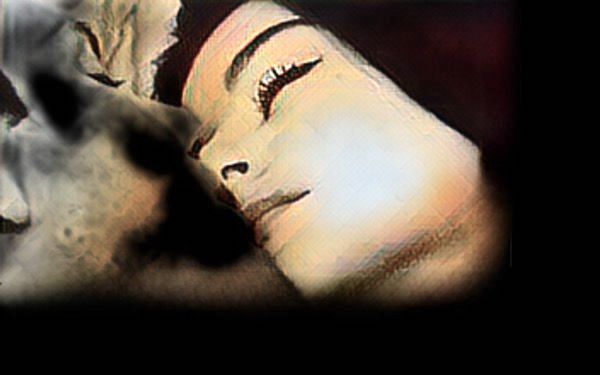
The famous sequence in which Jean-Louis races across France in the rain after receiving Anne’s telegram reading “I love you” captures this tension between romantic urgency and emotional impossibility. When they finally meet, love does not unfold as expected. The dead remain present. The scene became iconic precisely because it portrays a failed attempt at happiness—something far closer to real experience than any triumphant climax.
The film suggests that we do not remake our lives; we continue them. Loving again is not starting over but accepting that the past will remain an invisible third presence between two people.
This is perhaps why the film feels even more contemporary today. In an era obsessed with instant definitions—healthy or toxic, fate or mistake, true love or dependency—Lelouch offers ambiguity without moral judgment. No manual, no diagnosis, no guarantees. Only the attempt.
Nor is there a conventional romantic victory. The ending remains suspended, acknowledging that adult love does not resolve life; it complicates it in ways both beautiful and painful.
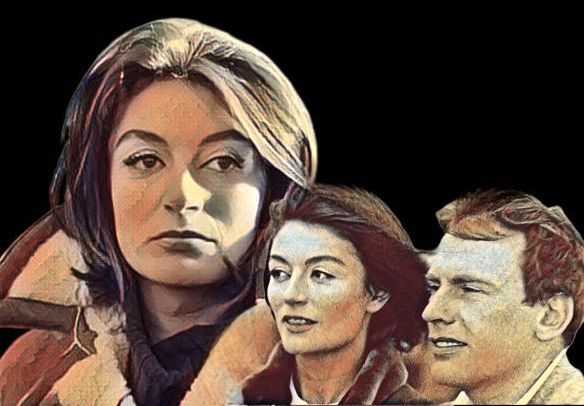
Lelouch revisited the characters decades later, in 1986 and again in 2019, exploring memory, aging, and the persistence of feeling. Yet the original film continues to haunt us, perhaps because it articulates something rarely spoken aloud: surviving love can be harder than losing it.
If there is a lesson in sixty years of A Man and a Woman, it is not romantic in the traditional sense. It is existential. Love is not destiny, not salvation, not a guarantee of happiness. It is an act of courage against time, memory, and the knowledge that everything may end again.
And still, we try.
Because, as the film seems to whisper across decades, we do not start life over. We go on living it.
Descubra mais sobre
Assine para receber nossas notícias mais recentes por e-mail.
 miscelana.com