
Attention, The Gilded Age fans: with the new season expected to premiere by the end of 2026, likely not before October or November, there is plenty of time for increasingly precise speculation. HBO Max has announced several new cast members, along with promotions for previously secondary characters, making it possible to outline what viewers can realistically expect from Season 4 of The Gilded Age.
First, the official season summary:
Bertha Russell [Carrie Coon] changed Society at a cost. Now, her family must reckon with the consequences as Agnes van Rhijn [Christine Baranski] seizes an opportunity to regain her position. Meanwhile, Marian [Louisa Jacobson] forges a new path for herself and Peggy [Denée Benton] works to be accepted by her future in-laws. In this new era, you must be careful what you wish for.
From what fans deduced based on a social media post by Donna Murphy during a costume fitting, the story will jump forward roughly two years, placing Season 4 in 1886. This information did not come from an official HBO announcement but from behind-the-scenes clues, which makes it all the more revealing. The time jump does more than shift the historical backdrop. It fundamentally changes the kind of story the series is choosing to tell and dissolves expectations that seemed natural after the Season 3 finale.
At the time, the prevailing assumption was immediate continuity. There were imminent weddings, newly announced pregnancies, ongoing investigations, and a marital separation still raw and unresolved. Everything pointed to the new season picking up only months after the Newport ball. We now know that this is unlikely, and there is something deeply melancholic about that realization.

If two years have indeed passed, we will not witness the birth of Gladys’s first child but rather encounter a duchess already fully absorbed into British aristocratic life, possibly facing a second pregnancy and a future that has hardened into reality. The same applies to the attempted assassination of George Russell. Two years later, the investigation is unlikely to remain in the chaotic state in which it ended Season 3. The mystery may be solved or quietly buried under elite agreements. In either case, the narrative focus shifts from who committed the crime to who paid the price.
Perhaps the most heartbreaking implication lies in the official synopsis itself. Marian is said to be forging “a new path,” and Peggy is still struggling to be accepted by her future in-laws, suggesting neither woman has married during this period. In historical terms, that is unusual. Engagements in high society rarely lasted longer than six months, as even Agnes’s own past illustrates. If Larry and Marian remain apart two years later and Peggy still speaks of “future” in-laws, significant obstacles must remain. For fans of the “Larrian” pairing, tissues may be required.
Agnes van Rhijn’s opportunity to “regain her position” is deliberately ambiguous. Reclaiming authority over the household from Ada Forte, who now financially sustains the family, would feel like a narrative regression after such a meaningful arc. It is more plausible that this refers to a struggle for status within the family itself, particularly since two years later Oscar will almost certainly be married to Enid Turner-Winterton, creating the unprecedented situation of two Mrs. van Rhijns under one roof. A mother-in-law versus daughter-in-law conflict could overshadow other domestic tensions in the series. Unfortunately, the time jump may mean we miss the early phase of that marriage of convenience.
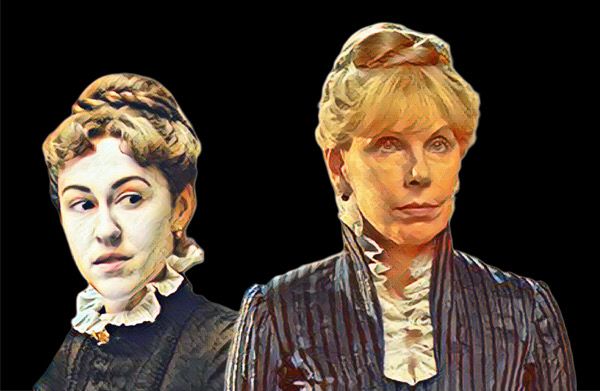
Speaking of the van Rhijn household, Jack’s departure leaves a vacancy downstairs now filled by Oliver, played by Taylor Trensch. On the surface, this is a domestic addition, yet it may prove revealing. In a family defined by stability and tradition, any new presence can disrupt the internal balance, especially after two years of quiet change.
Larry Russell and Marian Brook’s relationship, once seemingly headed toward a swift resolution, now appears far less certain. In the social world depicted in The Gilded Age, two years without marriage is not a romantic delay but a powerful narrative signal. It may indicate maturity, hesitation, or a silent rupture. If Marian is forging a new path, it may be professional, but it likely does not include Larry, a possibility that feels particularly painful for longtime viewers.
This opens the door to new romantic interests. Lee Klein, an emerging artist and protégé of William Merritt Chase, introduces the dimension of cultural prestige as social capital. In a New York striving for international legitimacy, art and taste function as instruments of power as well as personal rivalry. Given Marian’s passion for the arts, the connection seems promising.
Fiona Summers, a free-spirited Astor cousin who defies social conventions, could also become a disruptive force. She may complicate Jack and Bridget’s storyline or interfere more directly in Larry and Marian’s dynamic. Her disregard for social rules suggests she will not remain a background figure.
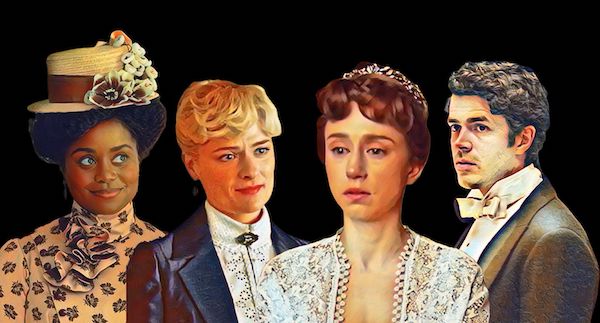
Dr. William Kirkland, who saved George Russell’s life and became engaged to Peggy, is now a series regular, expanding that storyline considerably. His mentor, Dr. Reginald Harris, arrives in New York to raise funds for the Freedman’s Hospital in Washington, a detail far from incidental.
Founded to care for formerly enslaved people after the Civil War, the hospital evolved into a major medical training center and a symbol of Black educational and social mobility during the post-Reconstruction era. Its inclusion suggests Peggy’s arc will extend beyond domestic or romantic concerns into political and intellectual territory. The promise of a “surprising connection” hints at philanthropic alliances or tensions within the Black elite, a subject rarely explored in period television.
Other additions reinforce this broader thematic scope. Mrs. Knapp Curtis, editor of the Ladies’ Home Journal, represents the growing influence of women’s magazines in shaping social norms. Her presence may support Peggy’s journalism career and offer commentary on modern womanhood as both empowerment and prescription.
The introduction of John D. Rockefeller expands the narrative to an even larger scale. He represents not only immense personal wealth but the emergence of an economic system capable of reshaping entire cities. Described as a self-made man of humble origins who became one of the most powerful figures in the world, as well as a devout Baptist and philanthropist who often clashed with fellow magnates, he seems destined to intersect with George Russell in potentially adversarial ways.
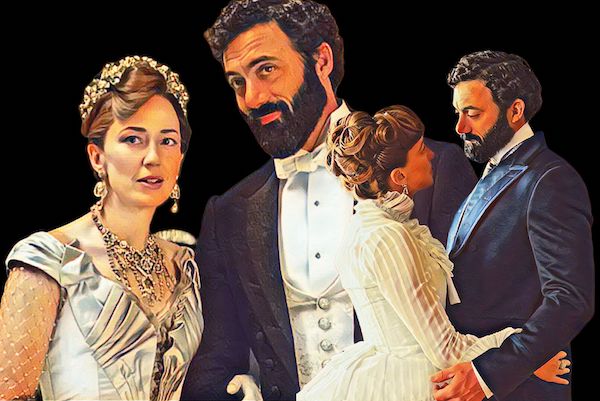
On the personal front, two years is a long time for Bertha to remain in limbo awaiting her husband’s decision. If reconciliation occurred, it happened offscreen. If a definitive separation took place, that too lies in the past. The synopsis suggests Bertha continues to deal with the consequences of her social ascent, and the warning that one must be careful what one wishes for indicates a season focused less on triumph than on its cost. Bertha achieved precisely what she wanted, yet in the logic of the Gilded Age, public victories often demanded private sacrifices.
The year 1886 represents more than a continuation of the 1880s. It marks a moment when New York’s social and economic transformations had already taken root. Power was no longer expressed solely through grand gestures but through constant recalibration of alliances, reputation, and influence. It is a world where decisions have already been made, relationships redefined, and dreams, for better or worse, hardened into reality. That may be precisely what makes this time jump both so painful and so compelling in Season 4 of The Gilded Age.
Descubra mais sobre
Assine para receber nossas notícias mais recentes por e-mail.
 miscelana.com