
Since December 2025, when the murders of Rob Reiner and Michele Singer Reiner shocked Hollywood and the American public, the case of Nick Reiner has entered a strange zone of simultaneous visibility and opacity. The charges are official, the detention is confirmed, and a public case number exists, yet almost nothing else has reached the public domain. Not for lack of interest, but because of a combination of legal caution, possible psychiatric evaluations, and a court order restricting the release of sensitive information.
Nick Reiner, 32, has been formally charged with two counts of first-degree murder with the special circumstance of multiple victims, as well as personal use of a deadly weapon, a knife. If convicted, he faces life imprisonment without the possibility of parole or the death penalty, although prosecutors have not yet decided whether to pursue capital punishment. The crime allegedly occurred in the early hours of December 14, 2025, at the family’s residence in Brentwood, an area associated with wealth and privacy rather than extreme domestic violence.
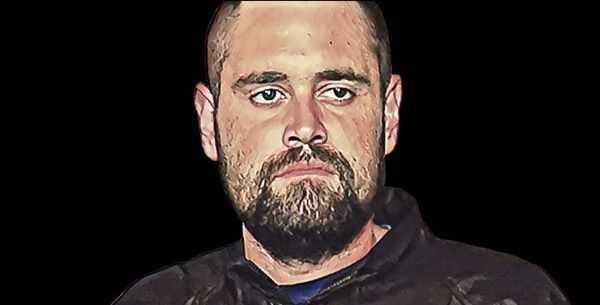
After the attack, according to prosecutors, he left the scene and was arrested hours later that evening in Exposition Park. He has remained in Los Angeles County custody without bail ever since. The arraignment has not yet taken place or, if it has, its developments have not been widely disclosed, leaving the case in a pretrial limbo typical of complex prosecutions but unusual in terms of public attention.
Perhaps the most revealing aspect of the case’s current stage is not what has been released, but what has been removed from public view. The Los Angeles County Department of Medical Examiner received a court order to place a security hold on information related to the deaths, including reports and detailed records. Although the cause of death had initially been disclosed, those details were later withdrawn, and no new documents may be released until further notice. In criminal investigations, such restrictions usually indicate the presence of sensitive evidence that could affect the conduct of the case and the future selection of a jury.
There is also no official narrative regarding motive at this time. Authorities have limited themselves to confirming the charges and stating that the investigation by the LAPD’s Robbery-Homicide Division remains ongoing. The absence of details fuels speculation, but the institutional pattern suggests caution in the face of potential mental-health factors, complex family dynamics, or circumstances still under forensic review.

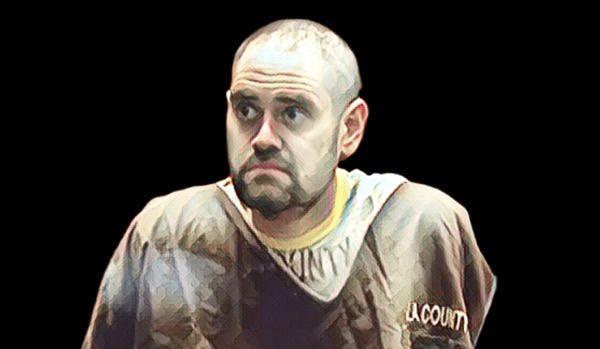
Outside the courtroom, the human impact of the tragedy has begun to surface in fragments. The couple’s other children, Jake, 34, and Romy, 27, released a brief statement days after the crime describing the loss as “horrific and devastating” and asking for privacy. In another passage, they said their parents were not only their parents but also their best friends — a formulation that conveys not just grief but the intimate scale of the rupture.
Reports in the American press indicate that comedian and actor Billy Crystal, a longtime close friend of Rob Reiner, has been offering direct support to the siblings. The two men had collaborated since the 1970s and maintained a friendship often described as familial. According to sources cited in coverage, Crystal and his family have been helping ensure that Jake and Romy have emotional and practical support as the criminal case unfolds. In tragedies of this kind, informal networks of care often become the closest substitute for normal life.
The arraignment will be scheduled for a later date, according to the official statement from prosecutors, and there is no widely confirmed public date so far. Following the withdrawal of private counsel and the imposition of partial secrecy on forensic information, this stage is expected to occur sometime in 2026, possibly in the first half of the year, although further delays are common in cases of this nature. Even before that hearing takes place, evidence review, competency evaluations, and preliminary negotiations between prosecution and defense may be underway.

Cases of intrafamily violence, especially those involving public figures, tend to move slowly and under strict information control. Prosecutors must preserve the integrity of the future trial, while the defense may be developing strategies that depend on medical examinations, personal history, and a detailed reconstruction of events. Until these steps are completed, silence reflects not an absence of information but a form of institutional containment.
The current situation is therefore paradoxical. There are grave formal charges, a defendant in custody, and an active investigation, yet almost no public narrative beyond the essentials. At the same time, the human dimension of the loss appears only in fragments, in the few authorized statements and private gestures of support among those closest to the family. The case remains open and in its most technical legal phase, one that rarely produces headlines but ultimately determines the course of the trial. The justice system is moving forward, but it is doing so largely outside the reach of public curiosity, as if the story itself were suspended in time until the courts bring it back into the light.
Descubra mais sobre
Assine para receber nossas notícias mais recentes por e-mail.
 miscelana.com