
The great legends of Hollywood are leaving us one by one. It makes sense, of course, as many have reached advanced age. Today, Robert Duvall, one of the most respected and quietly commanding actors in the history of American cinema, died at 95, bringing to a close a career that spanned nearly six decades and helped define what it means to perform with authority without excess. According to his family, he died peacefully at his home in Middleburg, Virginia, with his wife by his side. There will be no formal service. Instead, the request was simple and revealing of his discreet personality: that people honor his memory by watching a great film, telling a good story around a table with friends, or taking a drive through the countryside to appreciate the beauty of the world.
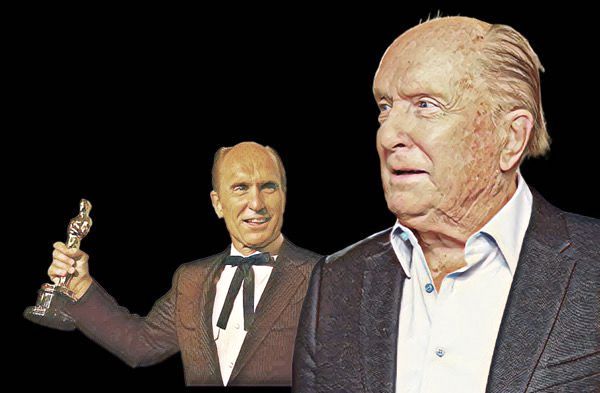
Few actors were so closely associated with restrained intensity as Duvall. He did not need grand gestures to dominate a scene because his mere presence already suggested danger, melancholy, or power. He was the kind of performer capable of conveying more with a still gaze than others could with pages of dialogue. This expressive economy made his characters unforgettable, even when they occupied secondary positions in the narrative.
For the general public, he will forever be Tom Hagen, the Corleone family’s lawyer in The Godfather, a calm and cerebral figure in a universe ruled by violence. The performance earned him his first Oscar nomination and cemented the idea that the most frightening power is not always the loudest. Years later, in Apocalypse Now, he created another absolute cinematic icon as Lieutenant Colonel Kilgore, the surf-obsessed commander who delivers one of the most famous lines in film history: “I love the smell of napalm in the morning.” If Tom Hagen represented the rationality of organized crime, Kilgore embodied the almost banal insanity of war.
But perhaps the role that best reveals the depth of his talent is the alcoholic country singer Mac Sledge in Tender Mercies, a delicate performance about redemption and faith that earned him the Academy Award for Best Actor in 1984. Duvall sang his own songs in the film and built a devastated character without ever resorting to easy sentimentality. It was a study of male fragility rarely seen in Hollywood.
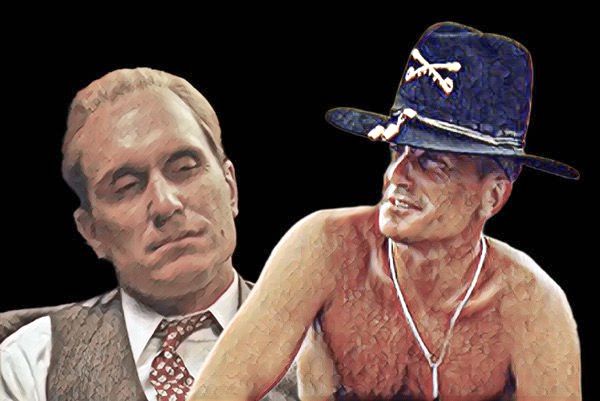
Born in 1931 in San Diego, the son of a Navy admiral and an amateur actress, Duvall grew up on military bases and arrived in cinema relatively late. He made his film debut at 31 as the mysterious Boo Radley in the adaptation of To Kill a Mockingbird, a small but crucial role that already demonstrated his ability to leave a lasting impression with minimal screen time. Trained at Sanford Meisner’s prestigious acting school in New York, he was a classmate and friend of Dustin Hoffman and Gene Hackman, sharing an apartment with them before fame while surviving on odd jobs and working in the theater.
In the 1970s, he became a central figure of the generation known as New Hollywood, alongside Al Pacino and Robert De Niro, helping redefine the profile of the American leading man. He was neither a traditional heartthrob nor an exhibitionist performer. He was, simply, a serious actor deeply interested in the psychology and emotional truth of each character.
Over the following decades, he moved effortlessly between leading and supporting roles, portraying authoritarian military men, difficult fathers, religious leaders, powerful lawyers, and figures worn down by time. He received seven Academy Award nominations and seven Golden Globe nominations, in addition to directing four feature films, including The Apostle, a personal project he wrote, financed, and starred in, demonstrating his commitment to spiritual and human stories outside the mainstream.
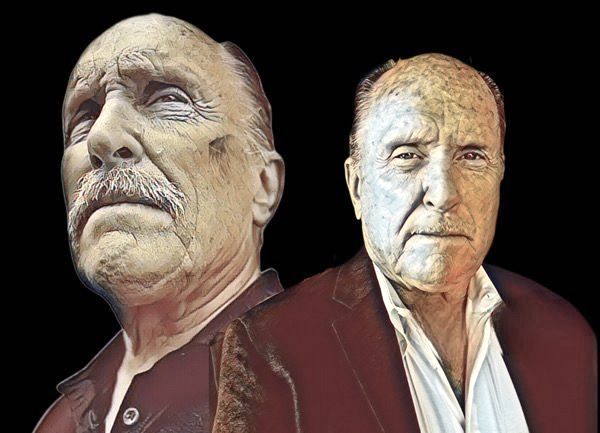
In later years, his roles reflected his own age: mentors, patriarchs, men hardened by life. Even so, he retained his ability to make each character singular. He was often described as “Hollywood’s greatest supporting leading man,” someone capable of stealing a film without appearing to try.
Robert Duvall’s death represents not only the loss of a great actor but the disappearance of a style of acting that privileged interiority over spectacle. In an industry increasingly driven by franchises and amplified performances, he reminded audiences that true dramatic power can reside in stillness.
His legacy endures not only in awards or iconic lines repeated across generations, but in the sense of authenticity he brought to every role. Robert Duvall did not seem to be playing intense men. He seemed to know them deeply. And perhaps that is why his performances remain so alive: because they were never merely performances, but convincing portraits of human complexity.
Descubra mais sobre
Assine para receber nossas notícias mais recentes por e-mail.
 miscelana.com