
In Episode 5 of A Knight of the Seven Kingdoms, viewers encounter not only fundamental revelations about the past of Ser Duncan the Tall but also two young performers whose work sustains the emotional core of the chapter. Chloe Lea portrays Rafe, a character significantly expanded from the original material, while Bamber Todd embodies Duncan as a child, offering a rare glimpse into the experiences that shaped one of the most honorable figures in Westeros.
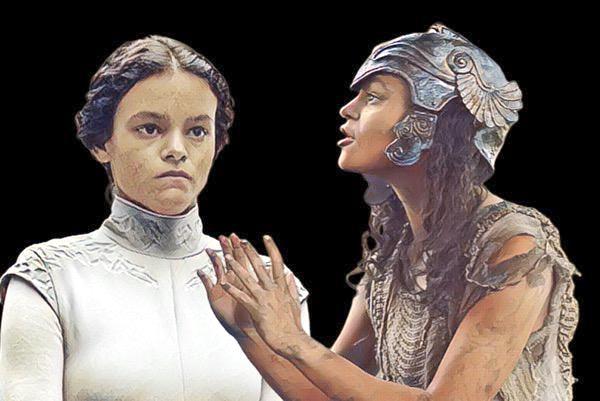
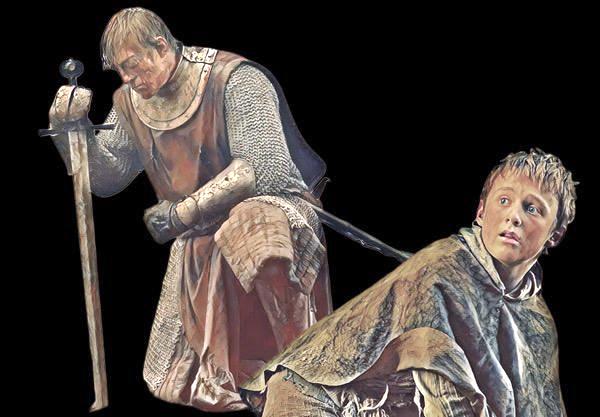
In George R. R. Martin’s original tales, Rafe is a boy whose presence is brief and devoid of lasting romantic or symbolic implications, functioning primarily as part of the background of Dunk’s miserable childhood on the streets of King’s Landing. By reinventing Rafe as a girl and suggesting she may have been Duncan’s first love, the adaptation profoundly alters the character’s narrative function. What was once merely a detail of setting becomes an emotional key to understanding the future knight’s sensitivity and the origin of his almost anachronistic compassion in Westeros.
Despite appearing for only a few minutes in a single episode, Chloe Lea has already become one of the most talked-about newcomers associated with the series. The emotional weight placed on her performance is considerable, as Rafe comes to represent not only a childhood memory but the possibility of affection in an environment dominated by neglect and violence.
Lea approaches the role with restrained naturalism, prioritizing a young girl marked by trauma and memory rather than overt dramatization, which makes Rafe feel less like a narrative invention and more like a formative presence in Dunk’s life, almost like a persistent memory that continues to influence his adult choices. Her performance triggered a significant surge in online searches, a recurring phenomenon for actors entering the world of Westeros, where even secondary roles can generate immediate global attention.
Before attracting widespread notice as Rafe in A Knight of the Seven Kingdoms, Chloe Lea was already connected to another major contemporary speculative franchise: the universe of Dune. In the series Dune: Prophecy, set thousands of years before the events of Denis Villeneuve’s films, the actress is part of the storyline exploring the origins of the Bene Gesserit order, one of the most enigmatic and influential forces in Frank Herbert’s saga.
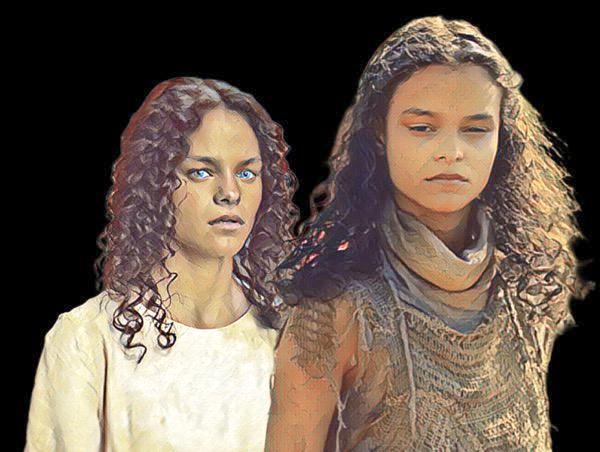
Set roughly ten thousand years before the birth of Paul Atreides, the series follows the formation of the sisterhood and the power struggles that shaped the future political and spiritual structure of the Empire. In this context, young characters carry strategic importance, representing the phase in which discipline, manipulation, and doctrine begin to replace individual identities. Chloe Lea’s presence in this setting reinforces her association with characters marked by both vulnerability and latent potential, a combination that also defines her portrayal of Rafe.
Although her role is not among the central protagonists, it exists within a narrative universe dominated more by psychological tension and silent intrigue than by direct action. In stories centered on the Bene Gesserit, each female figure typically functions as part of a much larger plan, where emotion, memory, and control of the body are political weapons. This demands performances based on suggestion and ambiguity, qualities that align closely with the restrained style Lea demonstrates in Knight.
Her involvement in Dune: Prophecy also reflects the tendency of major fantasy and science fiction productions to recruit young British actors who are relatively unknown internationally but capable of sustaining complex roles without bringing a pre-existing public persona. This type of casting enhances immersion and allows audiences to associate the actor’s face directly with the fictional world.
The fact that Chloe Lea appears simultaneously in two globally recognized franchises — Westeros and the Empire of Dune — amplifies her visibility and suggests an ascending trajectory within the genre. Both narratives privilege characters whose strength does not manifest through overt violence but through the ability to influence events from seemingly fragile positions. In this sense, her presence in both productions is not merely a coincidence of casting but an indication that she is being associated with specific archetypes: young figures whose importance lies as much in symbolic meaning as in emotional impact.
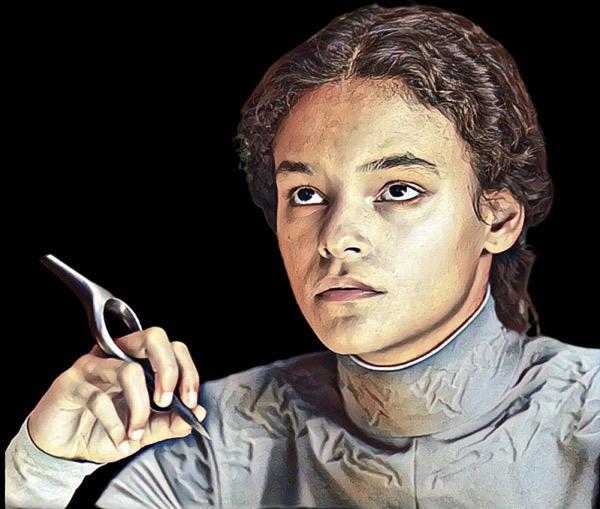
For viewers who discovered Lea as Rafe, her participation in Dune: Prophecy confirms that she was already circulating in high-level productions before achieving widespread recognition. For science fiction audiences, meanwhile, she emerges as another promising face within a universe known for launching long-lasting careers. In both cases, the result is the same: growing curiosity about who Chloe Lea is and what her next steps will be.
Bamber Todd, in turn, as the young Duncan, faces the equally demanding task of portraying a younger version of a character audiences already know in adulthood. His interpretation avoids sentimentality, presenting a boy shaped by adversity yet still capable of quiet empathy. Through subtle expressions and restrained physicality, Todd conveys the loneliness, vulnerability, and resilience that will later define the future knight. Young Dunk does not appear as a hero in formation but as a child who learned too early to observe suffering and recognize his own helplessness in the face of brutality.
The interaction between the two actors transforms the flashback into more than a simple biographical exposition. The bond between Dunk and Rafe does not need to be explicitly named to be understood; it emerges from minimal gestures, glances, and the way they share space, like two children recognizing each other’s fragility. This delicacy makes the sequence particularly devastating, suggesting not only affection but also loss or impossibility, implying that something precious was left behind when Duncan set out on the path that would lead him to knighthood.
The most powerful effect of this change becomes evident when revisiting Dunk’s passionate defense of Tanselle against the violence of Aerion Brightflame. In the original material, his intervention was already heroic but could be interpreted as moral impulsiveness or spontaneous outrage at injustice. In the series, however, the scene carries a personal echo. Duncan is not merely defending a stranger; he appears to be reacting to a memory, as though protecting Tanselle were also a way of protecting something he once failed to preserve. The conflict ceases to be purely external and acquires an intimate, almost subconscious dimension.
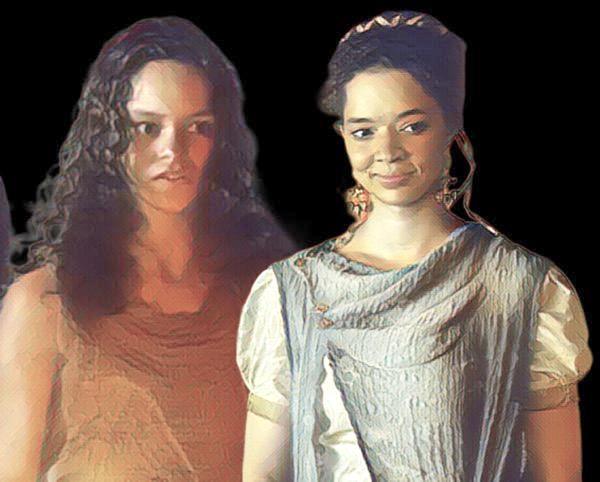
Casting relatively unknown young actors serves a deliberate purpose in a franchise built on immersion. Without prior celebrity associations, viewers can accept these portrayals as authentic glimpses into Duncan’s past rather than performances overshadowed by recognition. Together, Lea and Todd provide the emotional foundation of the episode, transforming what could have been mere exposition into a profoundly human exploration of memory, loss, and the origins of kindness in a brutal world.
Their sudden visibility also reflects the enduring cultural reach of stories set in Westeros. Even brief appearances can resonate widely when they illuminate the inner life of a beloved character. For many viewers, these performances do not simply expand the narrative; they make the journey of Ser Duncan the Tall deeply personal, grounding legend in lived experience and suggesting that his greatest strength is not skill with a sword but the ability to remain sensitive in a world that constantly punishes empathy.
Descubra mais sobre
Assine para receber nossas notícias mais recentes por e-mail.
 miscelana.com