
I wish I were more excited about the second season of Hijack, if only to publish these recaps with the urgency the series clearly wants to generate, but there is a paradox between the apparent complexity and the structural simplicity of the plot that leaves me uneasy. This new phase is a direct continuation of the first, revisiting characters and subplots that, honestly, most of us barely remembered or even fully registered the first time around. It feels somewhat egocentric for the writing to expect that level of recall and investment from the audience while repeating almost exactly the same formula: ordinary people coerced by criminals into carrying out increasingly dangerous plans to free the equally dangerous John Bailey-Brown from prison. If he were as brilliant as he is ruthless, perhaps he would not be trying to escape justice for the second time. Still, this is the material we have — and now, already in the final stretch of this chapter of the story, we move forward with it.
Episode 6 of Hijack season 2, titled “Junction,” begins exactly where the previous hour left us breathless: the train is devastated by the explosion, and a control room that has, ironically, lost any real control of the situation. Ada, Clara, and the team scramble to restore signal and tracking, but they are effectively blind. Bailey-Brown’s transfer is suspended, and the convoy is ordered back to the safe house, a decision that only deepens the chaos.
When Daniel learns what has happened, he heads straight to confront Stuart in prison and tells him that Bailey-Brown will soon be joining him. Stuart is agitated, pacing, erratic in a way that suggests he may know far more than he is saying. In thrillers like this, that kind of behavior is never accidental.

On the train, Sam regains consciousness disoriented and injured, pulling shards of glass from the back of his head, a brutally physical detail that grounds the sequence in trauma rather than spectacle. Once he composes himself, he confronts Jess and demands contact with whoever is truly in charge. The person who answers is Robert Lang, who appears to be a central figure in the operation, though his reference to “the people we work for” suggests he may himself be only another intermediary in a larger and more opaque chain of command.
Frustrated by how events are unfolding, Lang arms the bombs and prepares to end everything outright. Sam does what has defined him since the first season: he negotiates under pressure. He claims he can turn Bailey-Brown’s convoy around once the train is moving again. Ada agrees, but it is clear she has parallel plans of her own, reinforcing one of the season’s key themes: no one is being entirely honest.
Among the passengers, fear rapidly mutates into agitation, and agitation into danger. Petra, who appeared to have died in the previous episode’s explosion, is revealed to be alive, a twist that says as much about manipulative editing as it does about the story itself. Sam arranges to contact Ada after passing Signal 168, unaware that the train has already gone by it. Otto realizes before anyone else that the control room has no idea where they are.
Elsewhere, in an isolated house in the woods, Alasdair is treated by Marsha. Realizing both the severity of his wound and the threat surrounding them, she pretends to fetch a first-aid kit but instead hides and lures the assassins outside. Once they leave, she steals the car keys and attempts to escape. The plan nearly works until the beeping of the remote echoes through the forest and gives away her location, compounded by the shock of discovering Nick’s body in the trunk. What could have been a clean getaway becomes another nightmare.
Meanwhile, Detective Beck advances his investigation and learns, through Agata Robak, the name of the bomb maker: Jozef Kaminski, who is about to leave Brandenburg for Warsaw. Urgency spreads across every storyline.
Faber and Olivia approach Graham for help analyzing an encrypted email Sam Nelson sent to Thatcher. The origin has been meticulously concealed, meaning Sam’s own computer may be the only way to trace it back. It is a significant clue pointing to a far more sophisticated conspiracy.
Back on the train, news arrives that Bergmannstrasse station is swarming with police, courtesy of Lang. Sam immediately understands the handover has become an ambush and renegotiates with Winter, insisting Bailey-Brown and the passengers will remain onboard. When the train stops, he realizes the situation is about to spiral and decides to turn the control room’s blindness into an advantage.
He and Jess leave the train and manually switch the tracks to divert onto another line, avoiding the station altogether. The plan depends on Otto moving forward to pick them up further down the route. But Otto is called away to assist Petra, who urgently needs medical help. He tries, but it is too late. Overwhelmed by panicked passengers and the gravity of the moment, he misses Sam’s signal to move the train, a delay that proves critical as police forces close in.
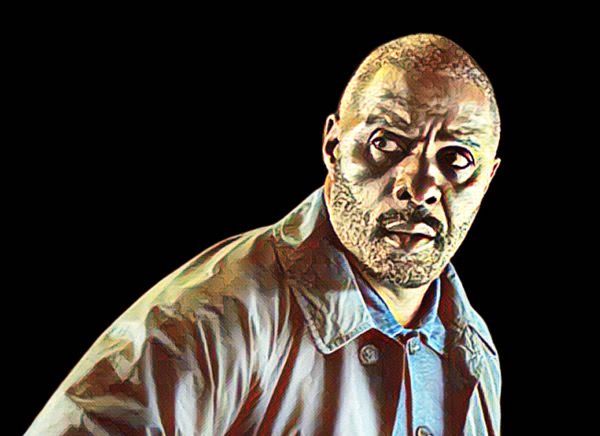
At the same time, the control room finally accesses the flash drive smuggled inside a baby bottle. The footage shows Jess murdering a man on the train, prompting Ada to issue a shoot-on-sight order. Soldiers locate Sam and Jess in the tunnels. Gunfire erupts — and then the train suddenly roars into view, interrupting the scene. Cut to black.
“Junction” is built almost entirely on the sensation of lost control. The explosion did not just damage the train; it shattered the illusion that anyone is truly steering events. Every character is operating with partial information, hidden agendas, and decisions made under extreme pressure. The flash drive, meant to help, only escalates the military response and turns Jess into an immediate target.
If the previous episode ended with the thunder of an explosion, this one closes on the sharp crack of gunfire and a narrative suspended on the brink of catastrophe. All paths converge toward Bergmannstrasse, yet no one is telling the full truth, and that collective opacity is precisely what makes the situation so volatile.
What comes next is impossible to predict, but one thing is clear: the season has entered its most tense and morally ambiguous phase, where every choice seems to push the characters closer to an outcome no one will be able to control.
Descubra mais sobre
Assine para receber nossas notícias mais recentes por e-mail.
 miscelana.com