
The astrological year may belong to the Horse, but if you ask Game of Thrones fans, we are still living in the Year of the Dragon. Alongside the success of A Knight of the Seven Kingdoms and the return of House of the Dragon, the Targaryen saga will reach the prestigious stage of the Royal Shakespeare Company in 2026, reinforcing the sense that Westeros remains one of the most resilient modern mythologies in contemporary popular culture.
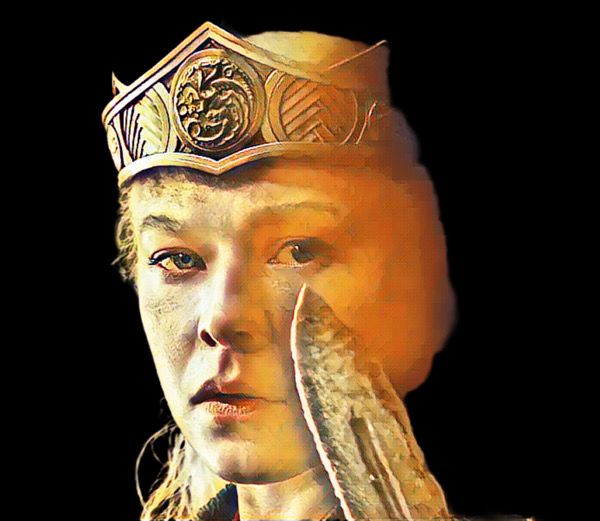
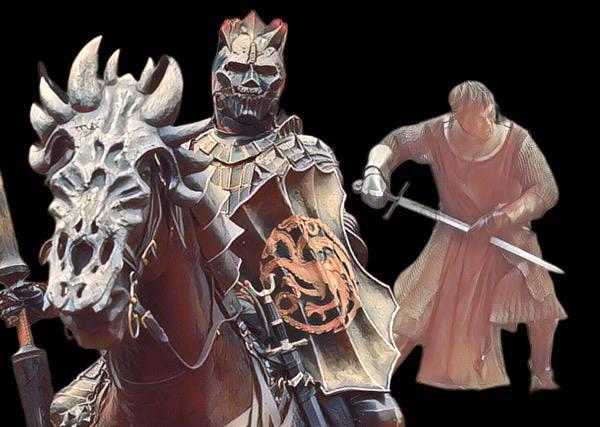
That is right, Game of Thrones is now a theatre as well. The play, set during the so-called Year of the False Spring, dramatizes the meeting between Lyanna Stark and Rhaegar Targaryen, the collapse of Aerys II’s reign, and the chain of events that directly ignited the story told in the HBO series, finally bringing to the forefront characters who previously existed only as memory, rumor, or legend within the narrative.
This expansion of the franchise is both unexpected and deeply consistent with the tragic nature of George R. R. Martin’s work. Before a new theatrical film or another large-scale television production, the story returns to its dramatic roots with Game of Thrones: The Mad King, an official stage play set to premiere in the summer of 2026 at the Royal Shakespeare Theatre in Stratford-upon-Avon. Produced by the Royal Shakespeare Company in partnership with HBO, the production is based on original material developed by Martin and adapted by playwright Duncan Macmillan, with direction by Dominic Cooke, following a creative process that lasted roughly five years. No wonder there are no signs of the book…
Set sixteen years before the events of Game of Thrones, the narrative unfolds in 281 AC, known as the Year of the False Spring, a brief thaw after a long winter that gave the realm the illusion that a new era of stability was about to begin. In this context, all the great houses of Westeros converge on Harrenhal, the largest castle in the Seven Kingdoms, for a jousting tournament proclaimed to be the greatest of its age. Yet the event has always been described as far more than a chivalric celebration. There are strong indications that it served as a pretext for powerful lords to discuss, far from the surveillance of the royal court, the possibility of deposing the Mad King and replacing Aerys II with his son, Prince Rhaegar Targaryen, widely regarded as the more capable ruler.
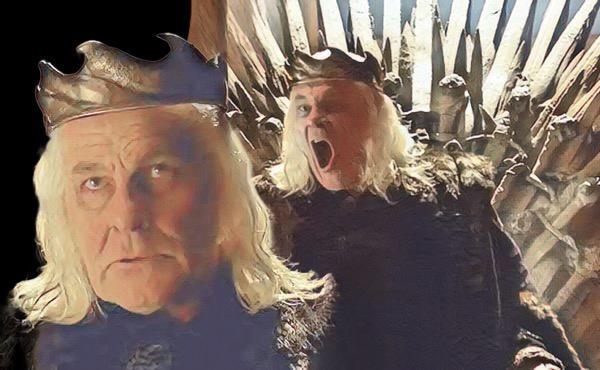
Aerys himself, consumed by paranoia and obsessed with real or imagined betrayals, chooses to attend the tournament in person, a decision that transforms a festive occasion into an atmosphere of constant tension. The play explores precisely this climate of fear and intrigue, with conspiracies forming within the court while rumors of war echo in the distance. Questions of succession, family alliances, and ancient prophecies become central to a silent struggle for power that is rapidly spiraling out of control.
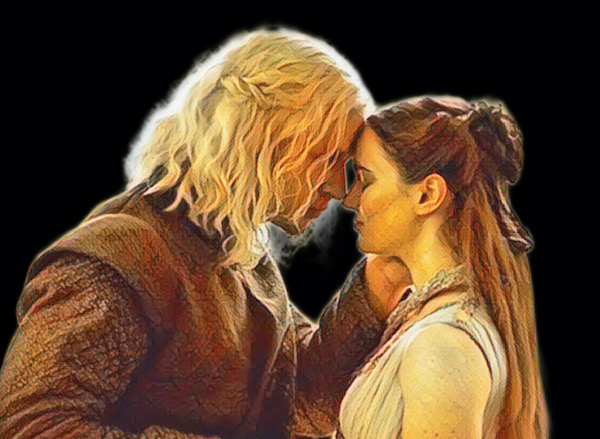
At the emotional core of the story are three figures who, although crucial to the fate of Westeros, never appeared directly in the original series: Lyanna Stark, Rhaegar Targaryen, and Aerys II himself. The relationship between Lyanna and Rhaegar is treated as an epic romantic tragedy, often compared to Romeo and Juliet. After winning the tourney, Rhaegar ignores his wife, Elia Martell, and crowns Lyanna Queen of Love and Beauty, a public gesture that humiliates House Martell, enrages Robert Baratheon, Lyanna’s betrothed, and signals a bond that will soon become the epicenter of an unprecedented political crisis.
Shortly thereafter, Lyanna disappears with Rhaegar, an event interpreted by the Starks and Baratheons as abduction and by others as an act of love, an ambiguity the play is expected to explore. Aerys responds with brutality. Brandon Stark and his father, Rickard, are executed in King’s Landing. Robert calls his banners, and Robert’s Rebellion begins, ultimately toppling the Targaryen dynasty after nearly three centuries of rule. By dramatizing the tourney and its immediate aftermath, the production places on stage the true episode zero of Game of Thrones, the moment when personal choices, political ambitions, and prophetic beliefs converged to produce the catastrophe that shaped the entire saga.

The play is also expected to feature a remarkable gallery of younger versions of iconic characters, including Eddard, Brandon, and Benjen Stark, Robert Baratheon, Jaime and Cersei Lannister, Barristan Selmy, Varys, Oberyn Martell, Arthur Dayne, Ashara Dayne, and the mysterious Knight of the Laughing Tree, whose appearance at the tournament fuels Aerys’s paranoia and remains one of the most fascinating enigmas in the canon. The presence of so many pivotal figures underscores that Harrenhal was not merely a social gathering but a historical convergence point where all the forces that would destroy the realm were simultaneously present.
Although the story originates from Martin’s material, the theatrical script is by Duncan Macmillan, who expanded the initial scope to follow the characters beyond the tournament itself, potentially including the first stages of the rebellion. Martin noted that he never imagined his world would be adapted for the stage, but emphasized that theatre offers a unique space where the imagination of the creator and the audience meet in real time, while also drawing a direct connection to Shakespeare, whose influence has always permeated the political and tragic structure of Westeros.
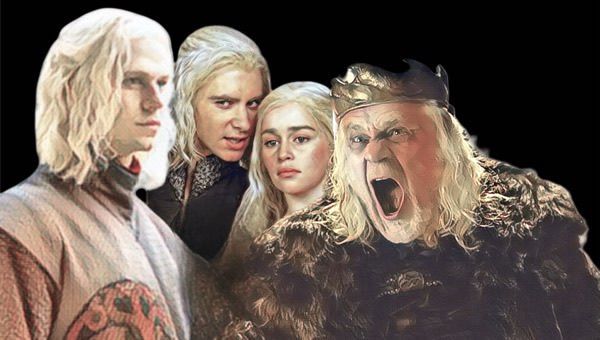
No cast has been announced so far, and the selection process is still underway, which is typical for a production of this scale at the Royal Shakespeare Company. Demand is expected to be extremely high, with priority ticket sales beginning in April 2026 and a strong possibility of future transfers to the West End or even Broadway, given the involvement of major studios among the producers.
More than a mere spin-off, Game of Thrones: The Mad King represents an attempt to fill the saga’s greatest emotional and historical gap, finally bringing into full view characters who previously existed only as recollection, rumor, or myth. By revisiting the Year of the False Spring and the Tourney at Harrenhal, the play not only reconstructs the events that preceded Game of Thrones but also questions the official narrative written by the victors, reminding us that wars are rarely decided by who is right but by who succeeds in imposing their version of history.
Descubra mais sobre
Assine para receber nossas notícias mais recentes por e-mail.
 miscelana.com